Understanding the Bhote Koshi Disaster
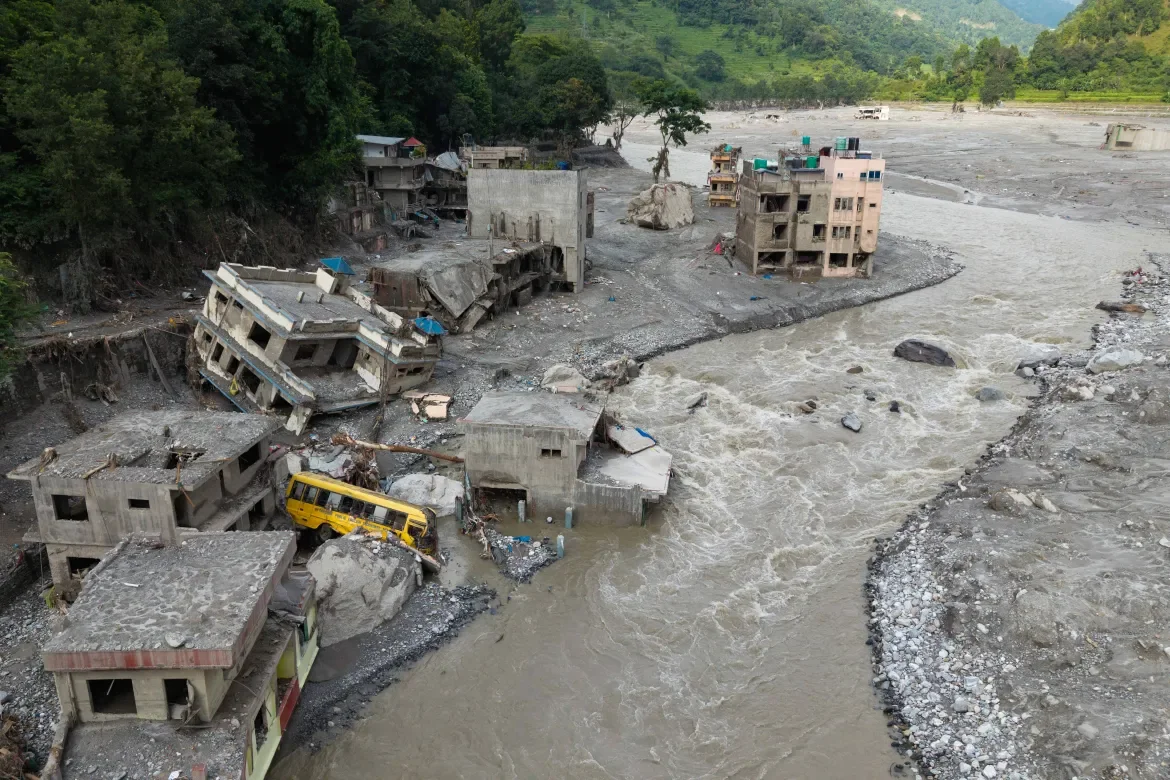
On the morning of August 26, 2026, a glacial collapse near the Nepal-Tibet border triggered a catastrophic flash flood down the Bhote Koshi River.
The wall of water, mud, and ice raced through the Rasuwa and Nuwakot districts, destroying roads, bridges, tea houses, and entire settlements. The disaster affected specific communities along the Bhote Koshi and Trishuli river corridors, leaving hundreds dead and missing, and changing the landscape of the northern border regions in ways that will take years to understand.
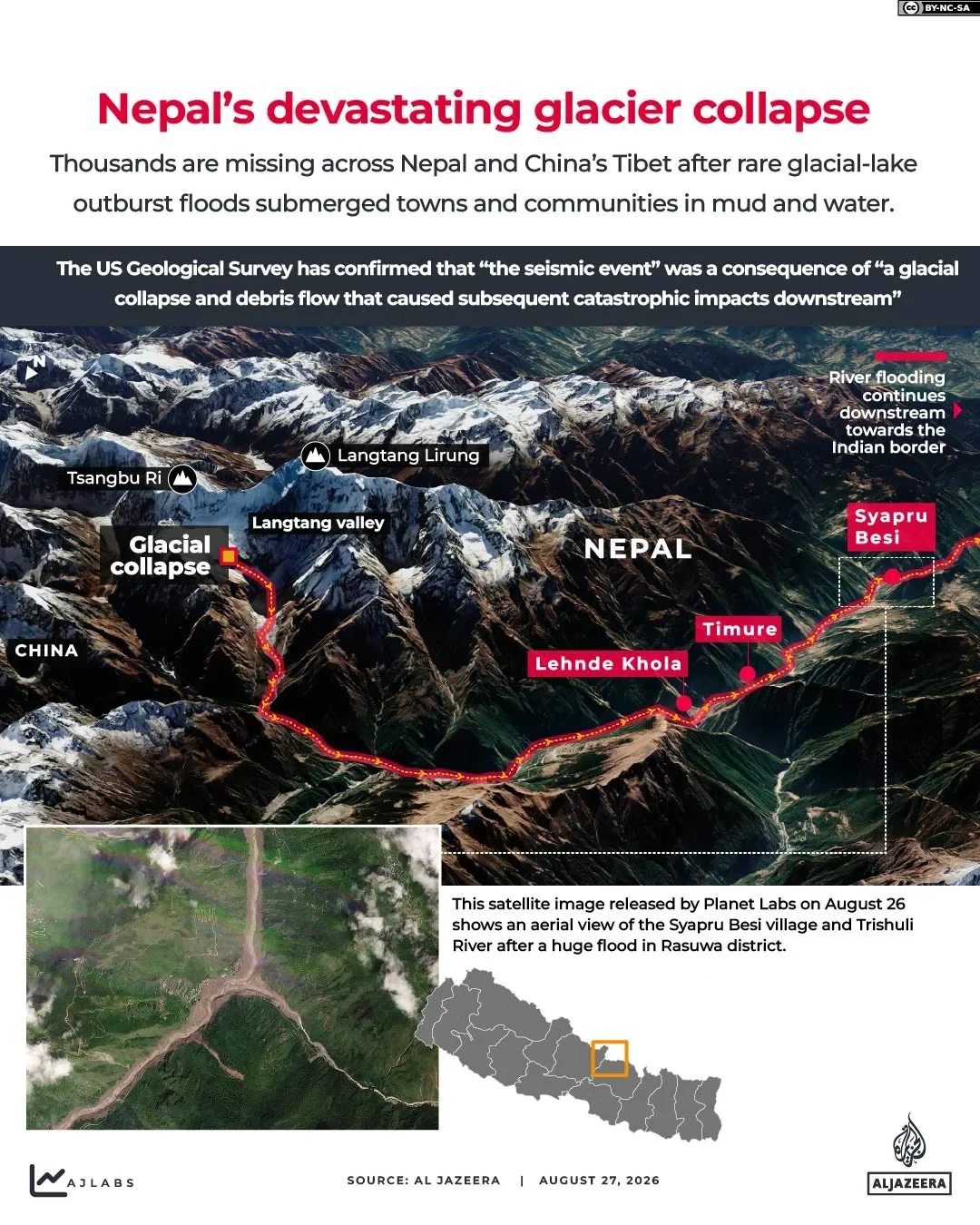
Infographic: Al Jazeera/AJ Labs, satellite imagery by Planet Labs, August 27, 2026. This satellite image and map, released by Planet Labs and published by Al Jazeera on August 27, 2026, shows the glacial collapse near Langtang Lirung and the flood path down the Lhende Khola through affected settlements including Timure and Syapru Besi.
The Bhote Koshi and the Vulnerability of Border Communities
The Bhote Koshi River originates in Tibet near the Nepal-China border. It flows through the Rasuwa district, passes through Nuwakot, and eventually joins the Trishuli River. These are ancient water corridors, and the communities that live along them have survived for generations by understanding the mountains and the water that carves through them.
But understanding an old pattern doesn't protect you from a new extreme.
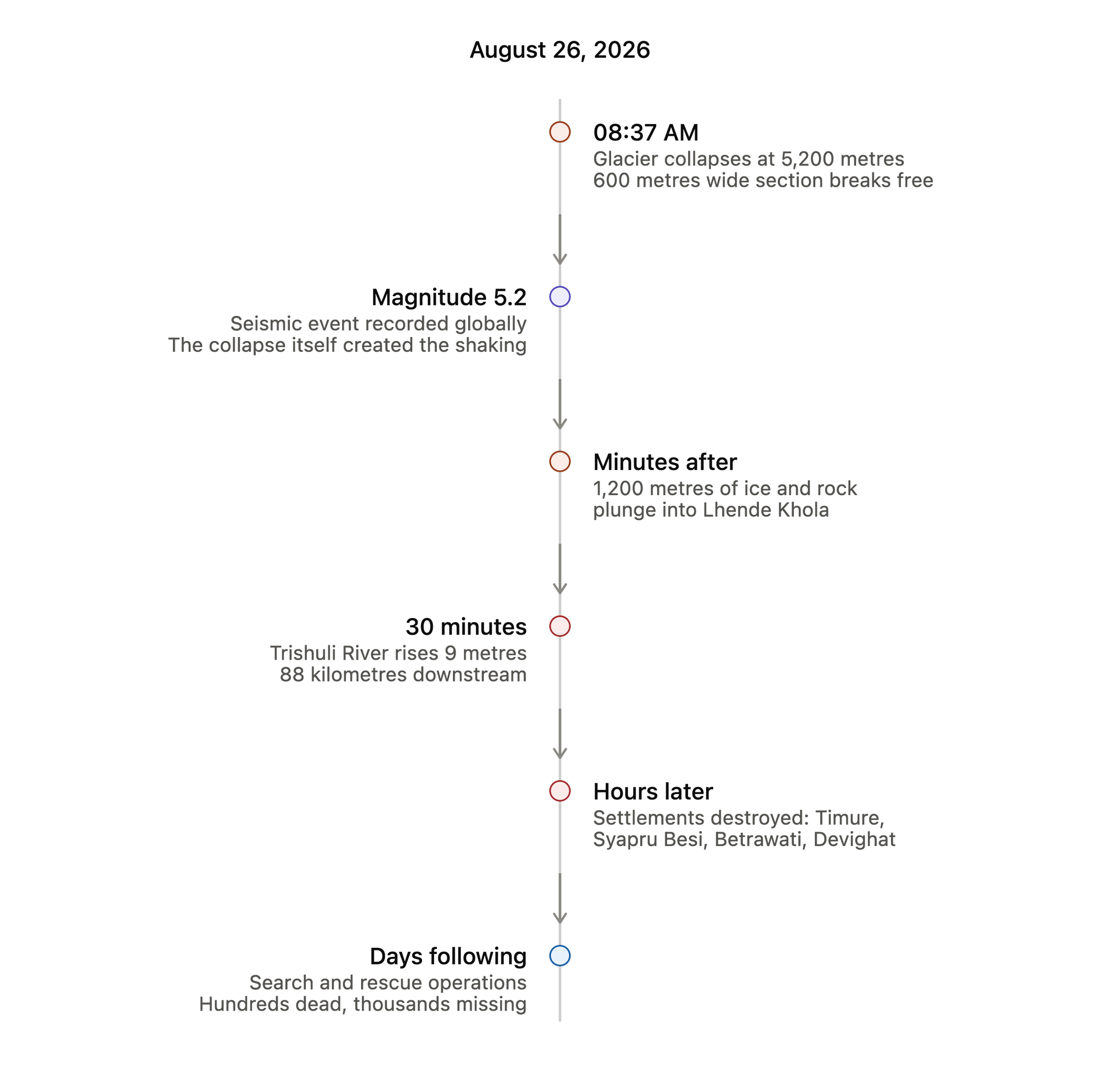
What happened on August 26 was not a typical monsoon flood. High in the mountains near the Nepal-China border, at an elevation of approximately 5,200 metres on the Langtang Himal, a section of glacier roughly 600 metres wide sheared free from the bedrock. The collapse itself registered as a magnitude 5.2 seismic event, so massive that seismometers recorded it across the globe. Nearly 1,200 metres of ice and rock plummeted into the valley below, entering the Lhende Khola and then racing into the Bhote Koshi and Trishuli river systems at catastrophic speed. The Trishuli River rose by as much as 9 metres in approximately 30 minutes in some areas, with a wall of water, ice, rock, sediment and debris sweeping everything downstream.
The settlements of Timure, Syabrubesi, and Trishuli Bazaar were in the path. Tea houses that have welcomed trekkers for years were swept away along with the bridges that connected communities and the road infrastructure that linked these isolated communities to the rest of Nepal.
This is what geography and climate change combine to create. The mountains that make Nepal extraordinary are also the mountains that can kill you.
Infrastructure: The Invisible Problem in Rasuwa and Nuwakot
Most people don't think about infrastructure when they hear about a disaster in a remote area. They should. The infrastructure holding those communities together is fragile, and when it fails, there's no backup plan.
Rasuwa and Nuwakot are border districts. They're not major trekking regions like the Khumbu or the Annapurna Circuit. They're transit areas, places where trade happens between Nepal and China, where pilgrims pass on their way to sacred sites. The communities there are smaller, more isolated, with fewer resources than the trekking hubs that get international attention.
A bridge in Rasuwa doesn't get rebuilt after a disaster because there's a budget for it. It gets rebuilt because local communities, sometimes with help from NGOs or government aid if they're lucky, figure out how to do it themselves. The road infrastructure that connects these isolated communities to the rest of Nepal is minimal. Supply chains are precarious. Medical help is hours away.
When the Bhote Koshi flood destroyed the roads and bridges, entire communities were cut off with no way in or out except on foot, and the terrain was too dangerous for that.
This is the infrastructure reality that underlies life in these border communities. And when disaster strikes, this is what makes the impact so catastrophic.
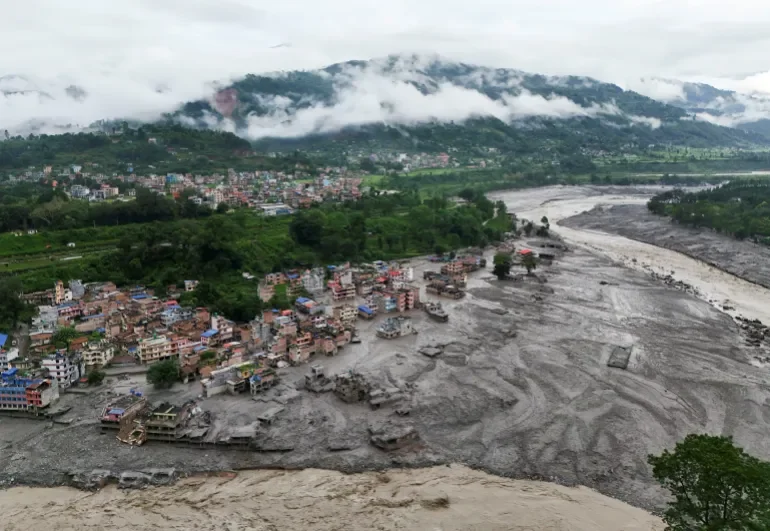
Aerial view of Devighat in Nepal's Nuwakot district after the August 26 flood. The Trishuli River, swollen with mud and sediment, carved through the settlement, destroying homes and infrastructure. The gray-brown floodwaters show the scale of the debris-laden surge that swept downstream.
Attribution: Photo: Navesh Chitrakar/Reuters, August 27, 2026
The Human Cost: Beyond the Headlines
When you see the news reports of flooding in Nepal, you see numbers. Fifty dead. A hundred missing. Entire villages cut off. You read it, feel something for a moment, and then the news cycle moves on. So do you.
But those numbers represent real people. They represent guides I've worked with, porters who have carried your bag and told you about their families, tea house owners who made you dal bhat for dinner and remembered exactly how you liked it.
I have friends in Nepal, guides I've worked with, people whose expertise and kindness made a real difference in the experience of the people I've led and who have become family. When the floods come, they're still there. Their families are still there. Their villages are still there. The question isn't whether they'll survive, because mountain communities have survived for centuries. The question is what they'll survive with, and how many times they can do this before something breaks.
These aren't abstract problems for abstract people. They're real people dealing with real crisis. And if you've trekked in Nepal, if you've sat in a tea house and eaten dal bhat and listened to your guide's stories, then you know these people matter.
What Resilience Actually Looks Like
There's a word that gets used a lot when people talk about Nepal: resilience. Nepali people are resilient, Nepali communities are resilient. It's said with admiration, and it's true. Mountain communities have faced challenges for centuries and found ways to adapt, to rebuild, to keep going.
Resilience doesn't mean you don't need help or don't deserve support. It means you keep going even when things are hard, and the people of Nepal do that with extraordinary grace and strength. But that shouldn't mean we expect them to handle repeated disasters alone.
The guides and porters who make trekking possible are not superhuman. They're human beings dealing with the same fears, the same grief, the same logistical nightmares that anyone would face when a monsoon washes away their livelihood. They show up because they're committed, because they love the mountains, because they have families to support. But they also deserve to have communities, economies, and governments that give them a fighting chance.
Resilience in the face of repeated crisis is not something to celebrate. It's something to support. Because resilience is what you do when the alternative is giving up, and nobody should have to choose that over and over again.
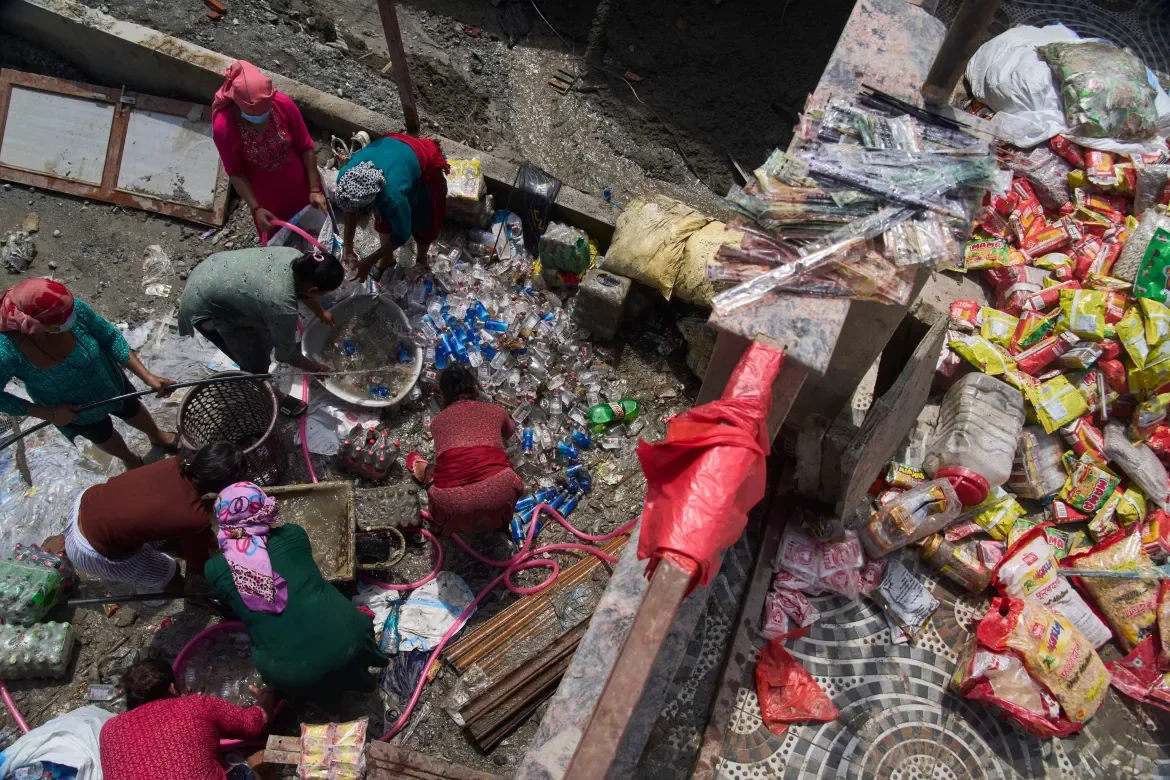
People salvage goods from a grocery store damaged by flash floods in the Dhading district.
Attribution: Niranjan Shrestha/AP Photo, August 2026
The Guides and Porters: Real People With Real Lives
The guides and porters who work on treks across Nepal carry loads, help set up camp, tell jokes that make everyone laugh even when the altitude has people struggling. They're warm, reliable, and extremely good at what they do. Many of them have families at home, children being born while they're away working, wives managing households and newborns while earning depends on the trek season continuing.
This is what trekkers sometimes overlook: real lives continuing back in the village while you're trekking, real families waiting at home, real calculations of whether the money earned on the trek is worth the months away.
The guides and porters who work on the major trekking routes like Everest or Annapurna Base Camps are unaffected by the Bhote Koshi disaster. They're safe. But their country is not. And that matters.
When disasters hit Nepal, they don't just affect the people in the immediate disaster zone. They affect the entire economy, the entire system of work and opportunity that communities depend on. They affect the headlines that scare people away. They affect confidence in safety. They affect income in regions that weren't even touched by the flood.
This is why understanding what happened in Rasuwa and Nuwakot matters, even if you're planning to trek in the Khumbu (Everest) or the Annapurna regions. It matters because the community you meet on the trail depends on Nepal being safe, stable, and economically viable. And right now, Nepal is dealing with a significant disaster that will have ripple effects far beyond the immediate affected regions.
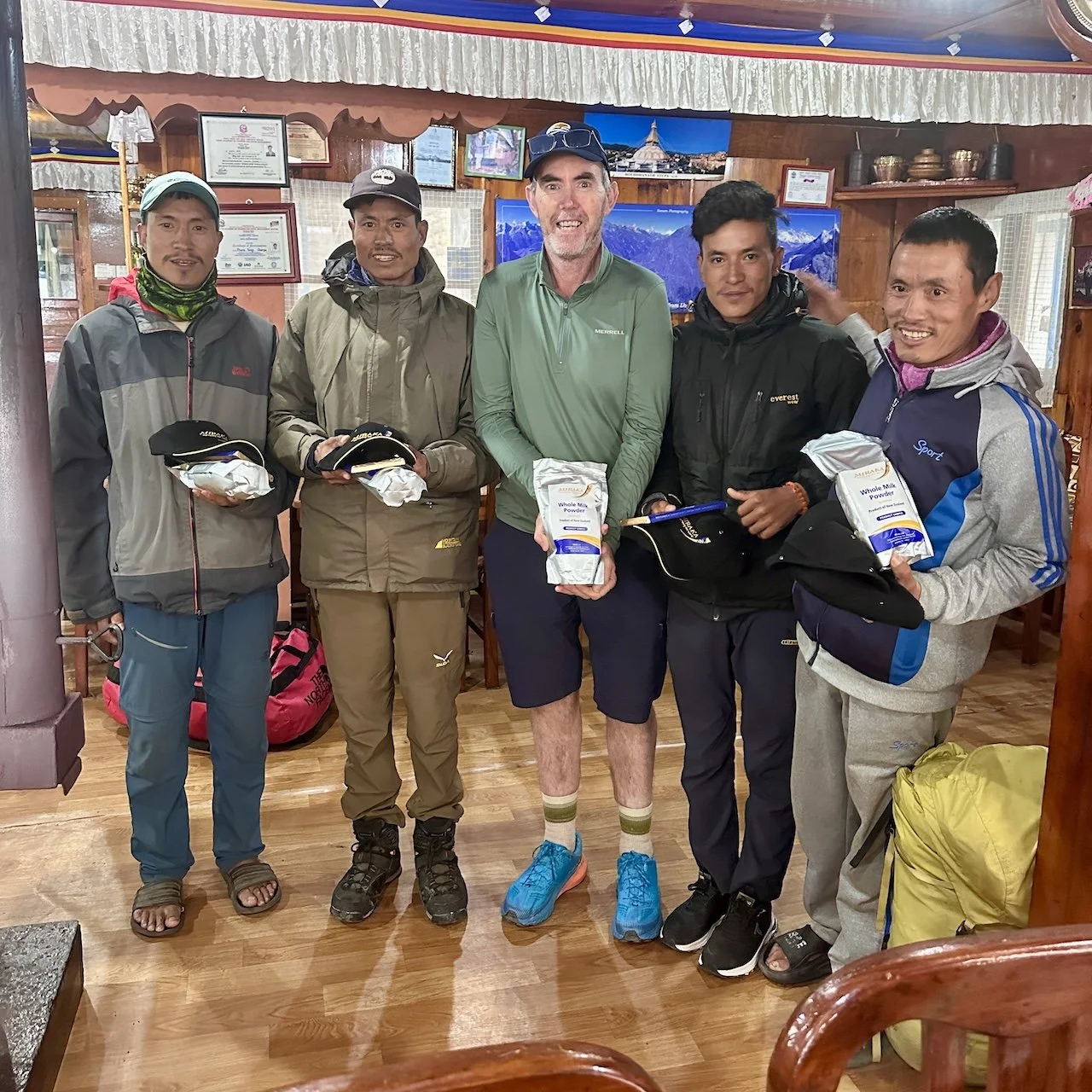
Andrew with the team in Lukla. Pradip, Phurtenji, Prashant and Bhakta. These are the people who make the trek possible, who know the mountains, who carry the loads, who tell the jokes, who keep you moving when the altitude hits hard. They're also the people whose income depends on Nepal being safe and the trekking season continuing.
The Economics of Crisis and Recovery
Natural disasters in Nepal create cascading economic impacts that most people don't understand. When a monsoon washes out a bridge, it's not just the bridge that's lost. It's the tea houses that can't get supplies, the guides who can't work because the trails are closed, the porters who don't earn money that month, and the families who depend on that income for everything from school fees to food to medical care.
In developed countries, disaster recovery is a government function, more or less. Insurance, infrastructure budgets, aid programs. In Nepal, disaster recovery is a community function, people pool resources, work together, figure it out. And they do. But the time it takes, the energy it takes, the opportunity cost is enormous.
A guide might lose two months of work because of a landslide, that’s two months of income. For someone living on the margins, that's not an inconvenience, that’s a crisis. That might be the difference between a child going to school or not. Between a medical emergency becoming a death. Between staying afloat or falling into debt.
This is why supporting Nepal during disaster isn't charity. It's recognising that the systems that allow trekking tourism to happen are fragile, and the people who make trekking possible are even more fragile when crisis strikes.
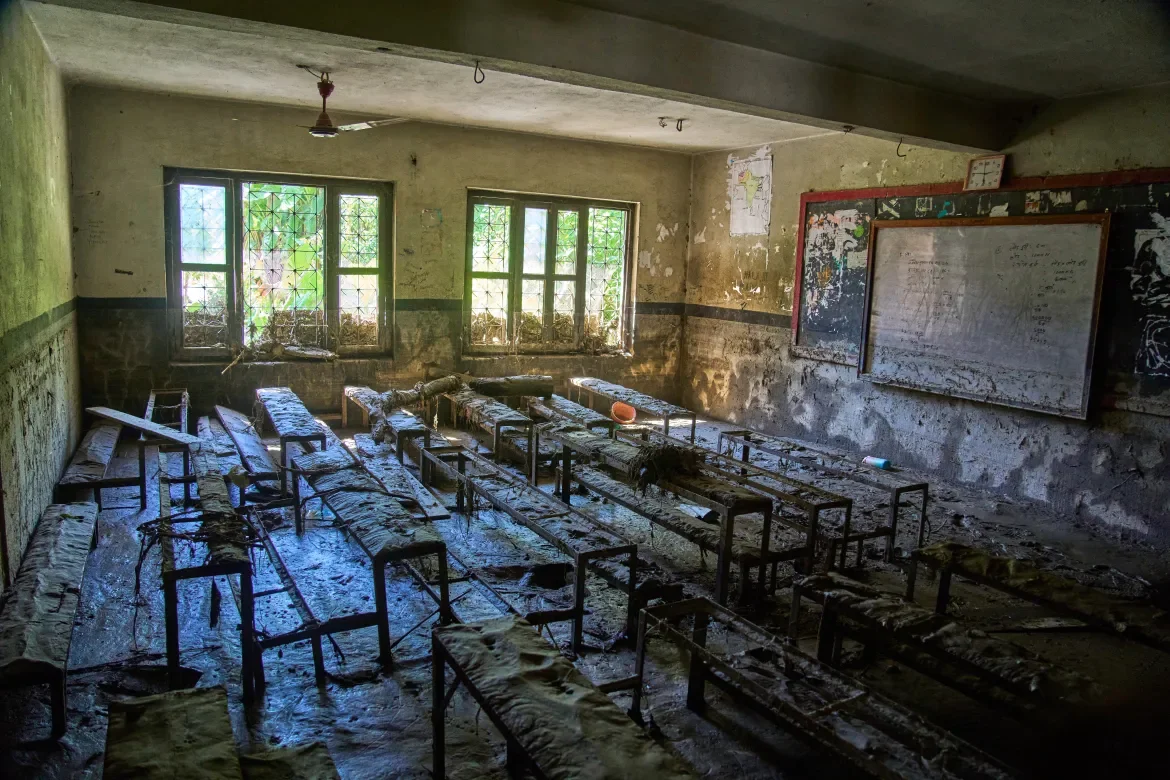
A classroom in Rasuwa district, Nepal, abandoned after the August 26 flood. Mud and sediment cover the floor, desks are overturned, and walls are stained with floodwaters. Schools, along with homes, bridges, and infrastructure, were destroyed across the affected districts.
Attribution: Niranjan Shrestha/AP Photo, August 2026
Why Tourism Isn't Enough
Trekking tourism has brought money to Nepal, created opportunities, supported communities, funded schools and medical clinics. That's real and important. But tourism is seasonal, dependent on safety and stability, vulnerable to global events, climate change, and natural disasters. When the monsoon washes out the trails, tourism stops, and when tourism stops, the money stops with it.
This is why relying solely on tourism to support mountain communities is a fragile strategy. It's why the communities that have thrived are the ones that have diversified, that have built infrastructure, that have invested in education and opportunity beyond hiking.
But that investment takes money, and most mountain communities in Nepal don't have it. They have the labour, they have the knowledge, they have the resilience. What they lack are resources.
When you trek in Nepal and you stay in a tea house and you eat dal bhat and you listen to your guide's stories, you're participating in a system that depends on the willingness of these communities to welcome you, to share their mountains, to make your experience possible. That's generous and it's beautiful but it's not enough to sustain them through repeated disasters.
What Actually Helps
From years of visiting Nepal and thinking about how to actually support the communities and people I care about, a few things matter. One-time donations matter, but they're not the whole answer. After a disaster, yes, emergency aid is critical, but what matters long-term is sustained support for infrastructure, for diversification, for opportunity. Relationships matter more than transactions. When trekkers see guides and porters as people, when they stay in touch, when they remember their names and ask about their families, that creates accountability and connection that goes beyond money.
Employment matters. Trekking jobs are often the best-paying work available in mountain communities. Supporting trekking tourism, doing it responsibly, paying porters and guides well, treating them with respect, is a form of support.
Giving guides and porters agency matters. They're not helpless. They're not victims. They're people dealing with difficult circumstances with extraordinary strength. Supporting them means listening to what they need, respecting their expertise, and letting them lead in their own recovery.
And yes, sometimes direct support matters. Sometimes fundraising for specific projects, specific villages, specific needs, is exactly what's required.
Muddy floodwater surges past houses along the Trishuli River in Betrawati in Nepal's Nuwakot district.
Attribution: Prabin Ranabhat/AFP, August 2026
The People I Know Are Still There
When the news reports fade and the world moves on, the guides and porters are still there. The communities are still there. The mountains are still there.
And when the next trekking season comes around, they'll be ready. They'll repair the bridges and clear the trails and prepare the tea houses. They'll welcome new groups of trekkers with warmth and hospitality and the kind of care that makes Nepal special.
That's resilience. And it's extraordinary. But it shouldn't have to be.
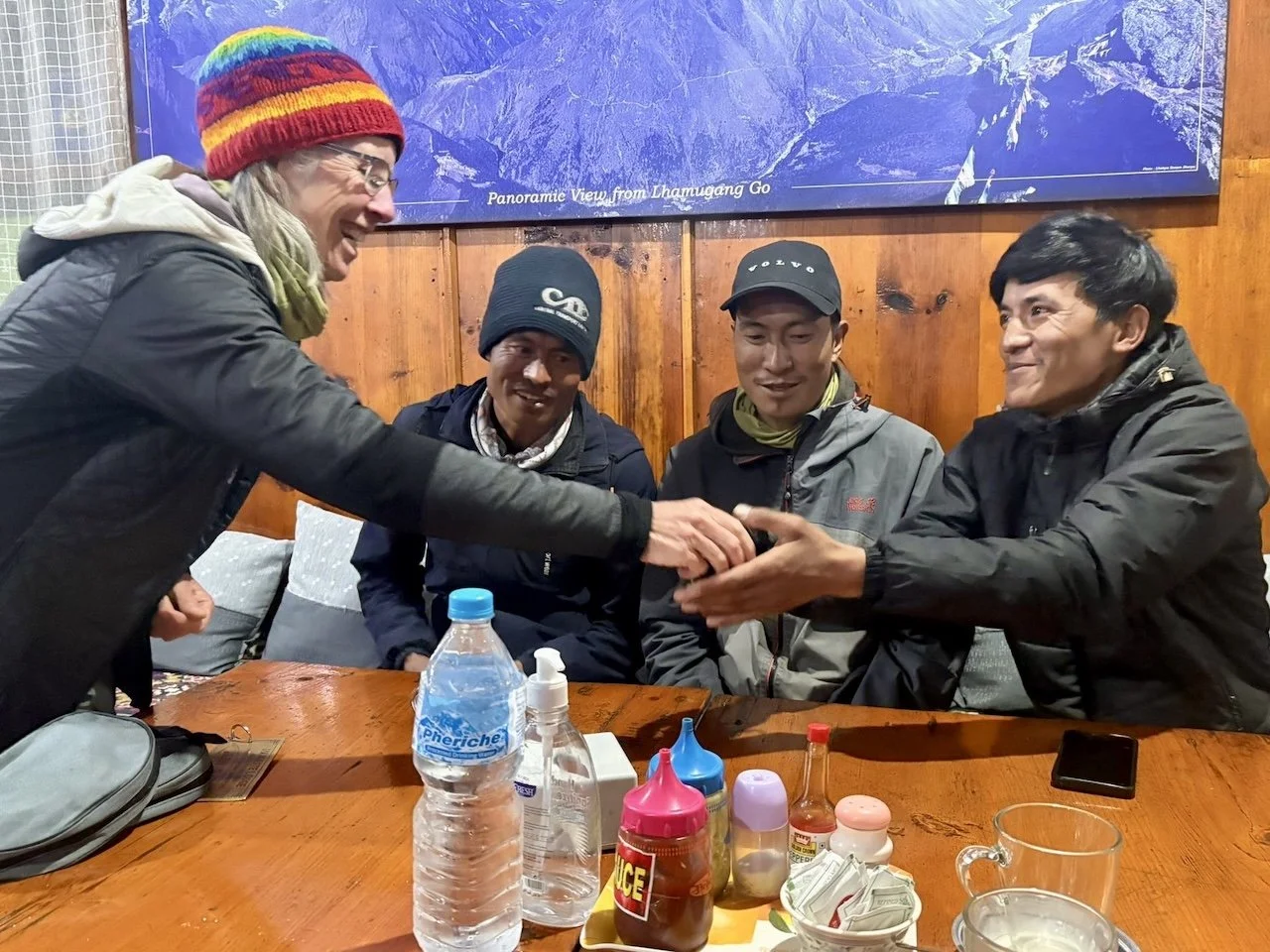
Happier days on the trail. Sharon with porters Purtenji, Pradip and Prashant at Lukla, on the way back from Everest Base Camp. These are the relationships that make trekking in Nepal possible, and the people whose livelihoods depend on the mountains staying safe and accessible.
What You Can Do
If you've trekked in Nepal, if you have a guide or porter whose name you remember, reach out. Check in. Ask how they're doing. Ask if their family is okay. Ask what they need. These are human connections that matter.
If you're thinking about trekking in Nepal, do it responsibly. Work with operators who pay guides and porters well, who treat them with respect, who invest in the communities they work in. Your money matters. Choose where it goes.
If you want to support Nepal more directly, there are organisations doing good work. Some are focused on education, some on infrastructure, some on disaster relief. Research, find ones that align with your values, give if you're able.
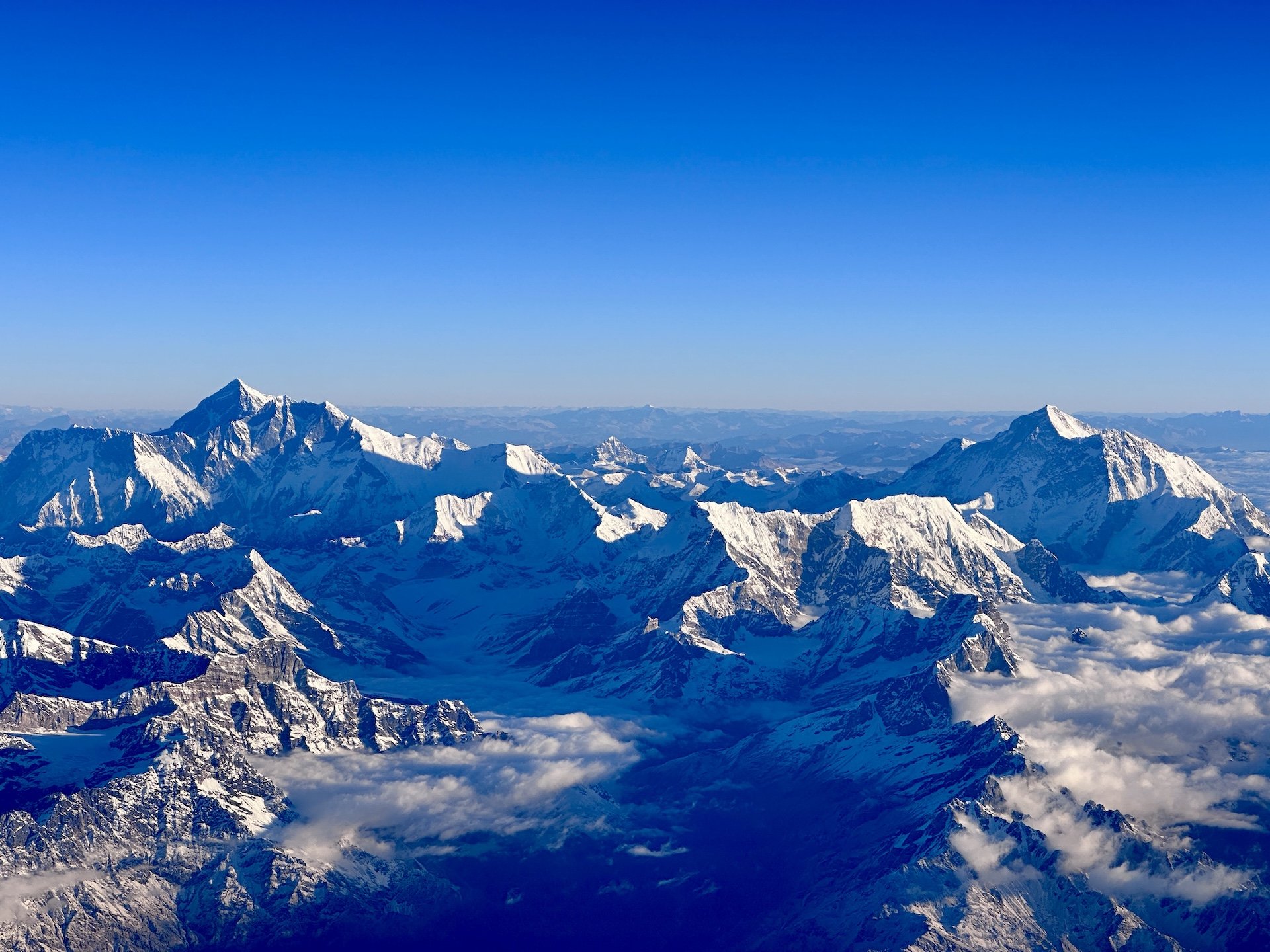
Sagarmatha from the air. Mount Everest rises at centre, surrounded by the peaks and valleys of the high Himalayas. This is the landscape that draws trekkers from around the world, and where the guides and porters who make those treks possible live and work.
The Mountains Endure
The Himalayas have been there for millions of years. They'll be there for millions more. The monsoons will come and the glaciers will melt and the valleys will flood. And the communities that live in those mountains will adapt and rebuild and keep going, because they always do.
But they don't have to do it alone. And they deserve better than to face repeated crisis with only their resilience to sustain them.
That's what it means to care about Nepal. Not just the mountains, not just the trek, not just the experience. The people. The guides. The communities. The families. The tea house owner who makes dal bhat. The porter who carries your bag and tells you stories.
They're not abstract. They're real. And they matter.
— Sharon ⭐️
Update:
Narayan Baniya, a guide with Himalayan Recreation Treks & Expedition and a friend of ours for many years, was on the Kailash Mansarovar route through Rasuwa when this disaster struck on August 26. He remains missing. He leaves behind his wife and six-year-old daughter. If you'd like to help support them, we've set up a fundraiser here 💜
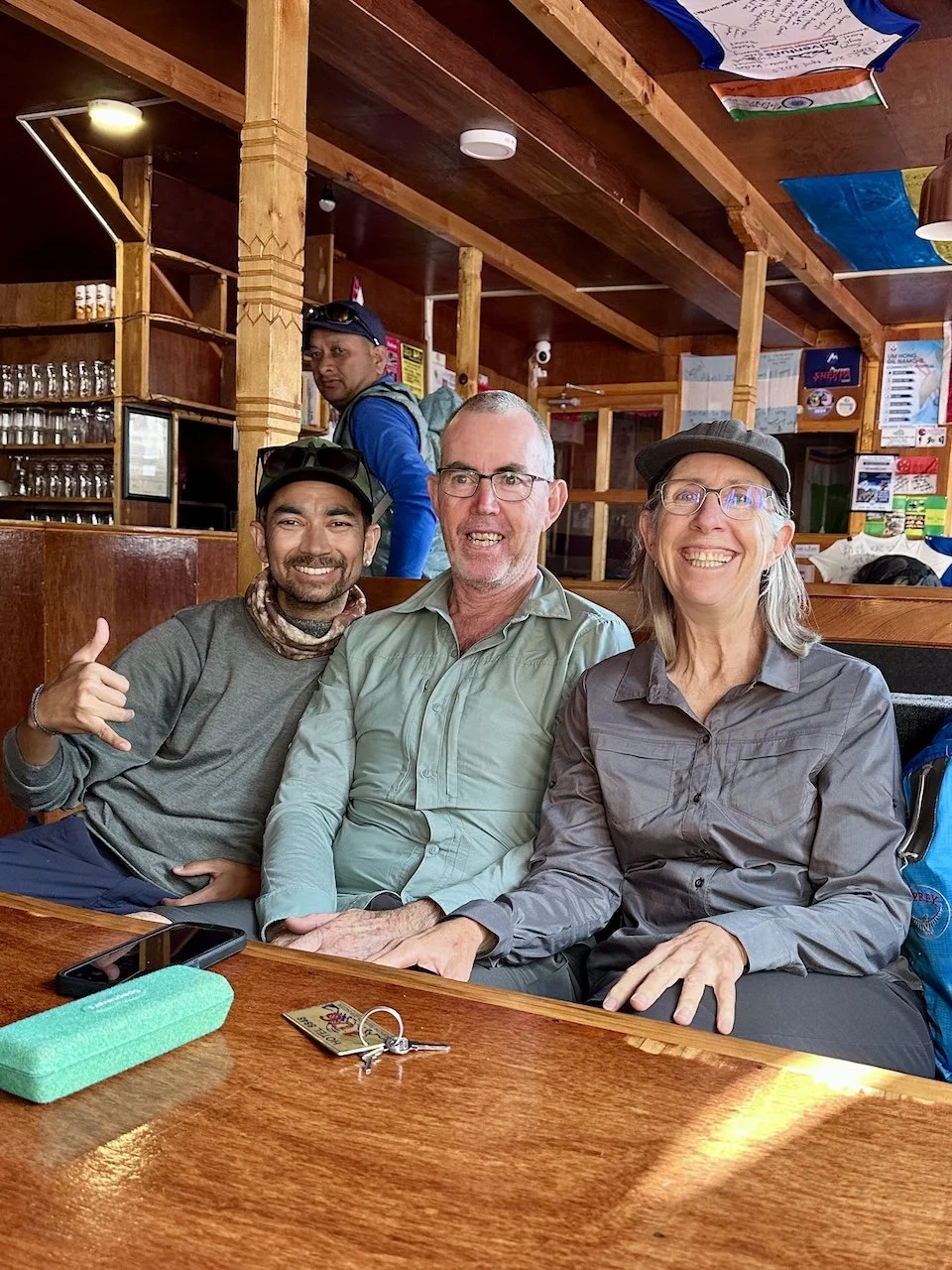
Narayan Baniya, Andrew and Sharon with Ram Simkhada behind. Namche Bazaar, Everest Base Camp Trek
Bishnu Thapa, Narayan Baniya and Sharon Evans in Kathmandu. After the disaster on 26 August, 2026, Narayan remains mission
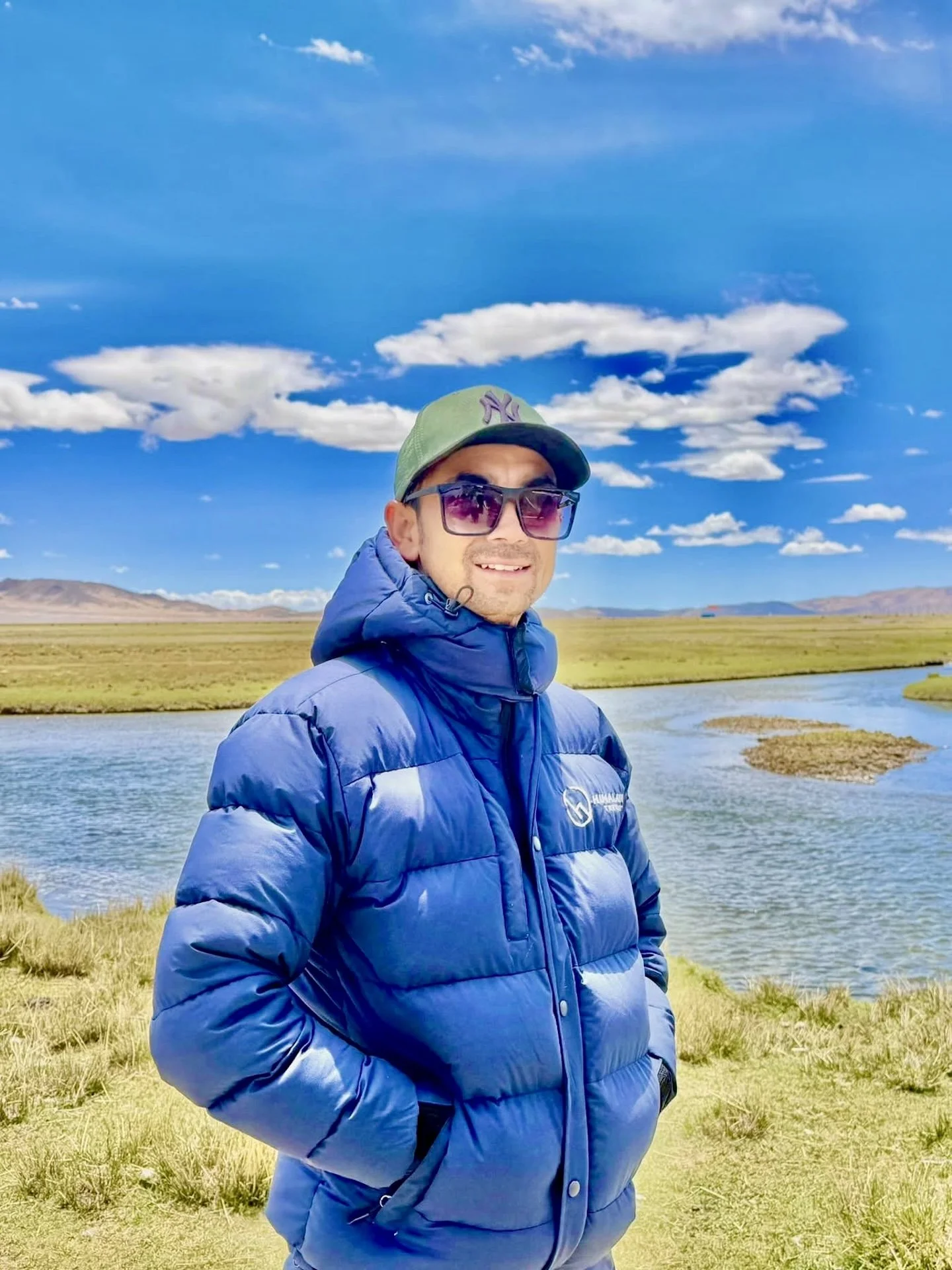
Narayan Baniya in Tibet, just days before disaster struck.
If you'd like to help support Narayan’s family, we've set up a fundraiser here 💜