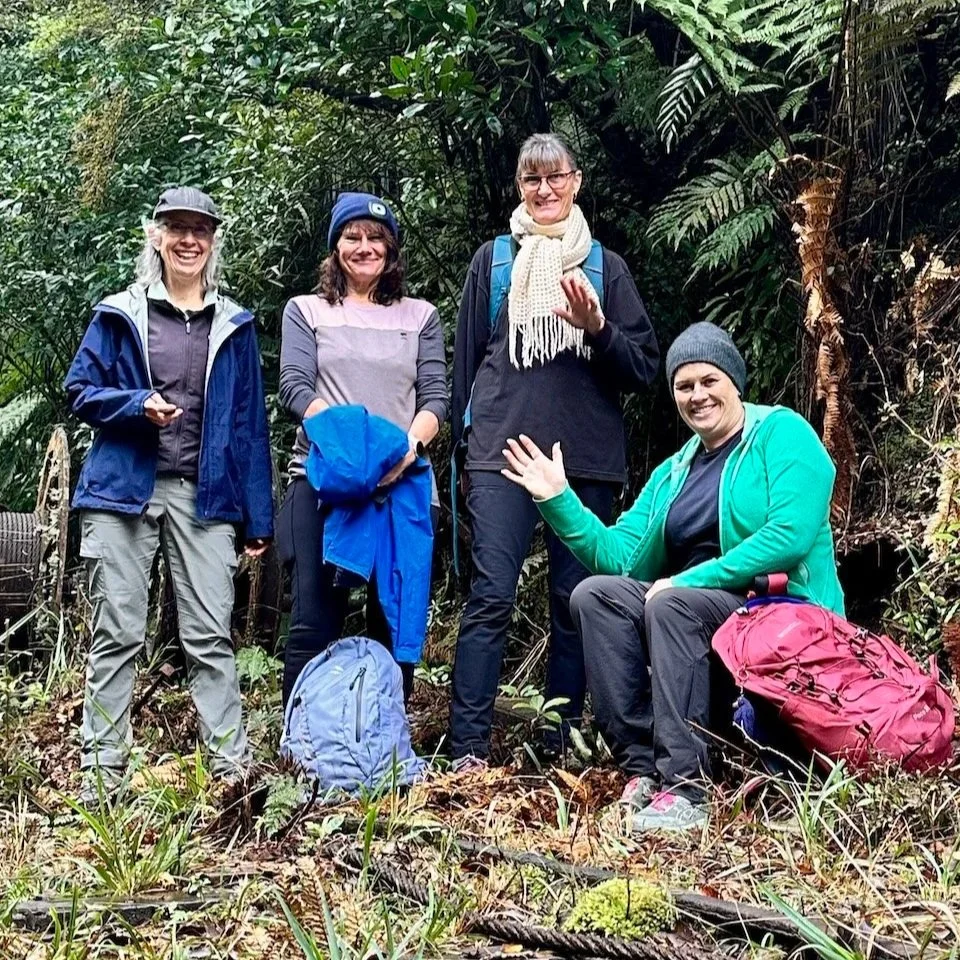
Sharon, Karen, Carlene and Lietta, Waiorongomai Valley, June 2026
Every walk teaches you something. This one taught me that gold miners were tougher than any of us, that a broken gas bottle is character building, and that sometimes the best thing you can do after six hours in the bush is lower yourself into a hot pool and stay there.
The Freewheeling Kiwi Reset and Recharge Walk returned in June, taking us into the Waiorongomai Valley near Te Aroha on a winter Sunday. The Matariki season had just begun and it felt like exactly the right place to be ✨
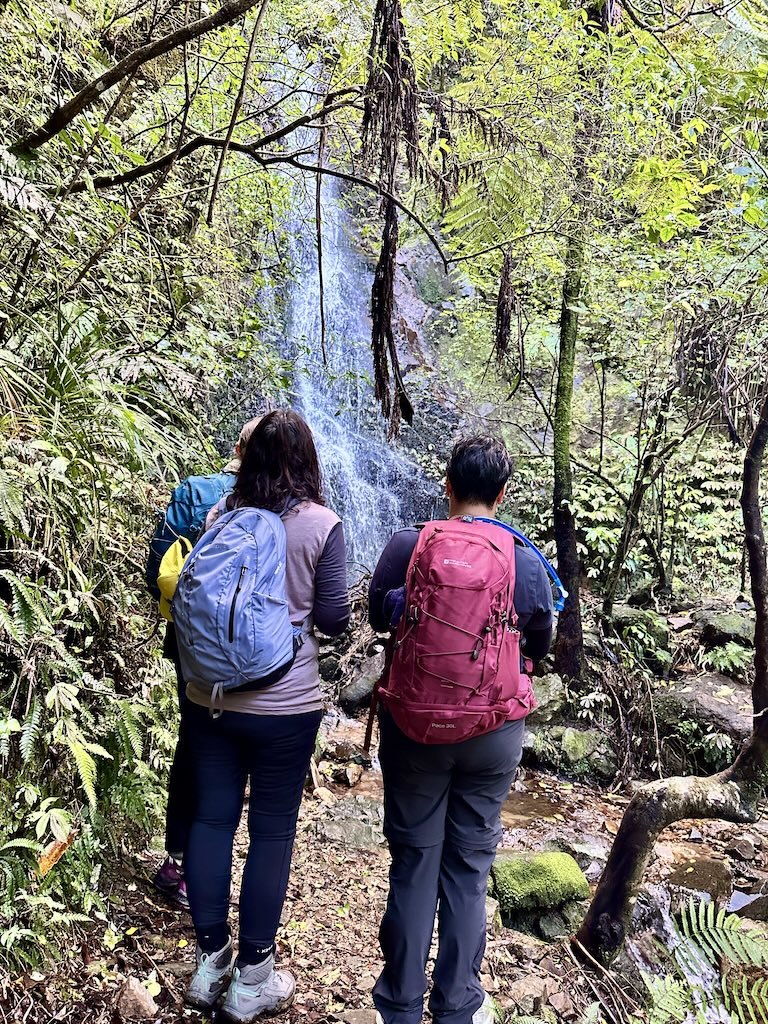
Stopping for one of the many waterfalls, Waiorongomai Valley
The Valley
Most people who live in the Waikato have driven past the turnoff to Waiorongomai without ever stopping. Two of the group admitted as much on the day and what the valley reveals only to those who walk into it is that this place has layers, and they run deep.
The trail follows the route of one of New Zealand's oldest bush tramways, built in the 1880s to carry gold ore down from the mines above. Tunnels cut through solid rock and rusting machinery sits where it was left, slowly being reclaimed by fern and moss. A swingbridge leads you into the dark of a tunnel and out the other side, blinking, into the forest again. It is not what anyone expected and that is what made it so good.
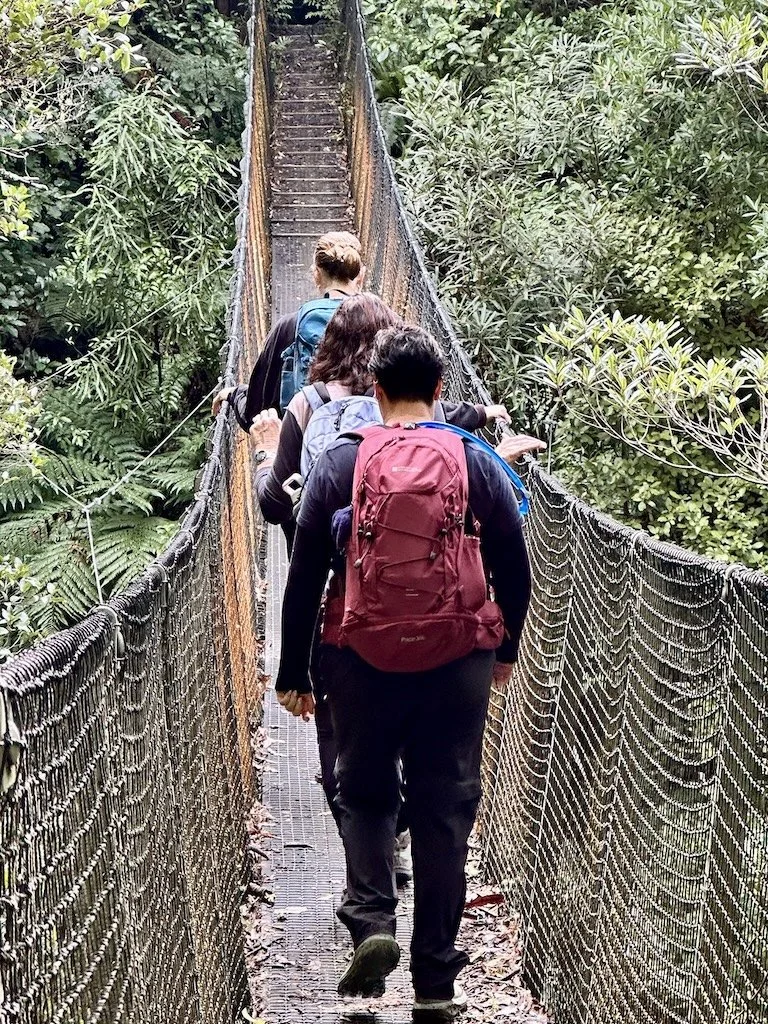
Crossing the swingbridge, Waiorongomai Valley
What We Noticed
Waiorongomai in winter is alive in the way that only wet native bush can be, with waterfalls threading through mossy rock faces and spilling across the track, ferns so green they seem to generate their own light, and the sound of water constant and underneath everything the whole day long.
We walked without hurry, stopping often, drawn in by the relics half-hidden in the undergrowth and the moments when the valley opened up and reminded us how small we were in the best possible way.
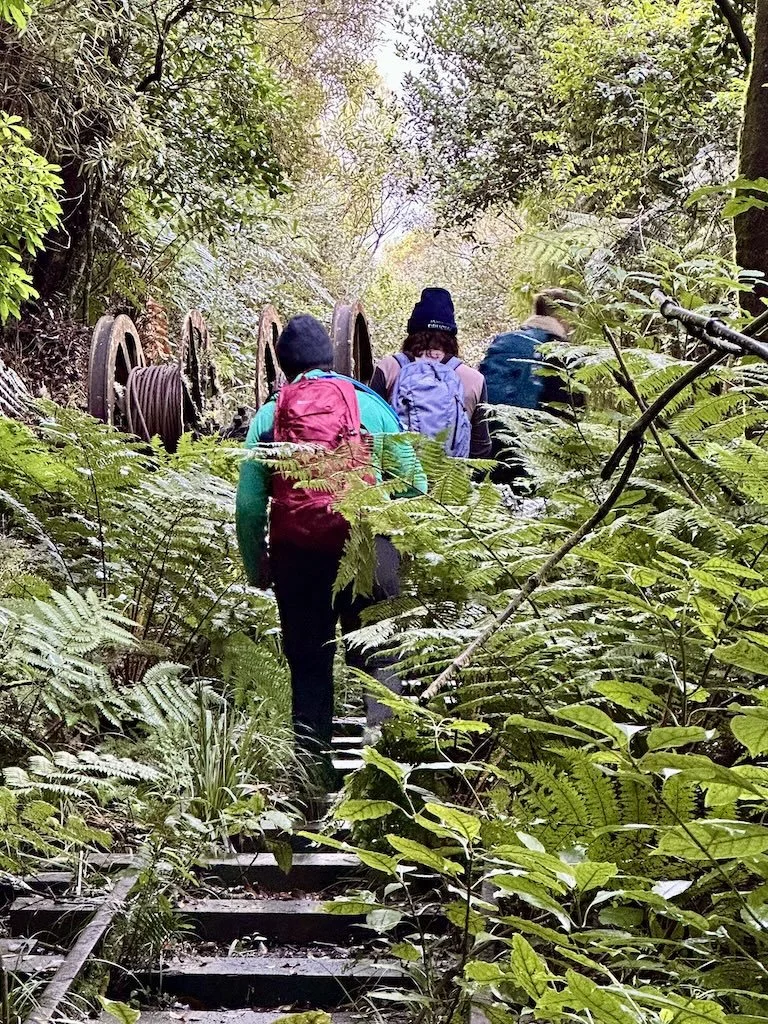
Reaching the winch at the top of the May Queen Incline, Waiorongomai Valley
What strikes me every time I walk with a group in nature is how quickly something shifts. The bush creates its own kind of permission — to be quiet, or to talk, or to simply exist without agenda.
People arrive with whatever they are carrying that week and somewhere along the track they set it down, without even noticing they've done it. Conversations happen out here that wouldn't happen anywhere else, shared in the particular trust that builds between people moving through wild places together, and they belong to the people who had them.
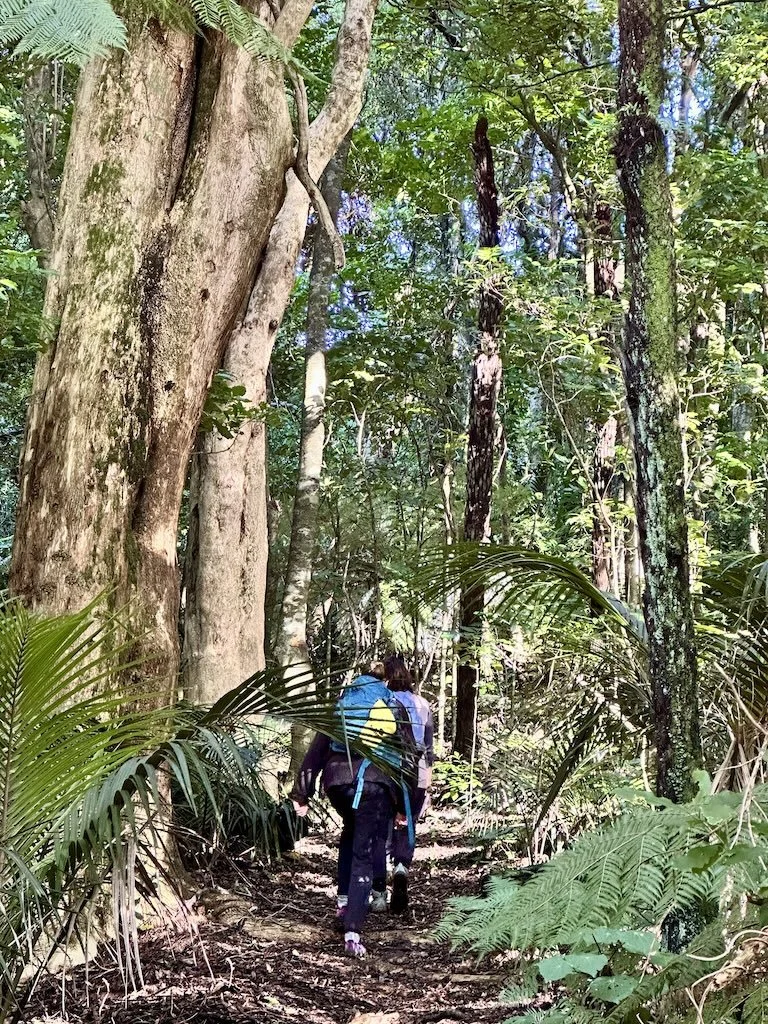
Into the forest on the Cadman Track, Waiorongomai Valley
Butler's Incline
The track climbs steeply up Butler's Incline, the old tramway gradient that once carried ore-laden skips down from the mines above. On the way up, one of the group asked whether I was afraid walking out here on my own. It is a question I appreciate the honesty of.
The short answer is no, and the longer answer involves a Road ID on my wrist, a PLB in my pack, a Garmin, an iPhone set up for emergency SOS, and a partner who always knows where I am. Preparation is what makes confidence possible, and being in a group that day seemed to open up a conversation about that confidence in a way I found genuinely moving.
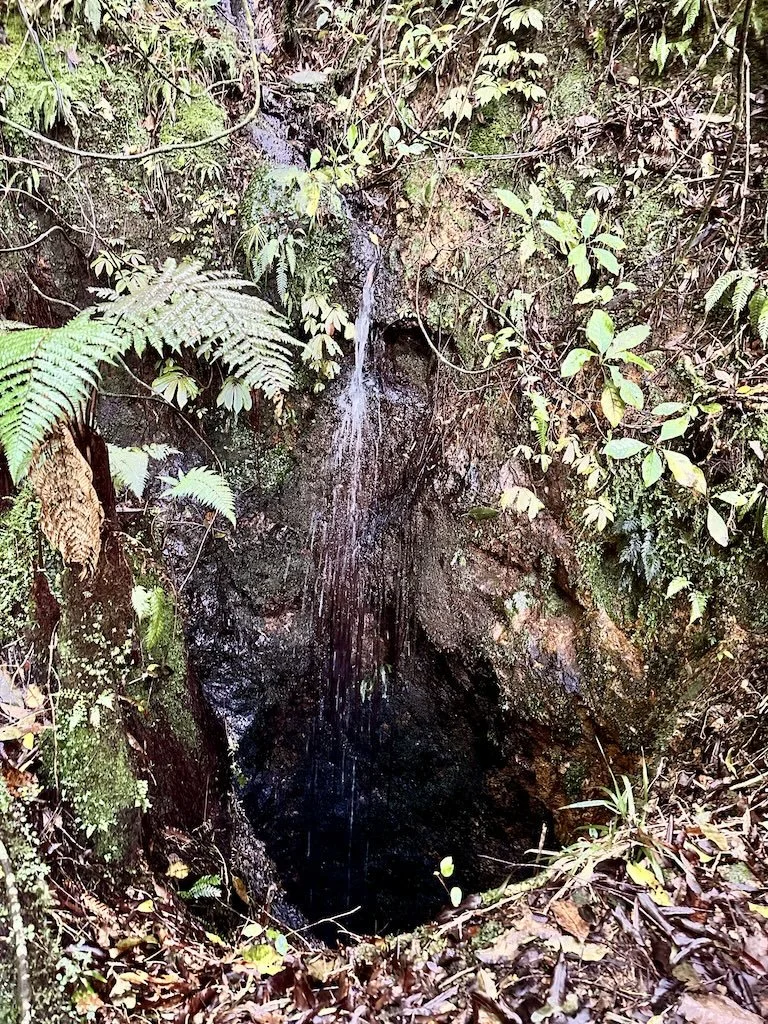
One of many gold mine shafts hidden along the trail, Waiorongomai Valley
We stopped at the Butler's Headframe for an early lunch, settling in under that weathered structure with its view across the valley, digging food out of our day packs and talking about the history of the place.
Who were these men? What drove them up here, into the cold and the dark, in search of gold? The machinery scattered through the bush suddenly felt less like relics and more like a story still being told.
From there the track continued up to the top of the May Queen Incline and beyond, leading us over the swingbridge and through the tunnel, emerging blinking into the forest on the other side. That moment, stepping out of the dark and back into the light, was one of those quiet surprises that stays with you long after the day is done.
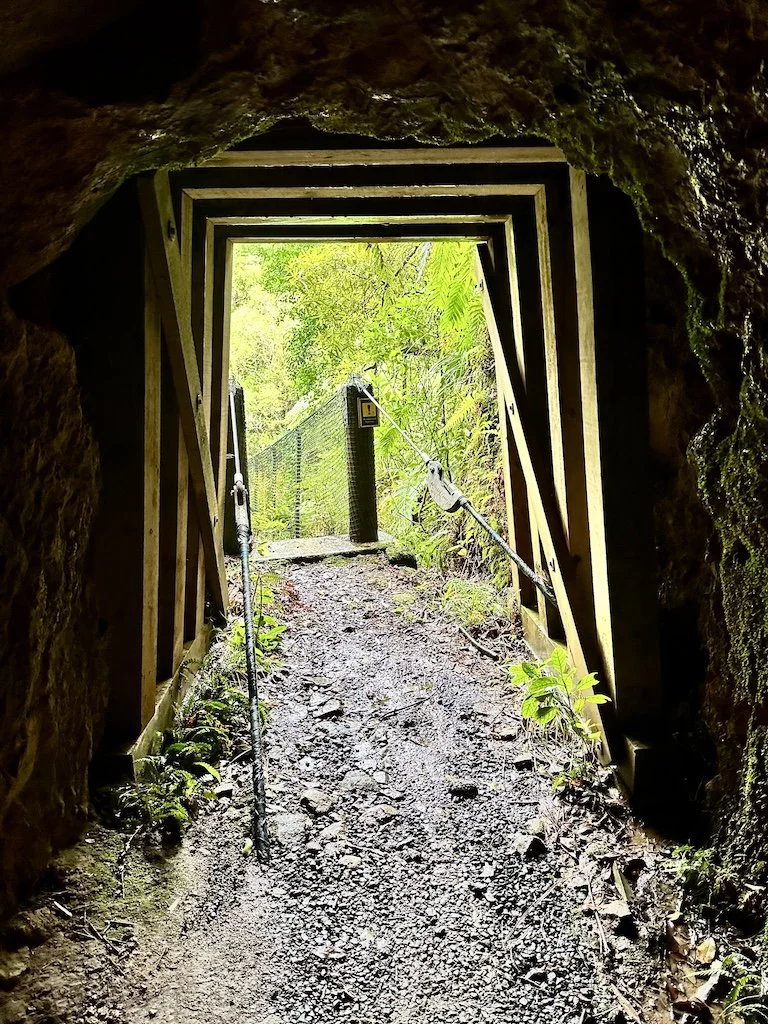
Light at the end of the tunnel, Waiorongomai Valley
The Billy (or the Attempt)
Back at the carpark, I had planned to finish the day with a billy of tea but the gas bottle had other ideas. It refused to connect properly and, with a faint hiss that suggested it wasn't worth pushing, we abandoned the plan gracefully and laughed about it instead. Sometimes the bush writes the script, and a walk that ends in laughter is never a bad walk.
A couple of us retreated to the Te Aroha hot pools afterwards, lowering ourselves into warm mineral water as the afternoon light faded. After six hours in the winter bush, there are worse ways to finish a Sunday.
What They Said
“The waterfalls and the swingbridge leading into the tunnel were such a surprise. I really felt like I had achieved something and would happily do those tracks again”
“Walking freely without having to worry about direction was the highlight for me. The pace was great and Sharon was very knowledgeable about the track and its surroundings.”
“I learned to trust that by taking time out for myself, I can do more for myself and others when I get back. I recommend Sharon’s walks all the time!”
There's a particular kind of quiet that settles over a group standing above a lake nobody's spoken about yet. That was Rotongata, sun on the water, no one in any hurry to say something.
The July Reset and Recharge Walk took us into the Ōkataina Trails near Rotorua, through towering kahikatea, twin crater lakes, and a 10 metre waterfall called Te Auheke — tumbling water.
This is the story of that day.