Building Our Off-Grid Cabin at Shambhala
There is something deeply satisfying about creating a shelter in the middle of the bush. Not simply building a structure, but slowly shaping a place that feels connected to the landscape around it. At Shambhala, our off-grid block in the Coromandel bush, the cabin has emerged piece by piece from a clearing surrounded by native forest, birdsong, and the constant reminders that this land is shared with wildlife.
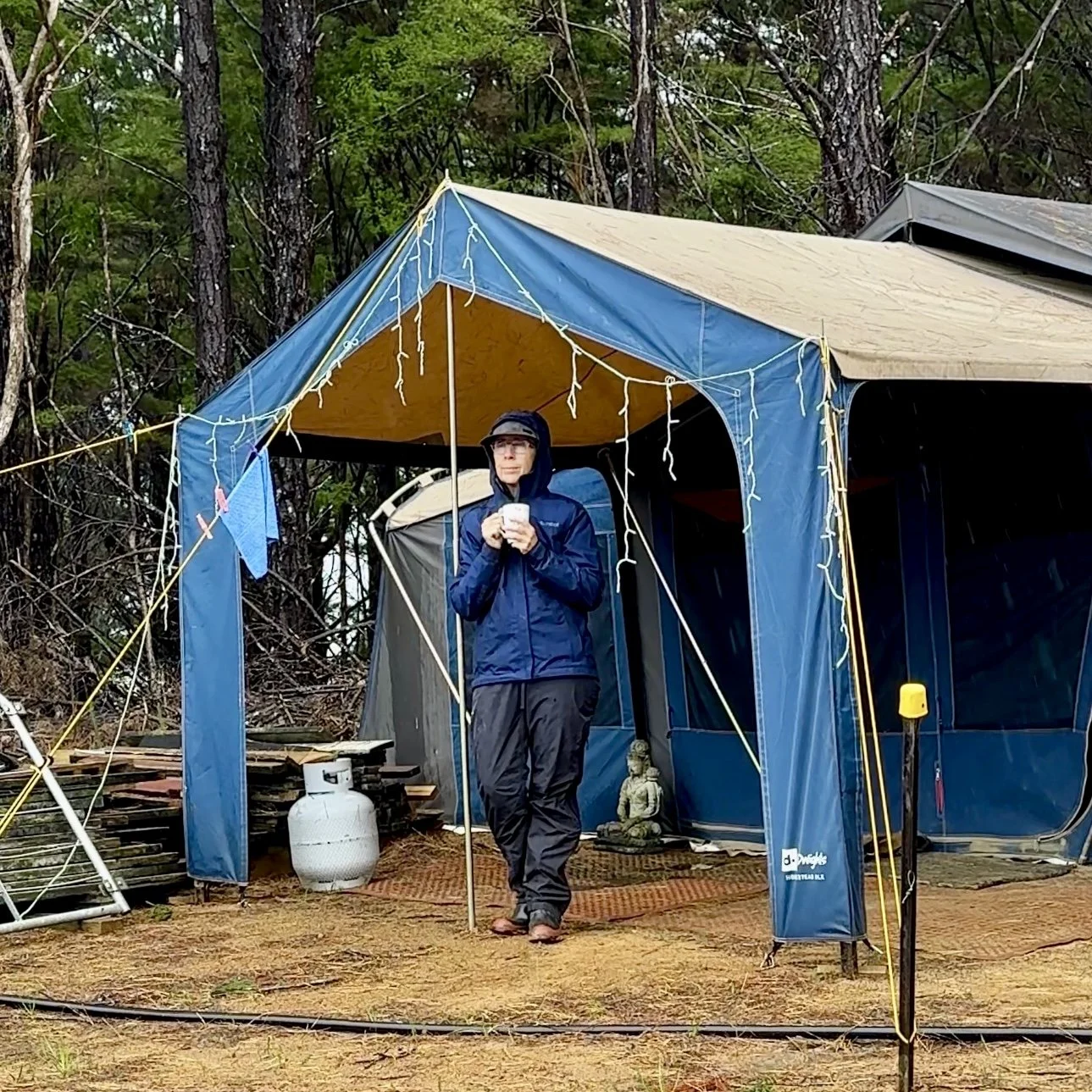
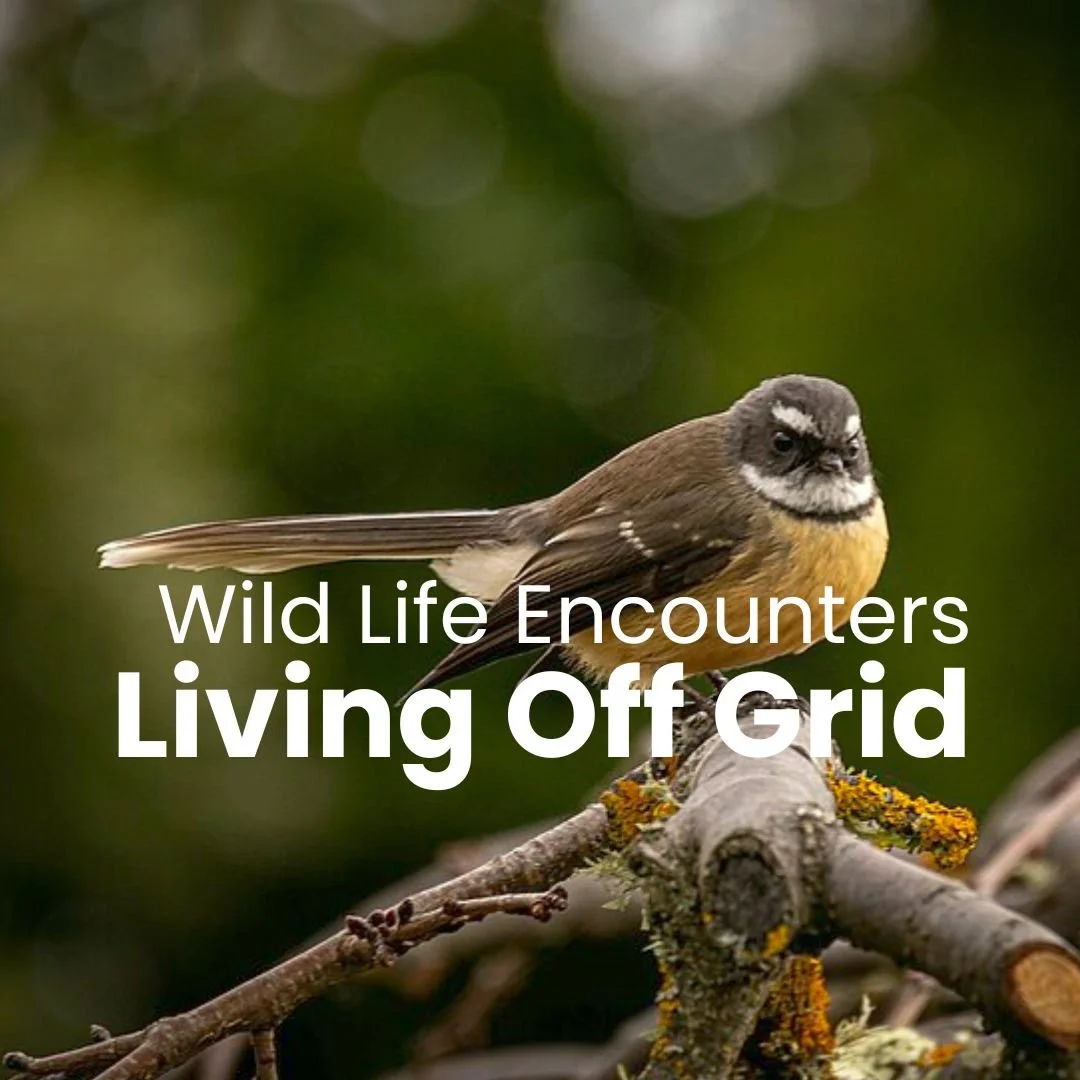
For now, life still revolves largely around tent living. The tent has become home in ways I never imagined. Its canvas walls carry the sounds of the bush far more intimately than a house ever could. At night, every movement outside feels amplified. The soft call of ruru drifts through the trees after sundown. Kākā screech overhead at first light. Sometimes there is the sudden crack of branches in the darkness, and I find myself pausing, listening carefully, wondering whether it is one of the semi-grown pigs moving through the undergrowth again.
Building a cabin in this environment feels very different from building in suburbia. Here, the bush sets the pace. Rain turns tracks into mud. Materials take longer to move. Simple jobs become physically demanding. There are no quick trips to the hardware store or easy solutions. Everything requires planning, patience, and often a willingness to adapt when conditions change unexpectedly.
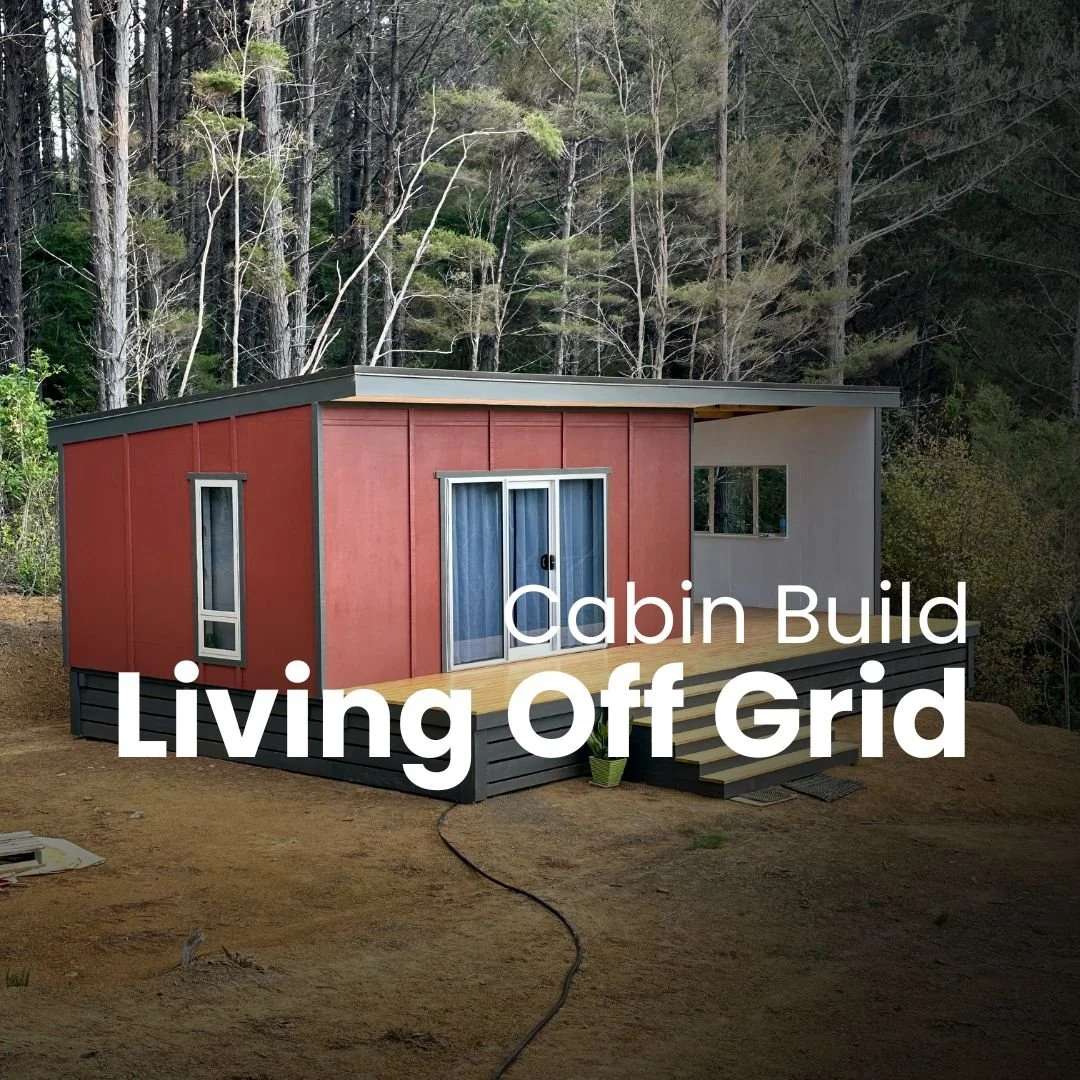
Work on the cabin once more grinds to a halt due to extreme weather - during January the summer rain gifted us 800 mm in just 36 hours.
At times, the challenges can feel overwhelming. Living off-grid while simultaneously building means there is very little separation between work, rest, and survival. Daily life still includes collecting and managing water, monitoring power carefully, checking traps, cooking simply, and constantly observing weather patterns. Construction happens around those rhythms rather than replacing them.
Yet there is also a strange freedom in that simplicity. The further removed life becomes from convenience, the more satisfaction there is in small progress. A completed wall frame, a section of roof, or simply finishing a difficult task before dark feels genuinely meaningful. Nothing is rushed. The cabin is growing slowly, but perhaps that is exactly how it should be.
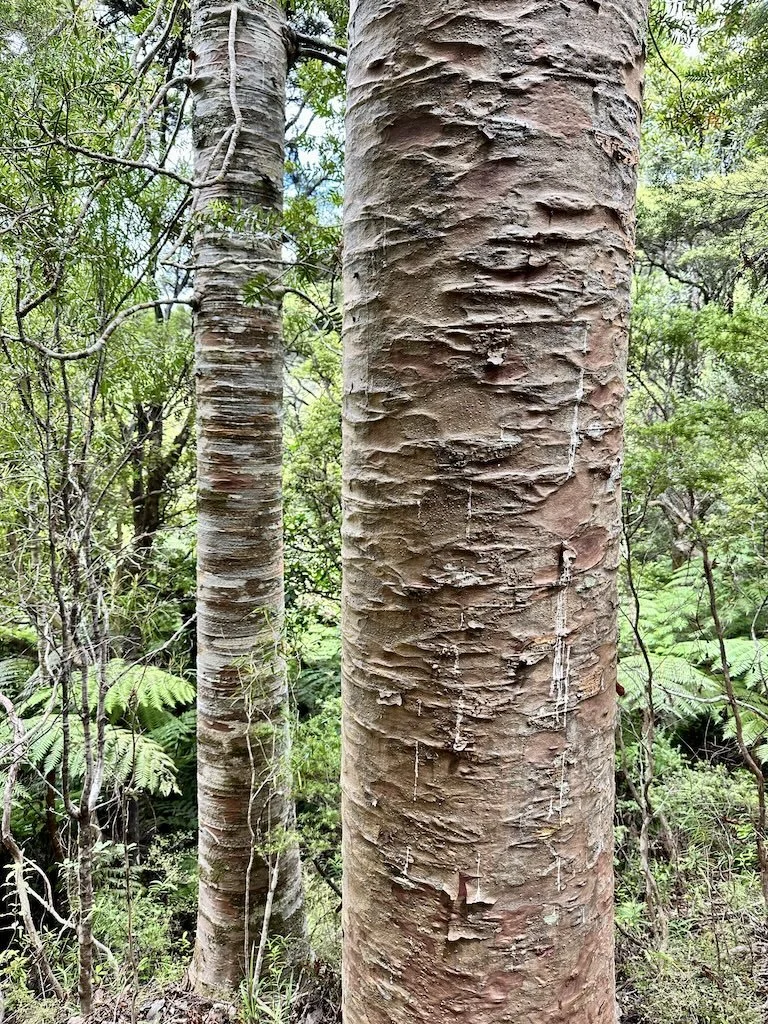
A quiet grove of native kauri on our Shambhala block, standing tall among the Coromandel bush. Building off-grid here is a constant reminder that we are guests in an ancient landscape shaped long before us. 🌿
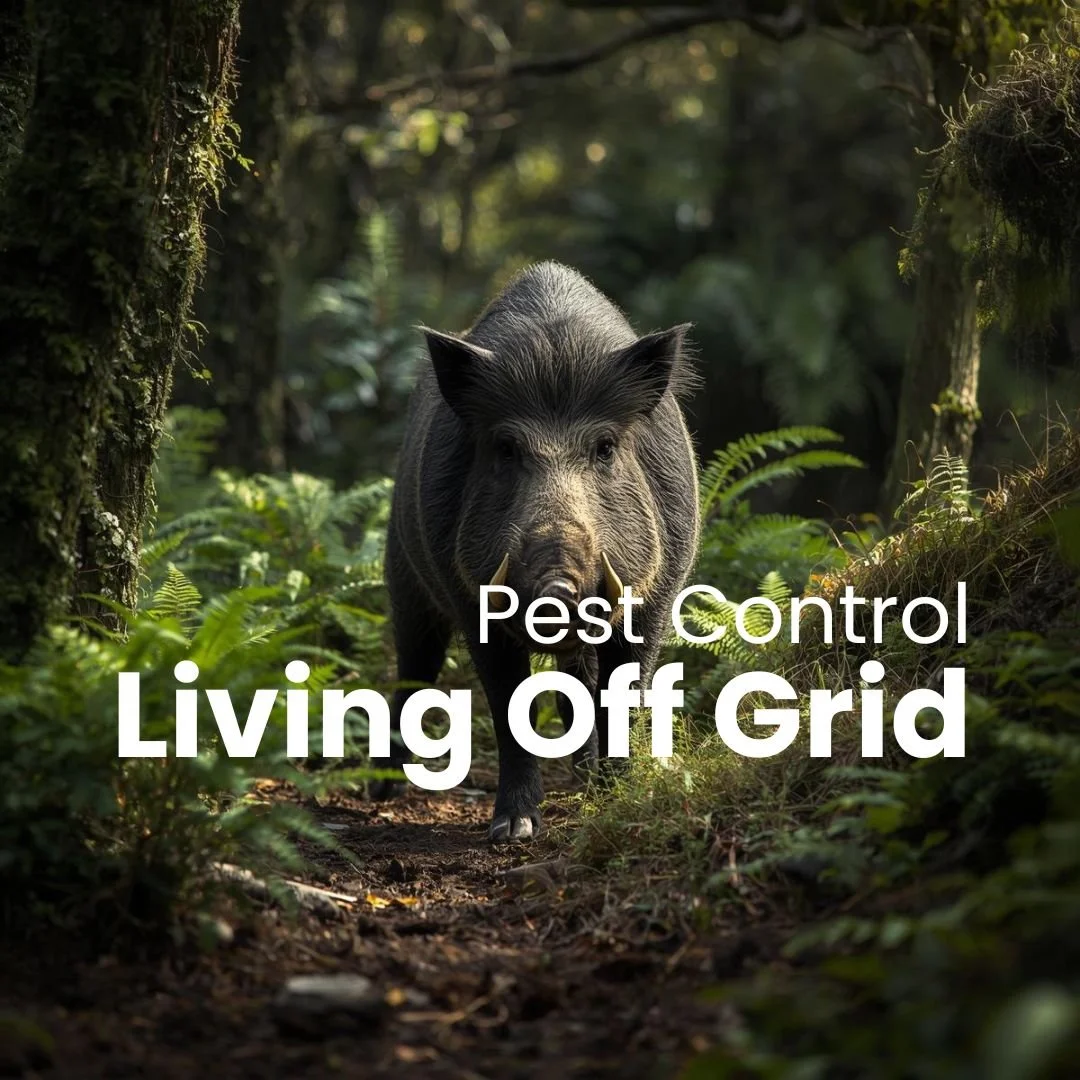
The surrounding bush has become part of the build itself. Towering trees frame the clearing, and birds move through the canopy while work continues below. There are signs everywhere that this landscape belongs to far more than just us. Wild pigs leave fresh tracks in the mud. Possums move through the forest after dark. Occasionally, distant bleating carries across the ranges, hinting at wild goats somewhere deeper in the bush. Sometimes fresh cattle droppings appear along the tracks, subtle reminders that wandering cattle move quietly through these vast unfenced stretches of Coromandel bush.
Even the unseen wildlife makes its presence felt. The scrape marks from a large boar’s tusks on nearby trees are a reminder that we are not alone here. At night, hearing kiwi calling somewhere beyond the clearing adds another layer to the experience. There is beauty in knowing these native birds still exist here, despite the pressures they face from introduced predators and pests.
That contrast is part of life at Shambhala. The bush is both peaceful and untamed. One moment brings absolute stillness and birdsong filtering through the trees. The next might involve checking traps, hearing pigs nearby, or discovering fresh signs of possum activity. Living closely with nature means embracing both sides of it, the beauty and the reality.
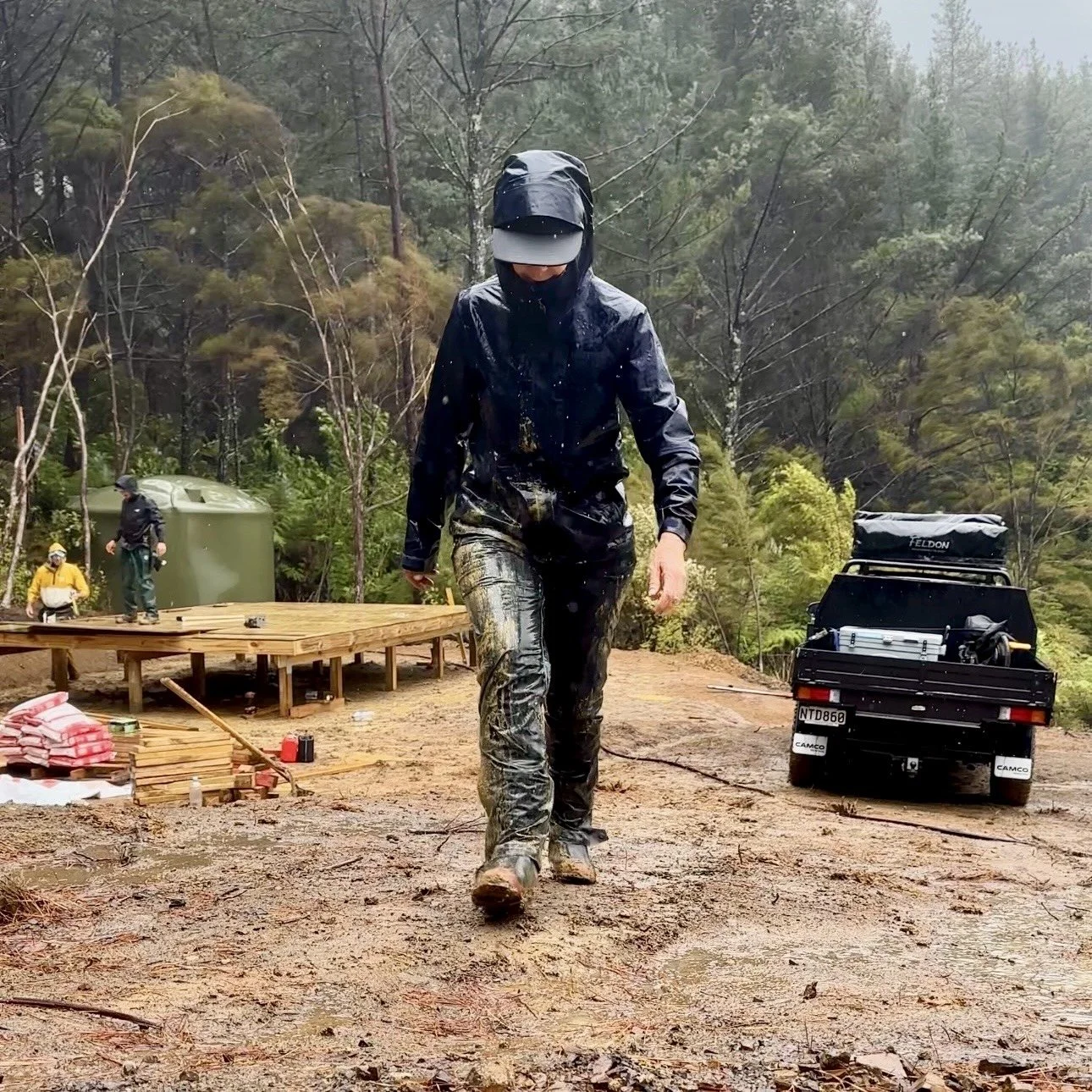
Building off-grid in the Coromandel bush is not always peaceful sunsets and birdsong. Sometimes it is rain, mud, soaked clothes, and learning resilience one challenging day at a time. Every difficult day on the build is slowly teaching us patience, adaptability, and determination. 🌧️🌿
As the cabin slowly takes shape, I have realised it is becoming more than just a building project. It represents resilience, patience, and a deeper connection with the land. Building off-grid strips life back to essentials. It teaches problem-solving, adaptability, and respect for the environment in ways modern life rarely demands.
There is still a long way to go before the cabin is complete. But perhaps that is part of the lesson too. The bush does not reward rushing. It rewards persistence, observation, and learning to move with its rhythms rather than against them.
And so the build continues, one step at a time, surrounded by ruru calls, kākā overhead, distant kiwi in the night, and the wild unpredictability of the Coromandel bush.
Have you ever worked through difficult conditions on a project or experienced a moment where nature tested your resilience? I’d love to hear your stories in the comments below.
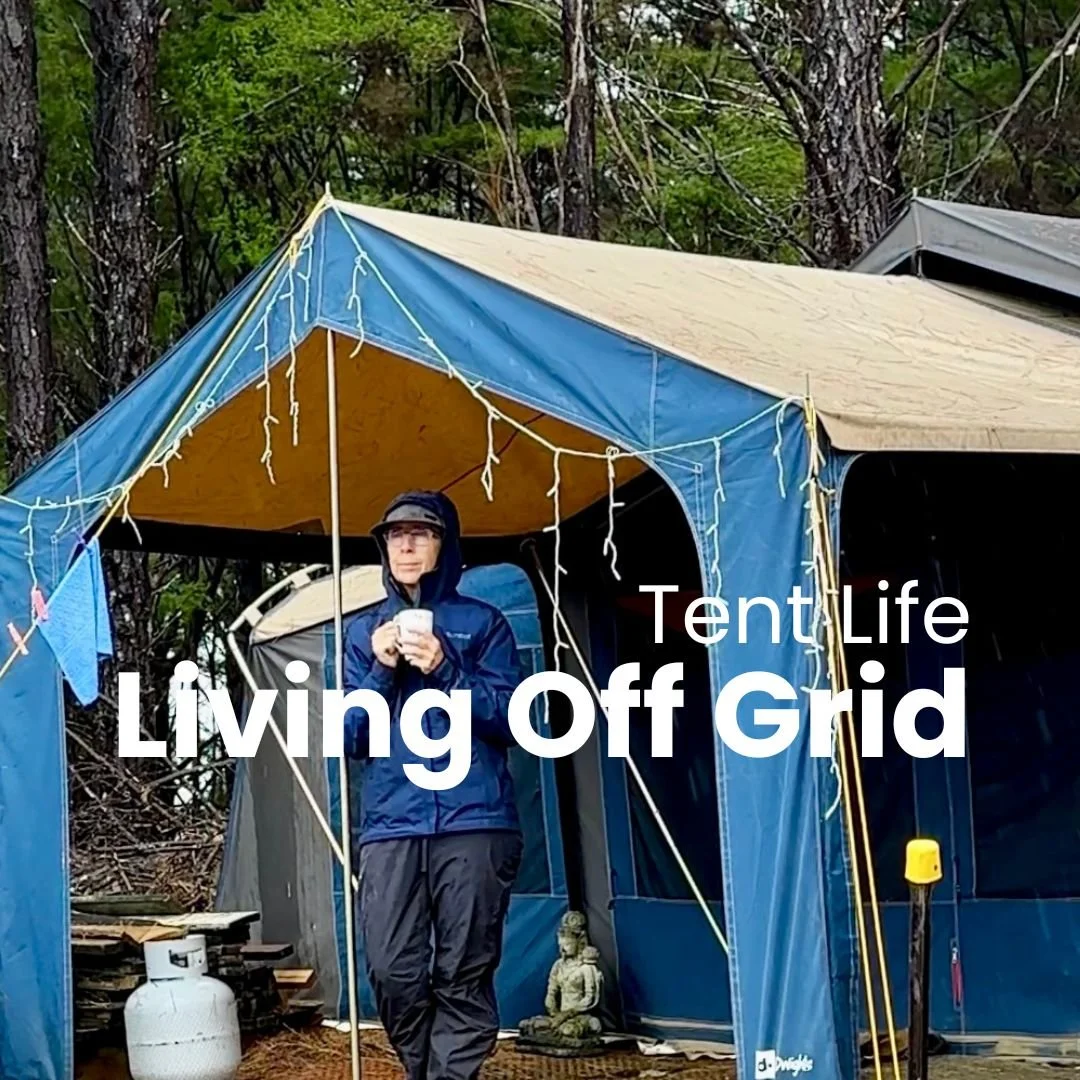
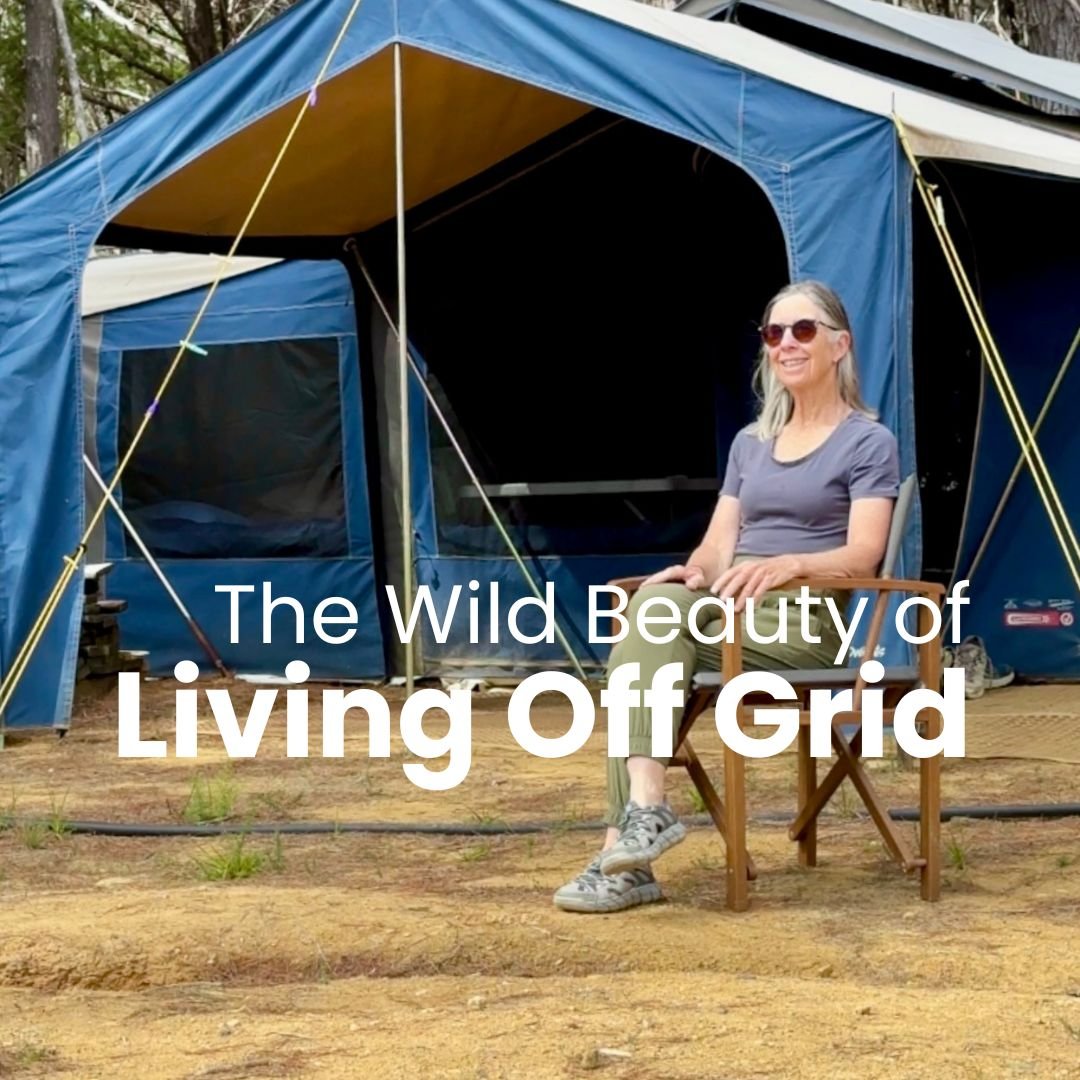

Living in a tent in the Coromandel bush while we build our off-grid cabin provides us with lessons in patience, resilience and humility.
Life here is immersive: you wake with the forest, sleep with the forest, and learn to navigate a world where humans are guests rather than masters.
In this post, I reflect on the experience of becoming one with Shambhala, a place of vast contradictions. Embracing those contradictions requires respect, attention and more than a little courage.