Kathmandu: Don't Just Pass Through
Most trekkers treat Kathmandu as a formality, something to land in, sleep off, and get through before the main event begins. I understand the logic entirely, because the mountains are waiting and the trail is calling and why would you linger? But I'd push back on that.
Because Kathmandu will get under your skin in a way you don't expect, if you give it the chance.
I love this city and find it genuinely, unreservedly fun. The chaos that hits you the moment you step outside, the traffic, the noise, the smell of incense and exhaust and spice and something frying somewhere, is not something to survive but something to lean into. Kathmandu is one of the most extraordinary cities in the world and most trekkers see about forty minutes of it from a taxi window.
I planned our departure dates deliberately around Tihar, Nepal's Festival of Lights, and I'd do it again without hesitation. But more on that shortly.
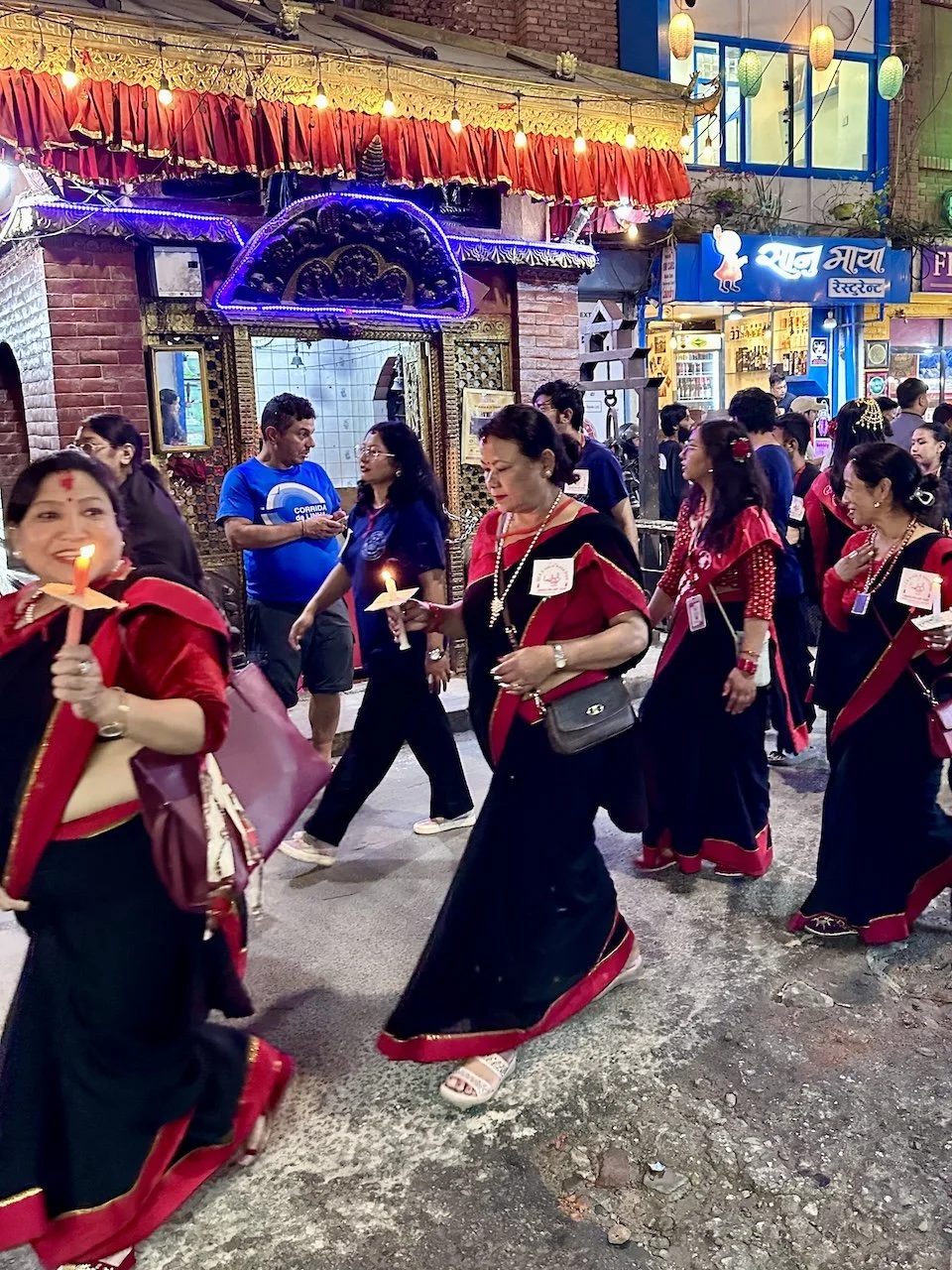
Street scene from Tihar, Nepal's Festival of Lights
Tihar: Nepal's Festival of Lights
Tihar is the second biggest festival in Nepal after Dashain and it runs for five days in late October or November, timed to the lunar calendar. In 2026, Tihar falls from 7 to 11 November, and quite simply it is one of the most beautiful things I have ever seen.
The streets of Kathmandu are strung with lights. Every home, every shop, every temple entrance is decorated with marigold garlands and oil lamps. Rangoli patterns in vivid colours cover doorsteps and courtyards. Dogs are garlanded and honoured on the second day (yes, dogs) because in Nepalese Hindu tradition, the dog is the messenger of Yama, the god of death, and deserves its moment of reverence. There is singing in the streets, groups of young people going door to door performing Deusi and Bhailo, traditional songs that fill the evenings with noise and warmth and laughter.
I have thousands of photos from Tihar in Kathmandu and none of them fully capture it, which is the only reason you need to be there in person.
Our ABC group returns to Kathmandu around 6 November, right as the decorations go up and the city begins to hum with anticipation. Our EBC group departs on 9 November, in the middle of it. This was not an accident. I set these dates specifically so that both groups would experience Tihar in Kathmandu, one on the way home from the greatest walk of their lives, one on the eve of it.
Plan for it and you won't regret a moment of it.
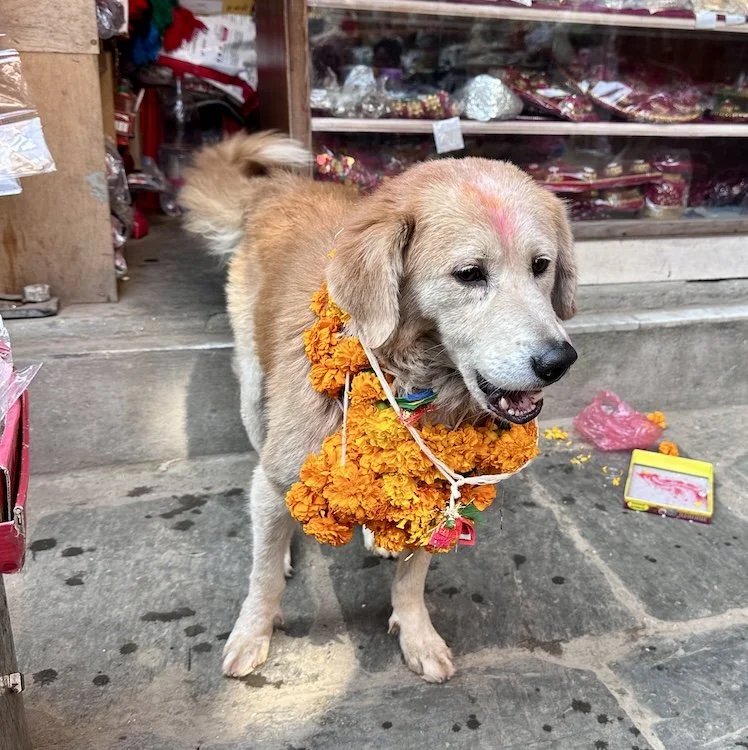
A dog wearing a marigold garland for Tihar, Nepal's Festival of Lights
Four UNESCO Sites in One Day
Kathmandu has seven UNESCO World Heritage Sites in the valley. On our guided city tour, we take in four of them in a single day with our guide Krishna from Himalayan Recreation and Treks. Here is what waits for you.
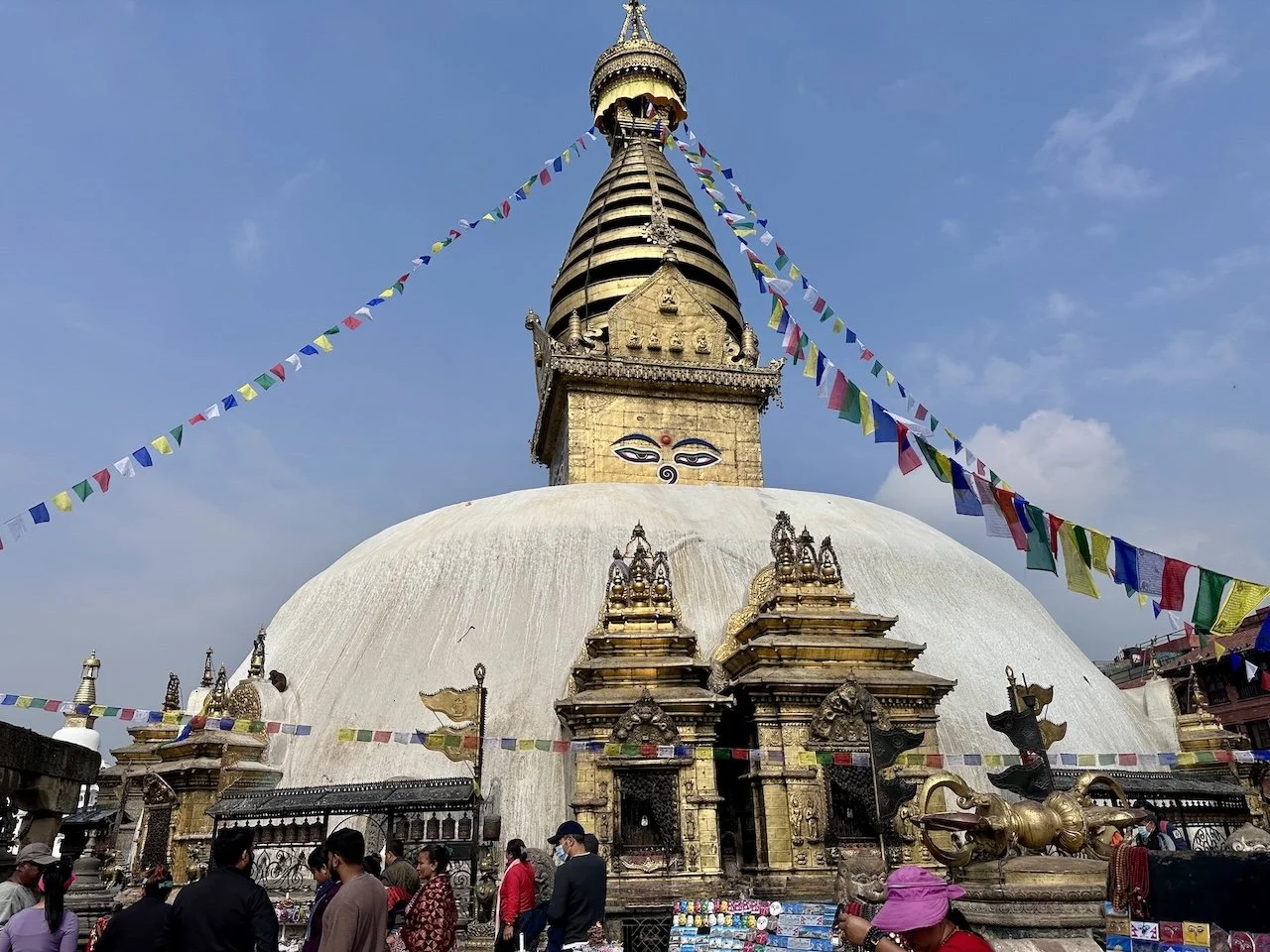
Swayambhunath, the Monkey Temple, prayer flags and the all-seeing eyes of Buddha above the bustle of pilgrims and visitors. Worth every one of those 365 steps.
Swayambhunath: The Monkey Temple
Swayambhunath sits on a hill above the city and to reach the stupa you climb 365 stone steps. There will likely be a monkey halfway up, utterly indifferent to your presence and very interested in any unattended water bottles or snacks.
We timed our visit to follow the pilgrims who circumambulate the stupa at sunrise, and the early morning light on the all-seeing eyes of Buddha watching out over the Kathmandu Valley is not something you forget quickly. The stupa is sacred to both Buddhists and Hindus and the atmosphere at that hour is something between peaceful and electric.
The panoramic view of Kathmandu spread out below, hazy and sprawling and impossibly alive, is worth the climb on its own.
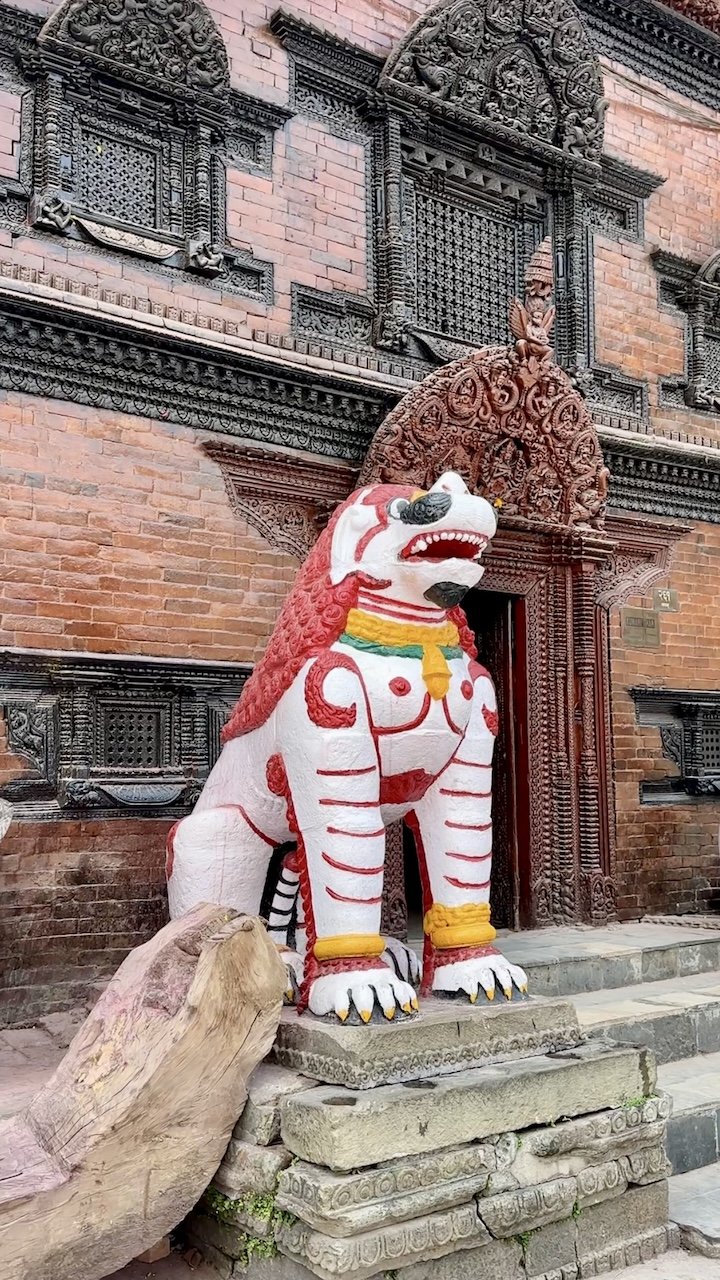
A guardian lion at the entrance to the Kumari Ghar, Kathmandu Durbar Square. Behind this door lives the Living Goddess.
Kathmandu Durbar Square
Durbar Square sits in the heart of the old city and was once the palace complex of the Malla and Shah dynasties. It is a place of extraordinary wooden architecture, intricately carved windows and doorways, ancient temples, and hidden courtyards.
The atmosphere inside the Kumari Ghar, the home of the Living Goddess, is hushed to the point of reverence. "No photos, no photos" the curator reminds those who forget themselves. Standing in that small red brick courtyard, the noise of the square entirely gone, you feel the weight of centuries.
Durbar Square was severely damaged in the 2015 earthquake and the ongoing restoration work is itself worth witnessing, a whole city stitching itself back together.
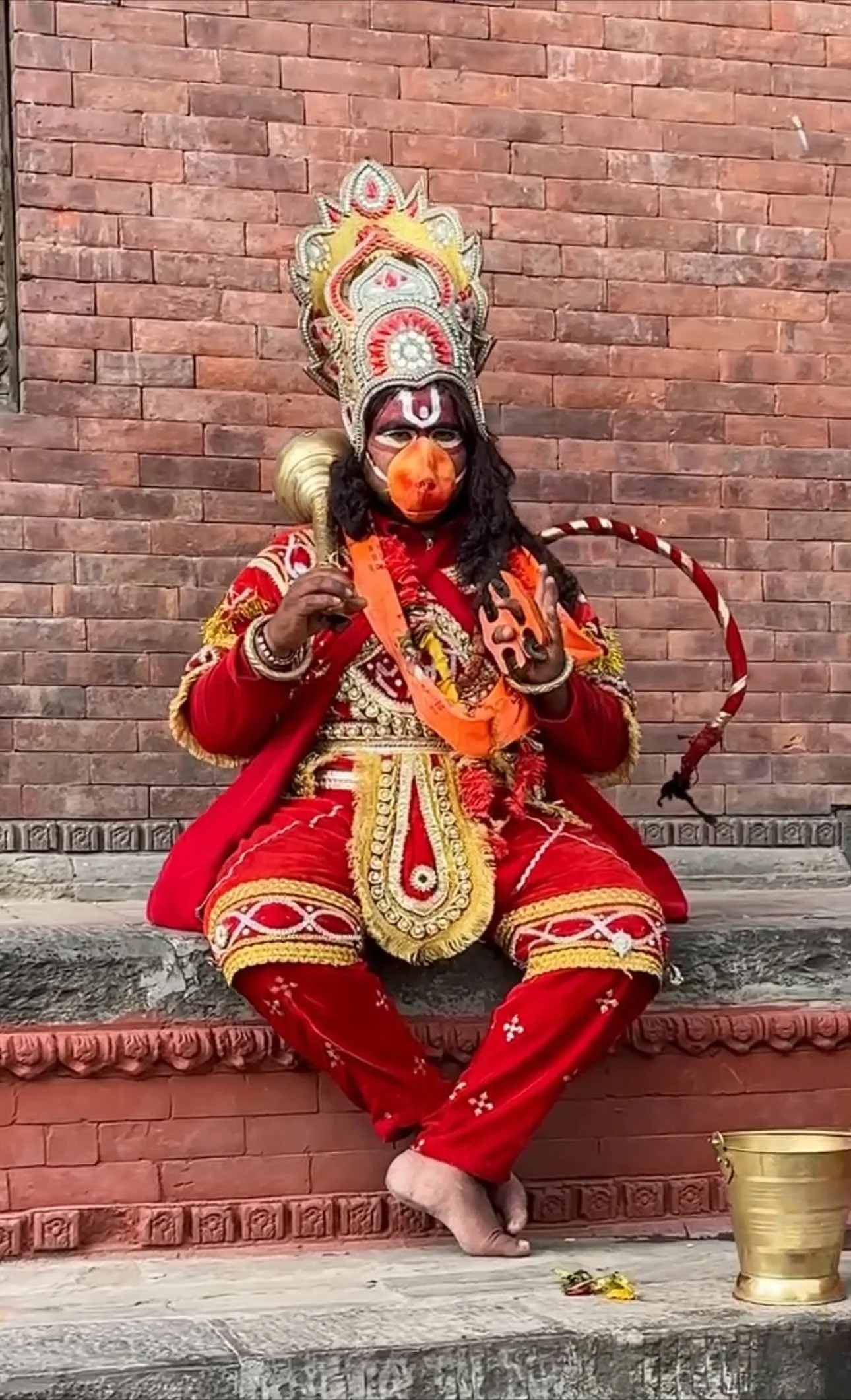
A Sadhu dressed as Hanuman at Pashupatinath Temple. One of the many extraordinary sights waiting for you in Kathmandu.
Pashupatinath Temple
Pashupatinath is Nepal's most sacred Hindu temple, dedicated to Lord Shiva, and it sits on the banks of the Bagmati River. Non-Hindus cannot enter the main temple but can observe from the ghats on the opposite bank, and what you observe is unlike anything most visitors have ever seen.
On the far bank, cremation fires burn and their smoke rises slowly into the haze above the city while the river runs dark and murky past the stone steps where pilgrims bathe and pray. The smell reaches you before you see it: spice and smoke and something ancient.
It is not comfortable viewing, but it is unforgettable and oddly peaceful. Death is not hidden in Nepal. It is honoured publicly and without apology, right there on the riverbank, and there is something genuinely profound about being present for that.
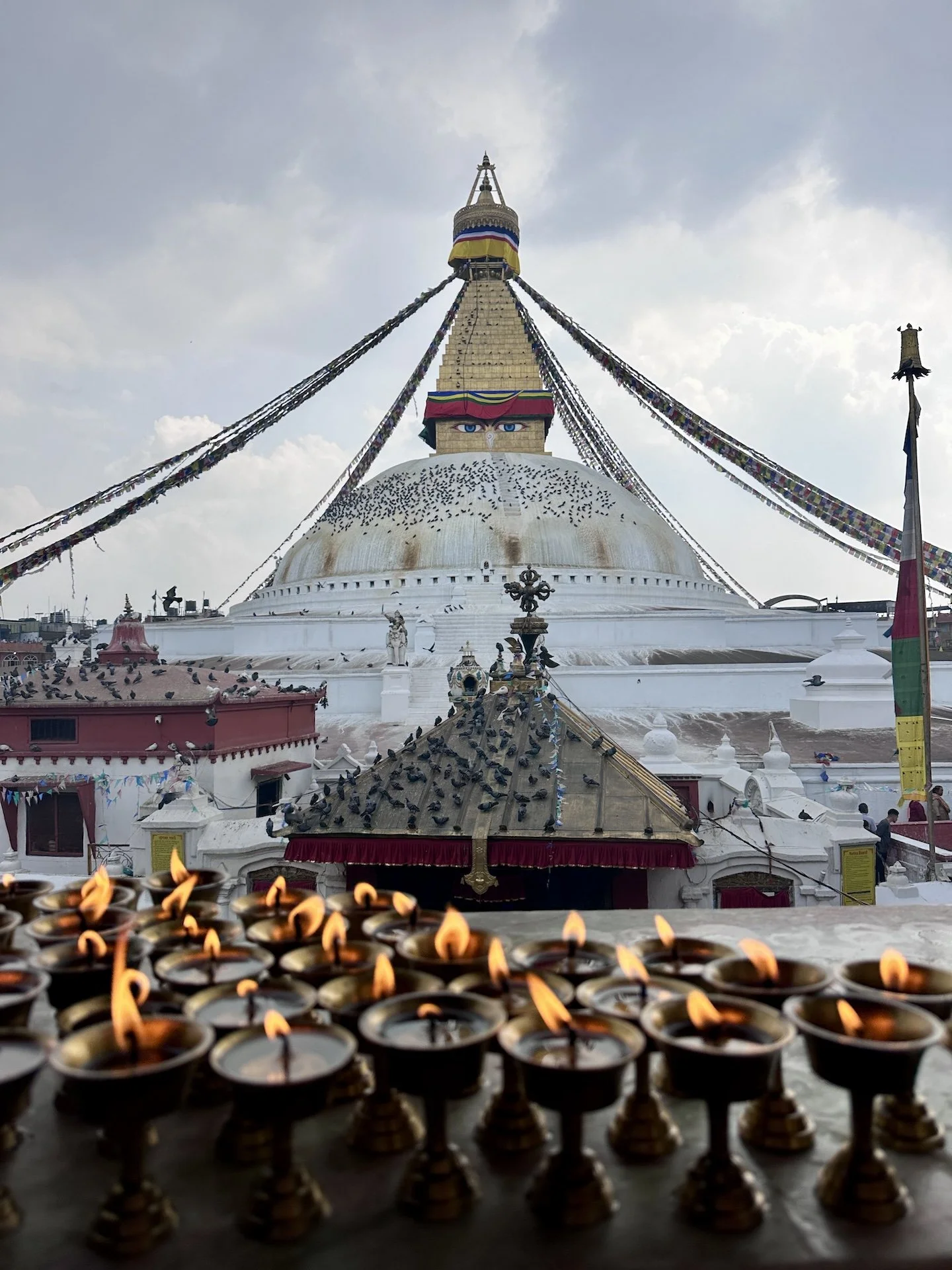
Boudhanath Stupa, Kathmandu. Butter lamps burning, the eyes of Buddha watching over it all. This is what waits for you before the trek begins.
Boudhanath Stupa
Boudhanath is the largest spherical stupa in Nepal and one of the largest in the world. It sits on an ancient trade route from Tibet and has been a place of pilgrimage for Tibetan Buddhists for centuries.
You will hear it before you see it: the murmur of prayers, the low ring of singing bowls, the soft cooing of the pigeons that have claimed the courtyard as their own territory. Then you turn a corner and there it is, enormous and white and impossibly calm in the middle of the city, the all-seeing eyes of Buddha gazing out in every direction.
The circumambulation path around the stupa is lined with prayer wheels and the shops that surround it sell everything from yak butter to mandala textiles to brass healing bowls. After the city tour we sat on the second floor of a restaurant overlooking the stupa and had lunch while Krishna talked us through centuries of history. Black tea, Nepali food, and the eyes of Buddha watching over proceedings. Not a bad afternoon.
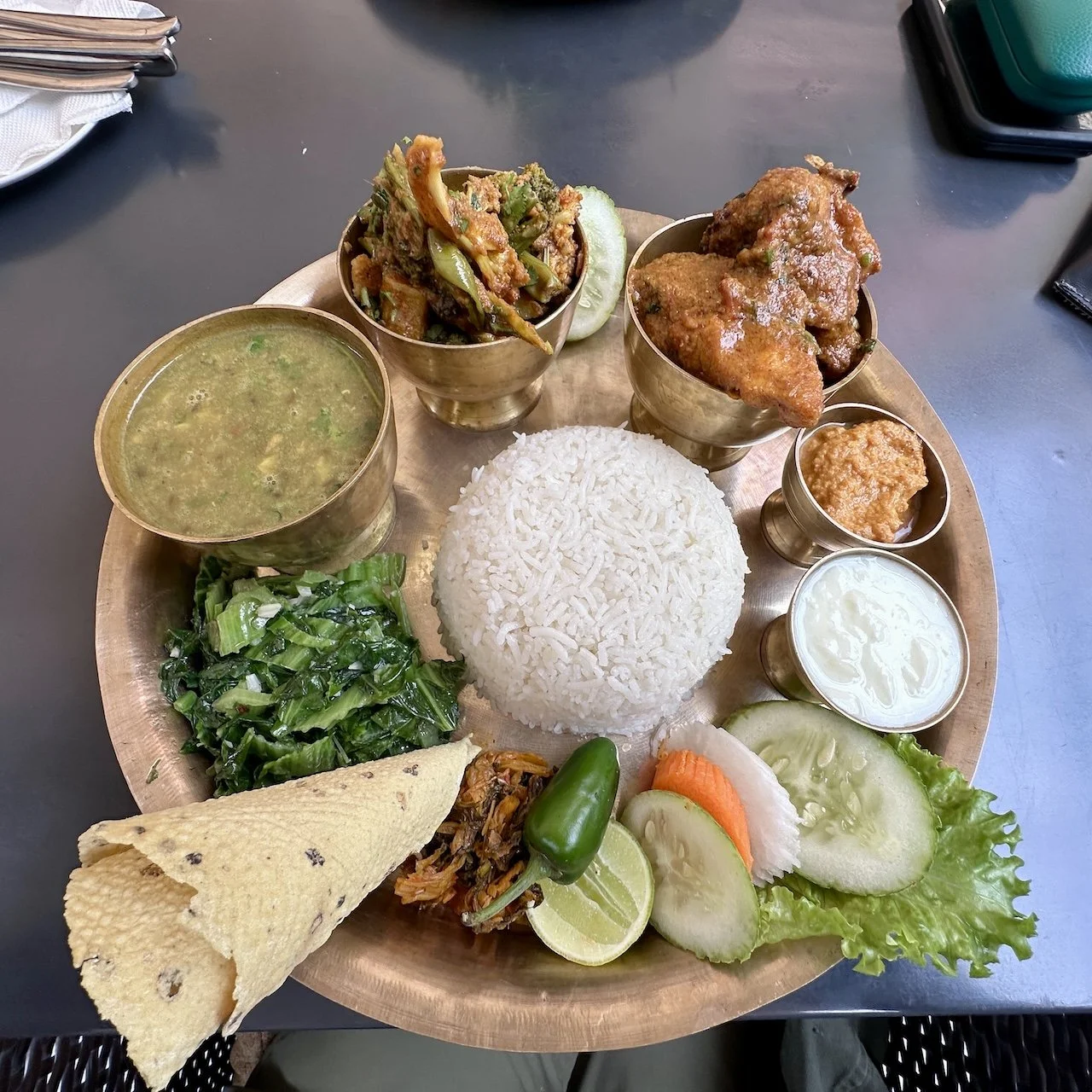
Dal bhat in Thamel. This is what you order. Don't even look at the rest of the menu.
Thamel: Where You'll Be Based
Thamel is Kathmandu's tourist hub and your base for the trip. It is loud, colourful, slightly overwhelming and completely addictive. Narrow lanes are lined with trekking gear shops, bakeries, restaurants serving everything from Nepali set meals to surprisingly decent pizza, rooftop bars, massage parlours, bookshops, and stalls selling prayer flags, thangka paintings, yak wool scarves, and singing bowls.
The gear shops are worth a browse even if you think you have everything. North Face, Mammut, Arc'teryx, much of it is replica but the quality varies wildly and some pieces are genuinely good value for money, so if you've forgotten something or want a spare layer, this is the place to sort it. The food is excellent and worth exploring properly rather than defaulting to the familiar, because the dal bhat at a proper local restaurant will be one of the best meals you eat before the trek. Haggling is expected in the markets and on the street stalls but not in restaurants or established shops, and learning the difference quickly makes life considerably easier. And walk. Thamel rewards wandering, so turn down the alleys you're not sure about, because you won't get properly lost and you will find things you weren't looking for.
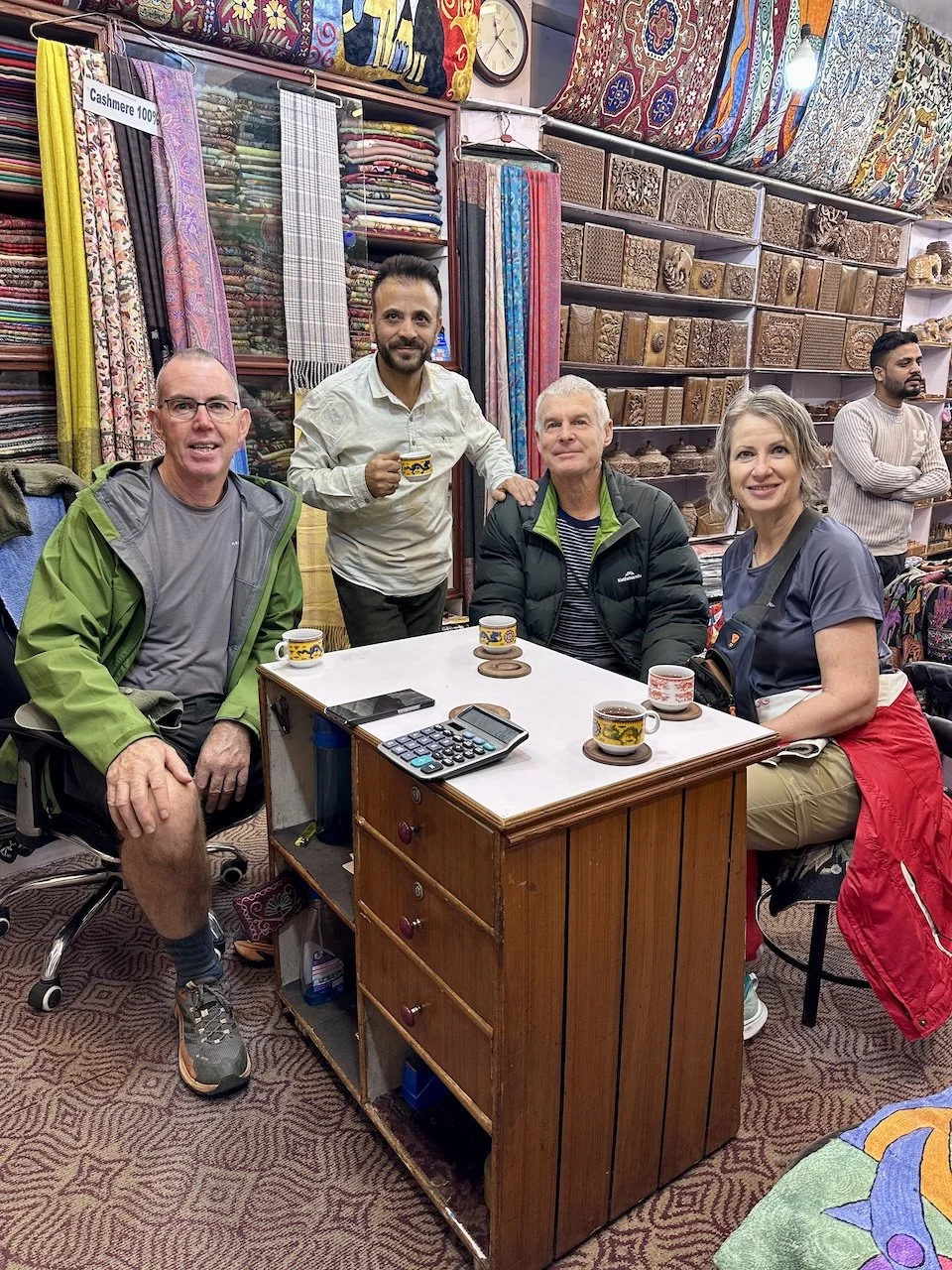
A warm welcome to us from Ashid, generosity like this is typical in Thamel
The Kathmandu City Tour Add-On for ABC Trekkers
The guided Kathmandu Valley Tour, four UNESCO sites, one day, with Krishna from Himalayan Recreation and Treks, is included as part of the EBC itinerary. For ABC trekkers, I am offering it as an optional add-on for those who arrive a couple of days early
The plan is straightforward: arrive in Kathmandu by 27 October, spend a day or two in Thamel at your own pace, then join us on 28 October for the full day city tour with Krishna before we all head to Pokhara together on the 29th.
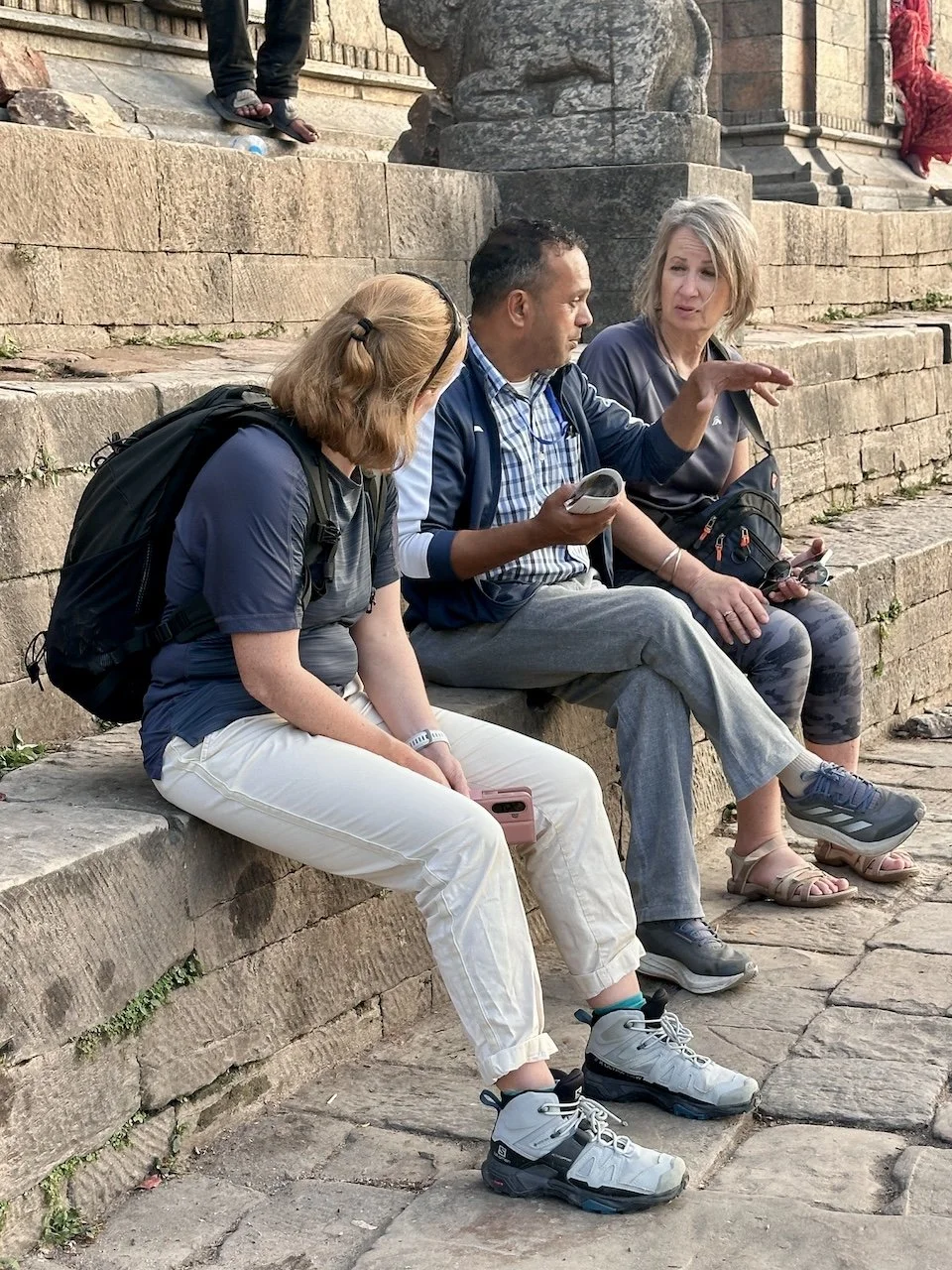
Himalayan Recreation Guide, Krishna with Elaine and Denise at the Pashupatinath Temple
The tour covers Swayambhunath, Durbar Square, Pashupatinath, and Boudhanath with private transport and a guide who has been doing this for years and makes history come alive. It is a proper introduction to Nepal before the trail begins, and it means you arrive at the trek having already had your mind properly opened by Kathmandu.
If you’d like to join the Kathmandu Valley Tour on 28 October, all the details are HERE 👉
Give Kathmandu the Time It Deserves
You are flying a long way to get to Nepal and while the trek is absolutely the centrepiece, Kathmandu is not just the departure point. It is part of the experience. The city has been at the crossroads of trade, religion, and culture for over two thousand years, surviving earthquakes, invasions, and rapid modernisation, and it is still standing, still chaotic, still extraordinary, still entirely itself. It deserves more than a night and a taxi window.
And if you happen to be there when the streets fill with marigolds and oil lamps and the singing starts in the evenings, you'll understand exactly why I planned it this way.
Sharon Evans is an HRT Adventure Leader and Himalayan trekking guide. She leads small group treks to Everest Base Camp and Annapurna Base Camp and has been travelling to Nepal for years. Her 2026 departures are EBC 9 November and ABC 28 October. Both groups experience Tihar in Kathmandu. That was entirely deliberate.
For the EBC trip: Everest Base Camp Group Trek 2026
For the ABC trip: Annapurna Base Camp Group Trek 2026
To book the Kathmandu Valley Tour add-on head over here Kathmandu Valley Tour 28 October 2026


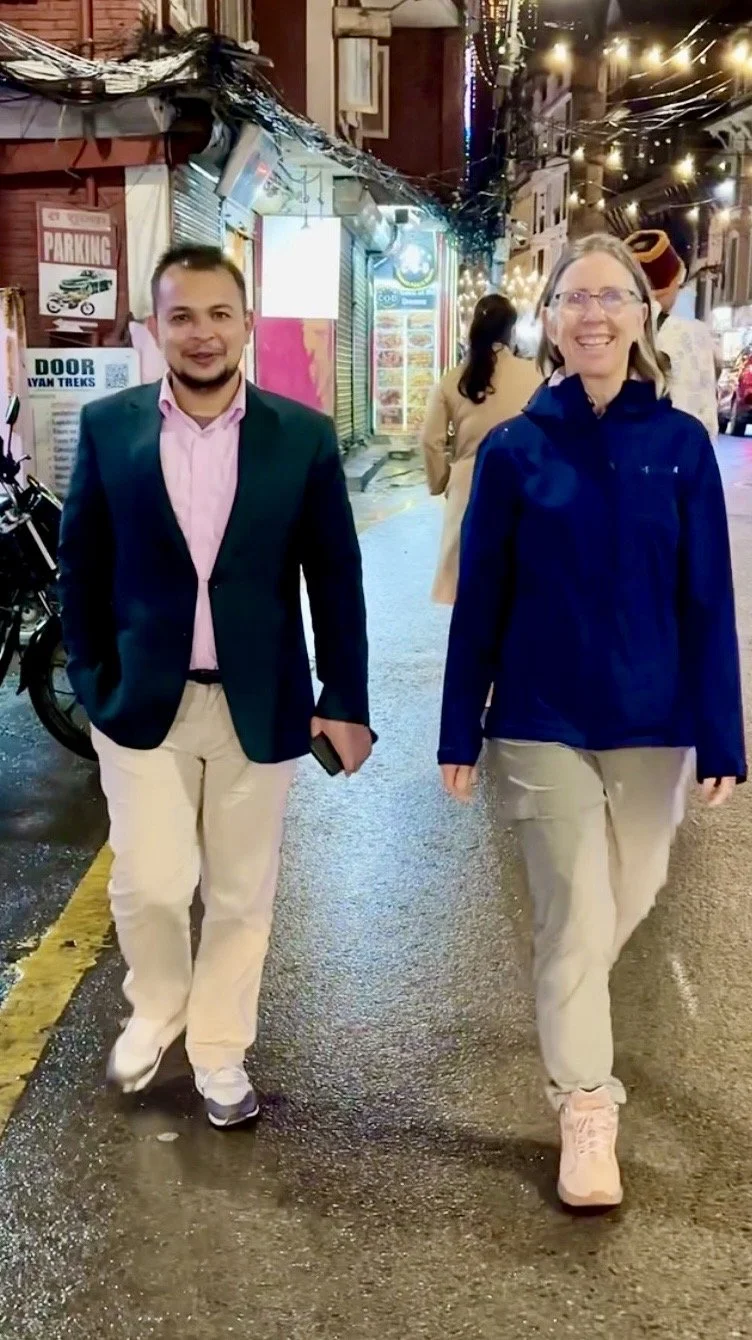
Bishnu Thapa, Himalayan Recreation and Sharon Evans in Thamel, Kathmandu
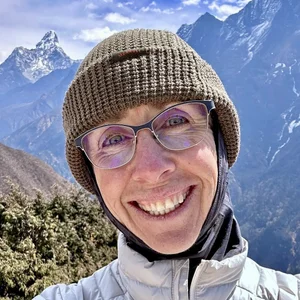
I love Kathmandu and I find it genuinely, unreservedly fun. Most trekkers treat it as a formality, something to land in, sleep off, and get through before the main event begins. That's a mistake.
Kathmandu has been at the crossroads of trade, religion, and culture for over two thousand years and it rewards anyone who gives it proper attention.
Here's what's waiting for you, including why I planned our 2026 departure dates deliberately around Tihar, Nepal's Festival of Lights.