Te Araroa - Walking Back to Myself
Two years ago, Andrew and I stood at Cape Reinga, looking out to where the Tasman Sea meets the Pacific Ocean. Behind us lay the edge of the country. Ahead stretched 3,000 kilometres of trail running the full length of Aotearoa to Stirling Point in Bluff. We had 133 days, two backpacks, and no real sense of how profoundly the walk would reshape my thinking about rest, reset, and what it means to come back to yourself.
What began as a long-held dream quickly became something far more layered. It turned into one of the most powerful lessons in slowing down I have ever received.
The First Weeks: When Your Body Protests
The first four weeks were physically brutal. Blisters that throbbed at night and made putting shoes back on feel like a test of will. Shoulders aching under pack weight. Hips bruising as my body adjusted to daily endurance.
There were moments when I wondered whether I had romanticised the whole idea.
Yet even in that discomfort, something essential was happening. The noise fell away.
No competing demands. No sense of needing to be somewhere else, doing something more productive. Each day reduced itself to its most basic elements: wake with the light, walk, eat, find water, make camp, sleep. The rhythm was repetitive but deeply regulating.
In the beginning my mind still raced ahead, planning, analysing, rehearsing. Over time, that urgency began to soften.
The Shift That Surprised Me
By the second month I noticed that my thoughts had lengthened. They were less sharp-edged, less transactional. Instead of mentally organising life into bullet points, I found myself absorbed in what was directly in front of me: the way light filtered through bush, the scent of warm earth, the steady cadence of footsteps along gravel roads and forest tracks.
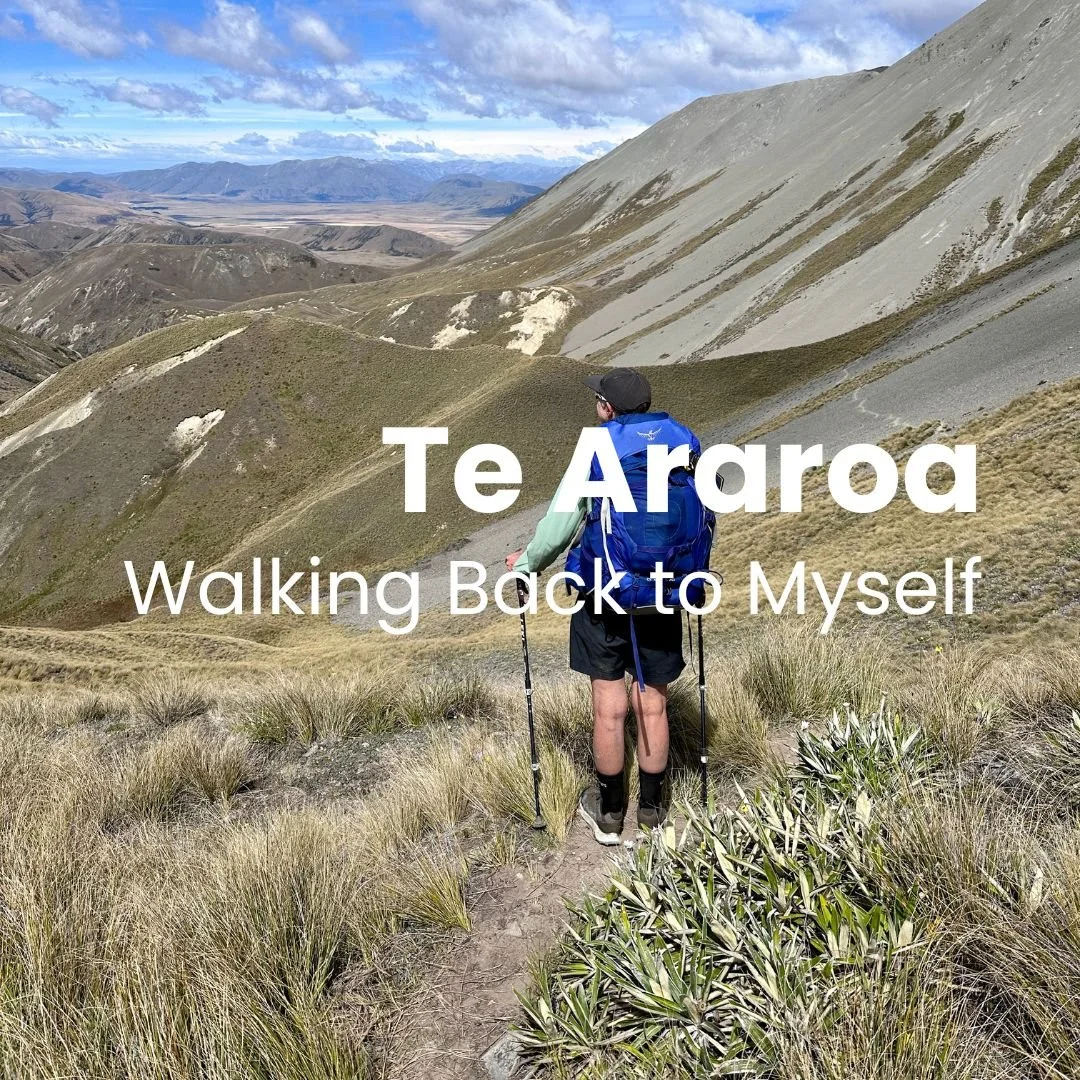
The most profound shift occurred around the three month mark, walking through Canterbury beneath the vast presence of the Southern Alps. Snow-capped peaks rising above braided rivers and wide open skies. Moving steadily through that terrain, I became aware that something inside me had recalibrated.
I no longer felt like a visitor moving through nature. I felt part of it.
My breathing matched my stride. My body trusted its own strength again. What I experienced was not dramatic or mystical, but biological. After a sustained period of operating at high pace, my nervous system had finally exhaled. The effort required on trail was real, yet it was clean and honest. Climb the hill. Cross the river. Adjust to the weather. There was no emotional performance attached to any of it.
What Simplicity Revealed
Living for months with everything I needed on my back stripped life back in a way nothing else could have. Two sets of clothes. A tent. A sleeping bag. A stove. Food and water. That was enough.
When you carry your world with you, you become acutely aware of what is essential and what is excess.
Andrew and I spent every day together for those 133 days, sharing huts, rain-soaked campsites, long gravel road sections and breathtaking ridgelines. Without the usual distractions, our conversations deepened. We met people from all over the world and formed connections that bypassed small talk entirely, because shared challenge accelerates honesty. When you are navigating swollen rivers or pushing through relentless wind together, pretence quickly becomes irrelevant.
What the Trail Returned to Me
Somewhere between Cape Reinga and the South Island, I was reminded of priorities I had held instinctively when I was younger, before busyness and obligation began to dominate. Freedom had once felt non-negotiable. Over time, I had quietly let it slip down the list.
Walking the length of the country brought me back to a simpler understanding. Freedom is sovereignty over your time. It is the ability to shape your days according to what matters most. It is having space to sit on a ridge and watch weather move across mountains without feeling as though you are falling behind.
When we finally reached Stirling Point in Bluff and touched the signpost that marks the end of the trail, there was an immense sense of completion. But more than that, there was clarity.
You Do Not Need 3,000 Kilometres
Not everyone needs to walk from Cape Reinga to Bluff to experience that kind of reset. But I do believe we all need space that is long enough and quiet enough to hear ourselves clearly again.
For me, that space unfolded across beaches, forests, farmland and mountains over 133 days. But I have also experienced a version of it on a single day walk in the Coromandel, returning home lighter, clearer, and more grounded than when I set out.
That is exactly what I had in mind when I created the Reset and Recharge Walk series. A small, intentional day in nature designed to give you that same quality of space, without needing to take months off or walk the length of the country.
If that sounds like something you need right now, I would love to have you join us.
👉 Find out more about the Reset and Recharge Walk, 3 May 2026 at Kauaeranga Valley
Te Araroa did not take me away from my life. It returned me to it, stripped back to what matters most: people, connection, freedom, and the simplicity that makes room for all three.
Sharon 💚
📹 Watch the Journey Unfold
If you would like to experience Te Araroa alongside us, I documented all 133 days on the trail through my daily vlog series. From the very first steps at Cape Reinga to that final emotional moment at Stirling Point in Bluff, it is all there.
👉 Watch the Te Araroa Vlog Series →
Each day is captured in a one-minute vlog, so the full series runs to just over two hours in total. Grab a cup of tea and settle in, or dip in and out whenever you need a dose of trail inspiration
🌿


Day 80 on Te Araroa. Eighty days without a rest day, pushing through foot injuries, running a business remotely, creating content, managing comments and brand partnerships while walking the length of Aotearoa.
The Richmond Range ridgeline is where it all caught up with me, not because I couldn't finish the walk, but because the weight of everything else made me stop.
This is the story of what happens when you ask for help, when a stranger named Leah shows up with Christmas cake, and why stepping back sometimes takes more strength than pushing forward.