It's the question that sits in the back of your mind from the moment Annapurna Base Camp shows up on your radar.
Am I fit enough to do this?
And I want to give you a straight answer. Not the vague "anyone can do it with the right attitude" version you'll find on most trek websites, and not the intimidating list of athletic prerequisites that makes you feel like you need to run a half marathon before you're allowed to apply.
The reality is more nuanced than either of those, and it depends on you specifically.
What the Annapurna Base Camp Trek Actually Involves
Let's start with what you're actually signing up for.
The Annapurna Base Camp trek covers around 115 kilometres return over 10 days. You'll reach Base Camp at 4,130 metres, sitting in one of the most dramatic natural amphitheatres in the world, completely surrounded by the Annapurna massif. The daily walking time is typically 4 to 6 hours, with some days shorter for acclimatisation and some longer as you push higher.
Compared to Everest Base Camp, ABC is shorter, lower, and generally considered more accessible for first-time Himalayan trekkers. But accessible doesn't mean easy. The trail through the Annapurna Sanctuary involves significant elevation gain, steep sections through the Modi Khola valley, and the physical reality of being at altitude for several consecutive days.
It is not technical. There is no climbing, no ropes, no ice axes. But it is demanding in a sustained way that your everyday fitness routine probably doesn't replicate.
If you're comparing treks, also read: Am I fit enough for Everest Base Camp?
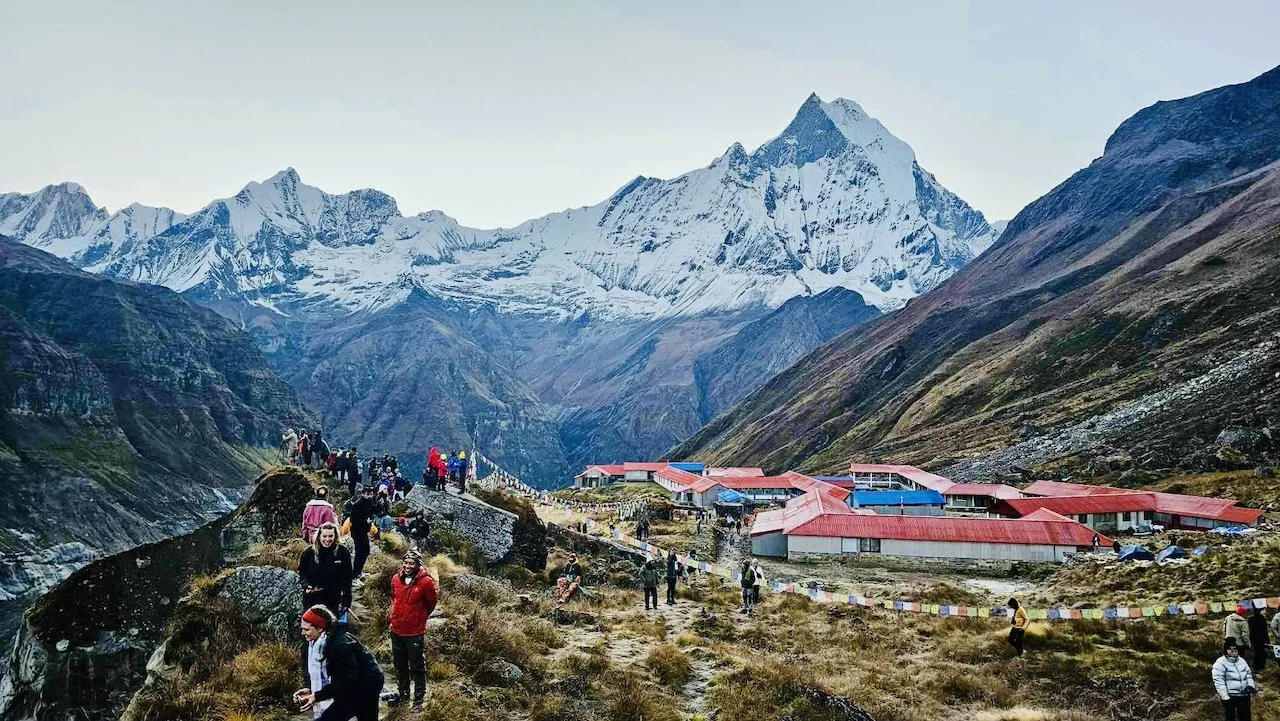
Annapurna Base Camp Trekkers leaving village
The Fitness Level You Need for ABC
You don't need to be an athlete. You do need to be genuinely active.
If you can comfortably do all of the following, you are in the right territory:
Walk for 4 to 6 hours on consecutive days without being completely wrecked at the end of it. This is the single most important indicator. Not one big effort, but the ability to keep going day after day.
Handle elevation gain. Days on the ABC trek involve real climbing, particularly through the sanctuary approach. Think full-day hikes with 800 to 1,000 metres of ascent. In New Zealand, something like the Tongariro Alpine Crossing gives you a reasonable benchmark. In Australia, a multi-day in the Blue Mountains or the Grampians will tell you a lot about how your body handles consecutive days on the trail.
Carry a daypack of around 5 kilograms. Your porter handles the bulk of your gear, so your daily carry is light. But it's still on your back for the full walking day.
If you're doing that kind of activity regularly in the months before departure, you have a genuine base to work from. If you're not there yet, that's not a reason to rule out ABC. It's a reason to start building your base now, with enough time to do it properly.
What Makes ABC Different from Other Treks
The thing that catches people out on ABC isn't usually the distance or the gradient. It's the altitude combined with the consecutive days.
At 4,000 metres your body is working harder than usual just to maintain normal function. A climb that would be unremarkable at sea level takes real effort up here. Sleep is often interrupted. Appetite drops. Some people get headaches. None of this means you're failing. It means your body is doing exactly what bodies do at altitude, and the key is knowing how to manage it rather than push through it blindly.
The other thing that surprises people is the steepness in the final approach through the Annapurna Sanctuary. The views are extraordinary. The climbing is genuinely hard. Strong legs matter here, and so does knowing when to slow down.
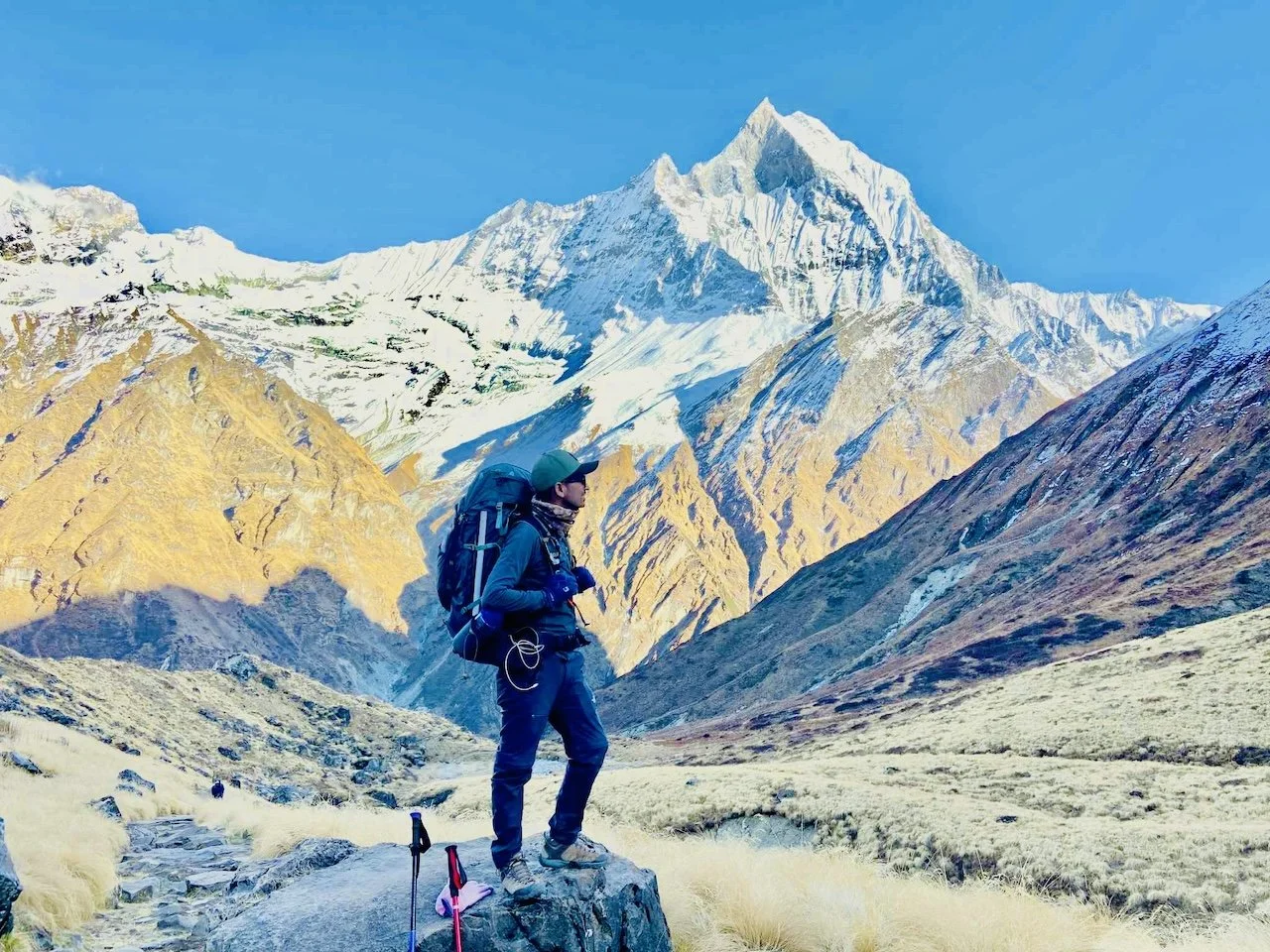
Narayan Baniya, Himalayan Recreation Guide, Annapurna Base Camp, Nepal. Photo Credit: Narayan Baniya
What Training Actually Helps
Hills. More than anything else, hills.
Long walks with elevation gain, done regularly and ideally on consecutive days. This is what replicates the actual demands of the trek better than anything else you can do. If you live somewhere flat, stair climbing is a genuine substitute. Load a pack and get moving.
Cardiovascular fitness supports everything else. Your heart and lungs are under sustained demand at altitude, so regular cardio, whether that's walking, cycling, swimming or running, builds the base that carries you through the hard days.
Leg and hip strength matters more than most people expect. The descent days on ABC are steep and the knees take real punishment. Basic squats, lunges and single-leg work done consistently in the months before you go will make a meaningful difference.
For a detailed 12-week training plan built specifically for Annapurna Base Camp, take a look at the ABC Training Guide I've put together.
What Training Won't Do
Training won't tell you how you'll respond to altitude.
This is the honest wild card that no amount of preparation removes entirely. Some people acclimatise easily. Others struggle regardless of fitness level. People who have been to altitude before have a rough idea of how they respond, but it can still vary. A well-structured itinerary with proper acclimatisation built in is non-negotiable, and pace is everything.
Walking slowly and steadily at altitude is not weakness. It's strategy. The trekkers who push hard to keep up appearances are the ones who end up sitting out a day in a teahouse.
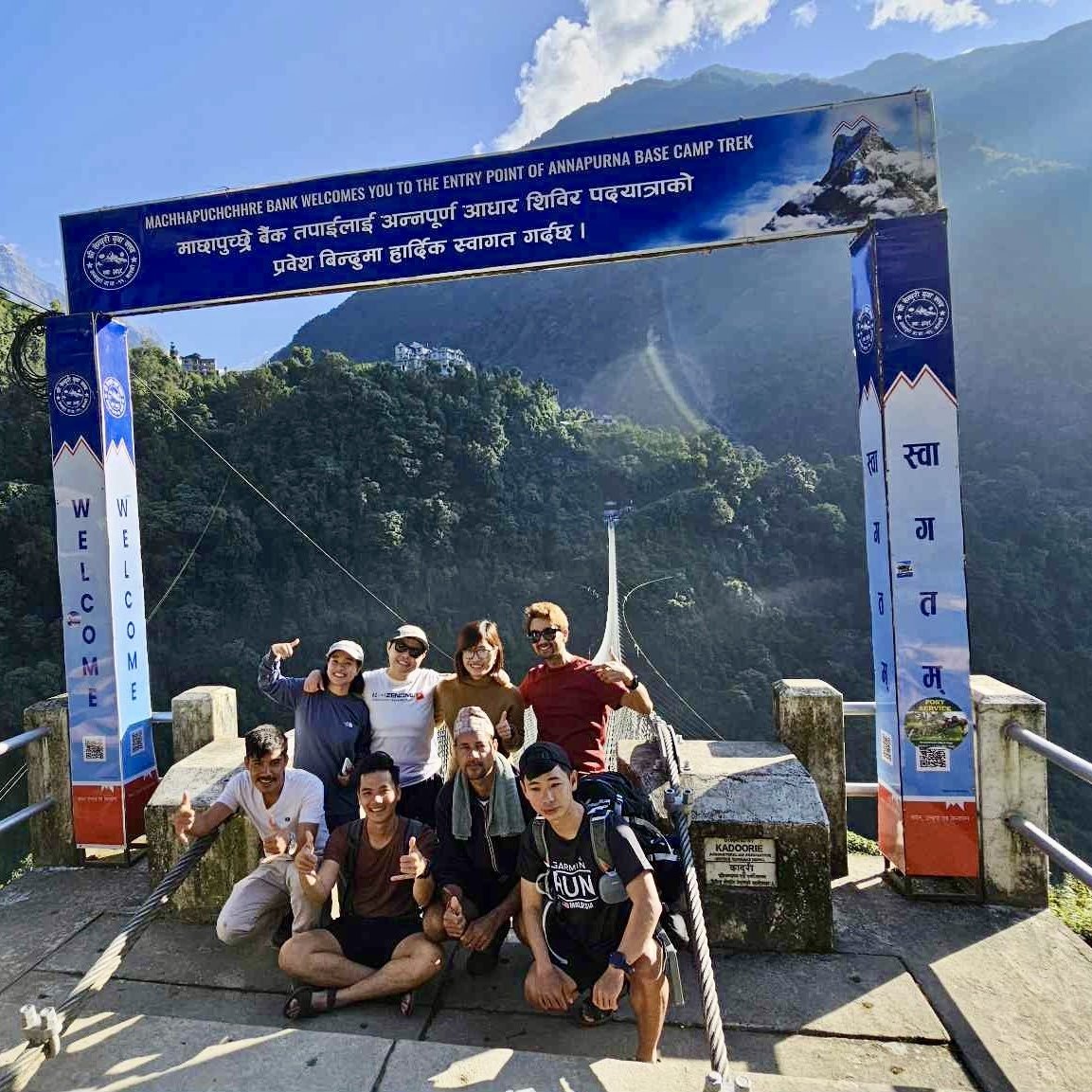
Annapurna Base Camp trekkers ready for an adventure of a lifetime
The Signs You Should Address Before You Go
Be straight with yourself about these:
You can't currently walk for more than 2 hours without significant fatigue. This is a gap you need to close before departure. It's closeable with consistent training if you have enough time.
You have a cardiovascular condition that hasn't been assessed in relation to altitude trekking. Get medical clearance. Altitude puts your heart and lungs under sustained pressure.
You've had a recent injury to your knees, hips or ankles. These need proper rehabilitation before you go. Descent days are long and steep.
You've never done consecutive days of hiking. ABC is not the place to discover your body struggles with back-to-back days on your feet. Build that experience before you arrive in Nepal.
What I See Hold People Back
From leading groups to Base Camp, the people who struggle are rarely stopped by fitness alone. They're stopped by going too fast, not drinking enough water, not eating when they don't feel like it, and ignoring early warning signs because they don't want to slow the group down.
The mental side of a Himalayan trek is real. The days are long. You'll have moments of doubt. Your body will tell you things and you'll need to know how to listen and when to act. Preparing for that side of the experience is just as important as the physical training.
So, Are You Fit Enough?
If you're active, hiking regularly, and you have a few months before departure to build your base intentionally, there's a very good chance the answer is yes.
If you're not sure, that uncertainty is worth taking seriously rather than glossing over. And it's exactly what Trek Prep is designed to work through with you.
Trek Prep is my 1:1 coaching package for people heading into a Himalayan trek. Over three sessions we work through your physical preparation, gear, the practicalities of altitude, and the mental side of what you're taking on. You leave knowing exactly what to do between now and departure, and you arrive in Nepal prepared rather than hoping for the best.
Our 2026 Annapurna Base Camp group trek departs 28 October. Spots are limited and filling up.
If ABC has been sitting in the back of your mind, this might be the year to stop wondering.
Sharon Evans is an HRT Adventure Leader and Himalayan trekking guide. She has led multiple groups to Everest Base Camp with a 100% summit success rate, and is leading her first Annapurna Base Camp group trek in October 2026. She offers 1:1 Trek Prep coaching for people preparing for their Himalayan adventure.
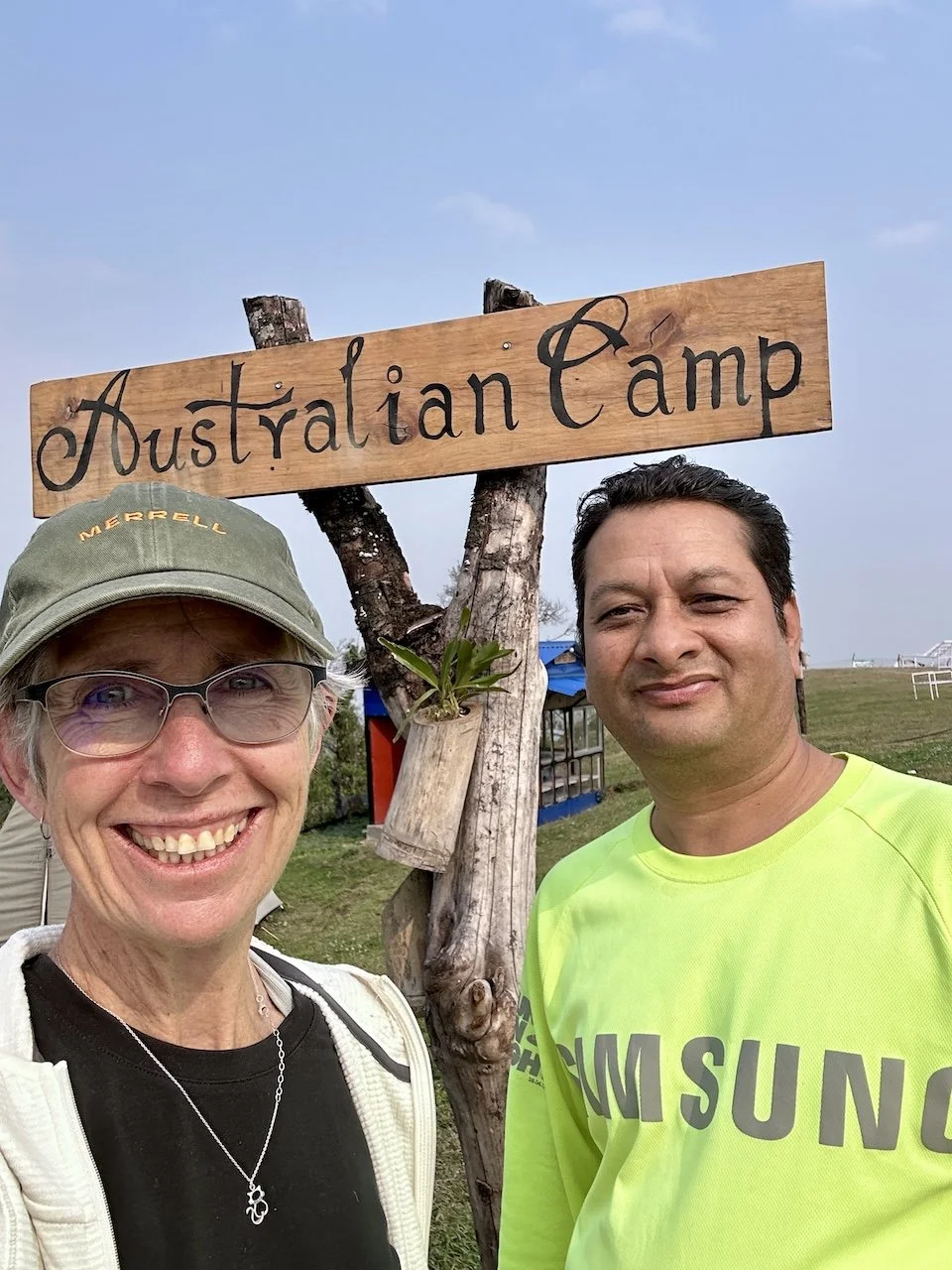
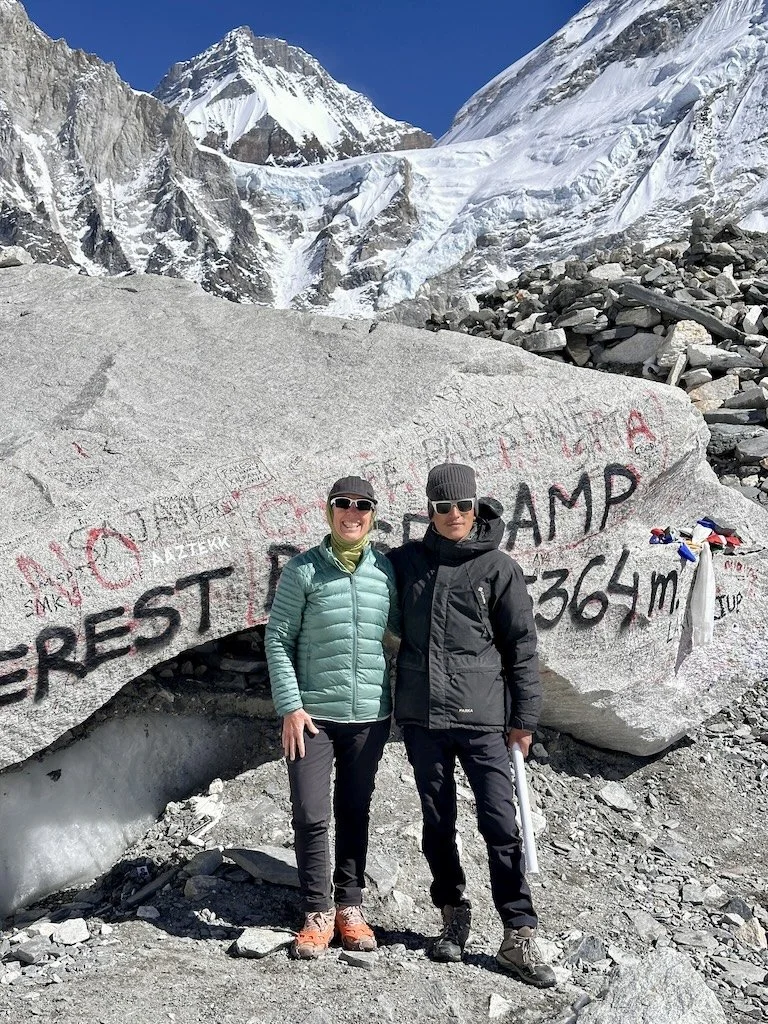
Sharon Evans and Ram Simkhada (HRT Guide) at the Australian Camp, Annapurna Base Camp Trek
Food is always the first thing trekkers stop thinking about and the last thing they should.
At altitude your body is working harder than it ever has, your appetite drops off right when you need fuel most, and the decisions you make at the tea house table matter more than most people realise.
Here's what you need to know before you go.