Gear Guide for Annapurna Base Camp: Lessons from Experience
EVEREST BASE CAMP ⚡️ LIMITED SPOTS LEFT ⚡️ BOOK NOW ⚡️ ANNAPURNA BASE CAMP ⚡️ LIMITED SPOTS LEFT ⚡️ BOOK NOW ⚡️
EVEREST BASE CAMP ⚡️ LIMITED SPOTS LEFT ⚡️ BOOK NOW ⚡️ ANNAPURNA BASE CAMP ⚡️ LIMITED SPOTS LEFT ⚡️ BOOK NOW ⚡️
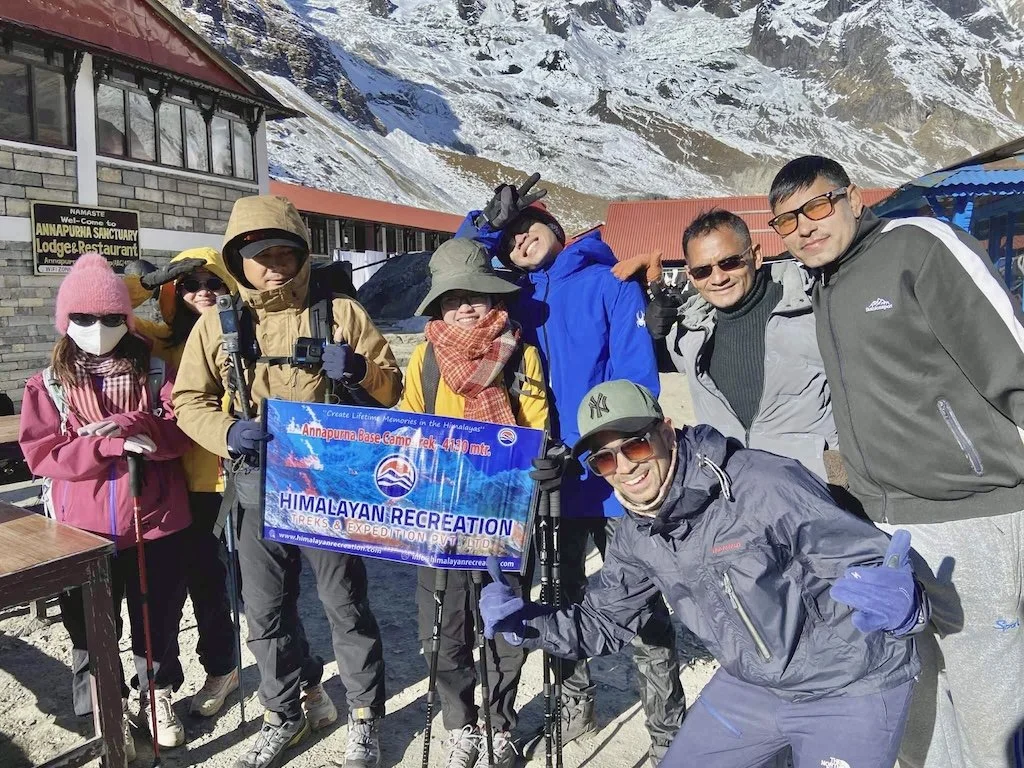
Gear Guide for Annapurna Base Camp
After successfully hiking to Everest Base Camp, I thought I was fully prepared for the Annapurna Base Camp trek. However a helicopter ride from Lukla to Kathmandu, a convenient shortcut after EBC, introduced an unexpected health challenge. A couple of days of recovery in Kathmandu were necessary before we could finally head to Pokhara and start ABC.
This experience highlighted the importance of having the right gear, flexible planning, and personal preparedness. This Annapurna Base Camp gear guide is designed to help you prepare for the trek safely and comfortably.
Clothing: Layering is Everything
Weather in the Annapurna region can change rapidly. Proper clothing ensures comfort and safety at all altitudes.
Base layers: Lightweight, moisture-wicking tops and bottoms. Synthetic or merino wool works best.
Mid layers: Fleece or lightweight down jackets for chilly mornings and evenings.
Outer layer: Waterproof and windproof jacket and pants. Conditions at higher altitudes can be unpredictable.
Hats and gloves: Warm hat for cold nights, sunhat for lower elevations, thermal gloves for high-altitude conditions.
Socks: Merino or synthetic hiking socks, plus spares to prevent blisters.
Tip: Layering correctly prevents both overheating and getting cold, even on a short trek.
Footwear: Comfort Comes First
For the ABC trek, I usually wear trail runners rather than traditional hiking boots. On both EBC and ABC, they provided the perfect combination of comfort and support, and there was no mud to contend with.
Extra socks: Bring a few spare pairs to manage sweat and prevent blisters.
Tip: Choose footwear based on personal preference and trail conditions. Trail runners are lighter, comfortable, and ideal for this trek.
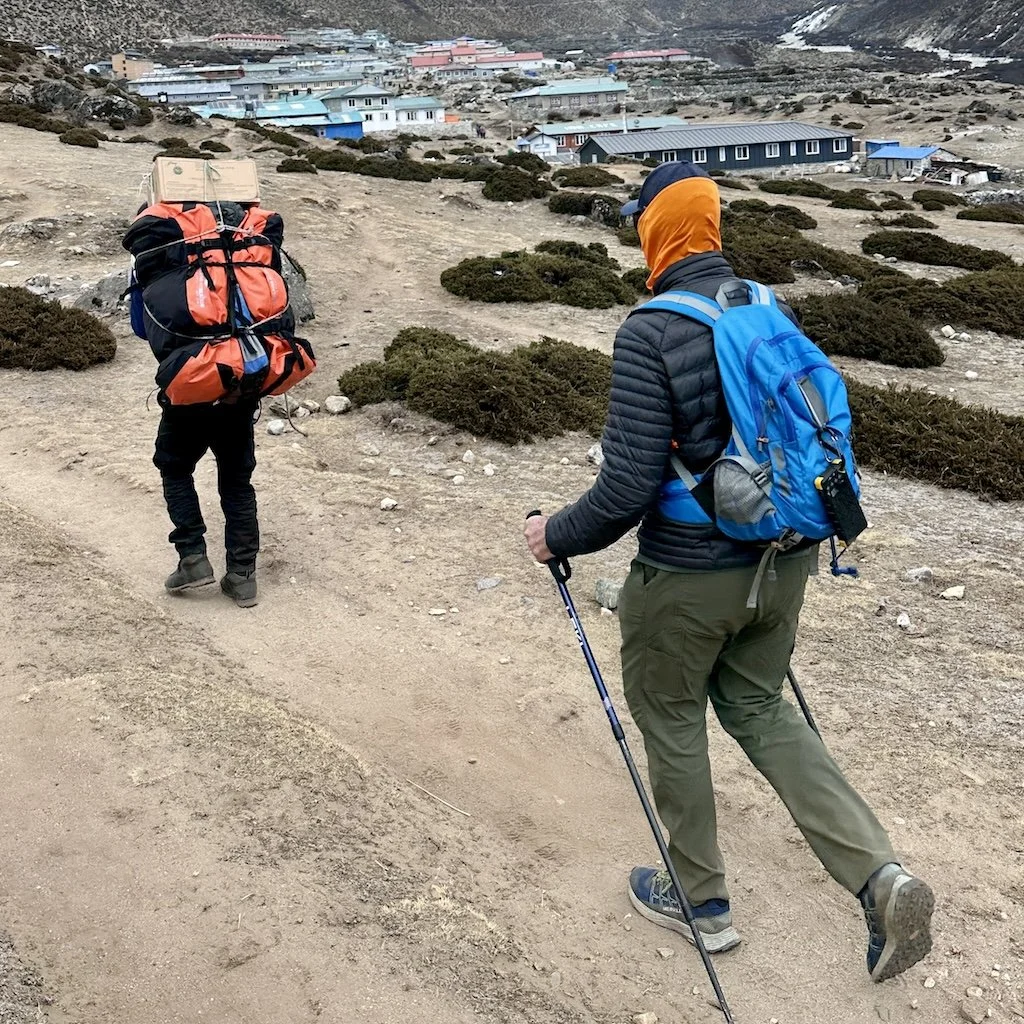
Nepalese porter loaded with two orange duffel bags
Duffel Bag: Leave the Heavy Lifting to Porters
Our tour company provides a duffel bag which the porters carry so there is no need for a large backpack. This allows you to keep your personal daypack light, carrying only water, snacks, camera, and essential items for the day.
Tip: Pack heavier items in the duffel to reduce strain and enjoy a lighter daypack experience.
Sleeping and Camp Essentials
Sleeping bag: Rated for minus five degrees Celsius minimum, as nights can be cold even in spring or autumn.
Sleeping liner: Lightweight and hygienic, especially for tea house stays.
Trekking poles: Reduce knee strain and improve stability on rocky paths.
Technology and Navigation
Phone and charger: Solar chargers are handy when away from power.
Headlamp: Essential for early starts and late arrivals at tea houses.
Camera: Optional, but highly recommended. The views along the ABC trek are unforgettable.
Health and Hygiene Essentials
Water purification: Tablets or filter bottles. Staying hydrated safely is crucial.
Medication: Include altitude sickness medication if prescribed, painkillers, and personal medication.
Hand sanitiser and wet wipes: Small but essential for tea houses and public toilets.
Snacks: Energy bars, nuts, and chocolate for quick fuel.
Lessons Learned from Our Experience
Expect the unexpected: Even after EBC, the helicopter ride exposed us to germs, causing a few days’ delay in Kathmandu. Always plan buffer days.
Recovery is part of preparation: Resting a couple of days helped us start ABC stronger.
Pack smart: A few extra items, such as warm layers and medication, made the trek far more manageable.
Practicality over perfection: Tea houses provide most amenities. Prioritise lightweight and multipurpose gear.
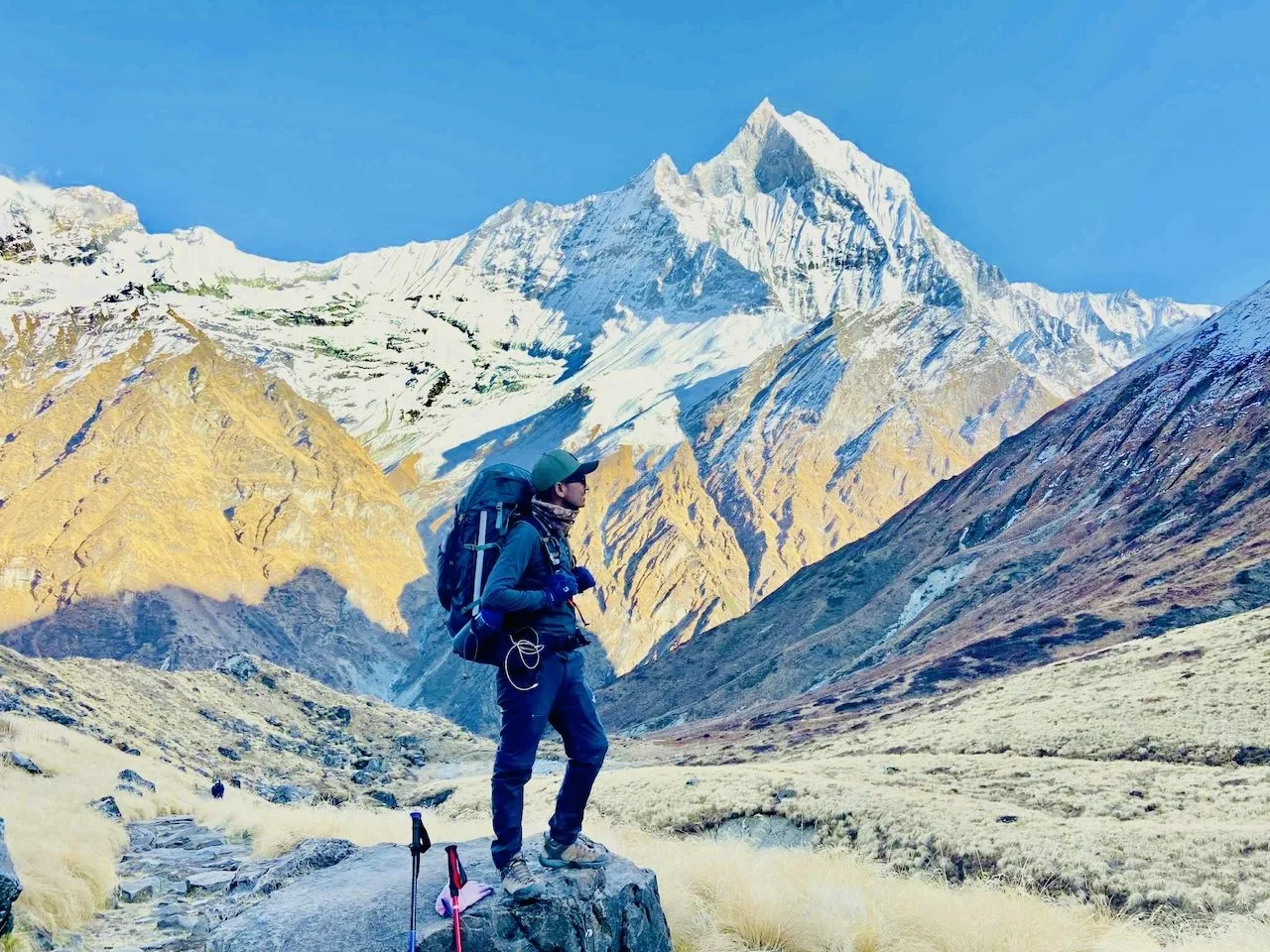
Enjoying the magnificent views on the Annapurna Base Camp Trek
Quick Gear Checklist for ABC
Base layers (two to three sets)
Mid layers (fleece or down jacket)
Waterproof jacket and pants
Trail runners and extra socks
Thermal hat, sunhat, gloves
Sleeping bag and liner
Trekking poles
Headlamp, chargers, camera
Water purification, medication, snacks
This guide is designed to help you prepare confidently, anticipate challenges, and enjoy the trek safely. Even with minor delays or illness, proper preparation ensures the adventure remains unforgettable.



On the morning of August 26, 2026, a glacial collapse near the Nepal-China border triggered a catastrophic flash flood down the Bhote Koshi and Trishuli river systems. Hundreds are confirmed dead, thousands remain missing.
The guides and porters who make trekking in Nepal possible live in these mountains. They are not abstract. They are real people dealing with real crisis. And if you've trekked in Nepal, if you've sat in a teahouse and listened to your guide's stories, then you know these people matter.
This is the story of what happened, why it matters, and what resilience actually costs when repeated disaster is the cost of staying alive.