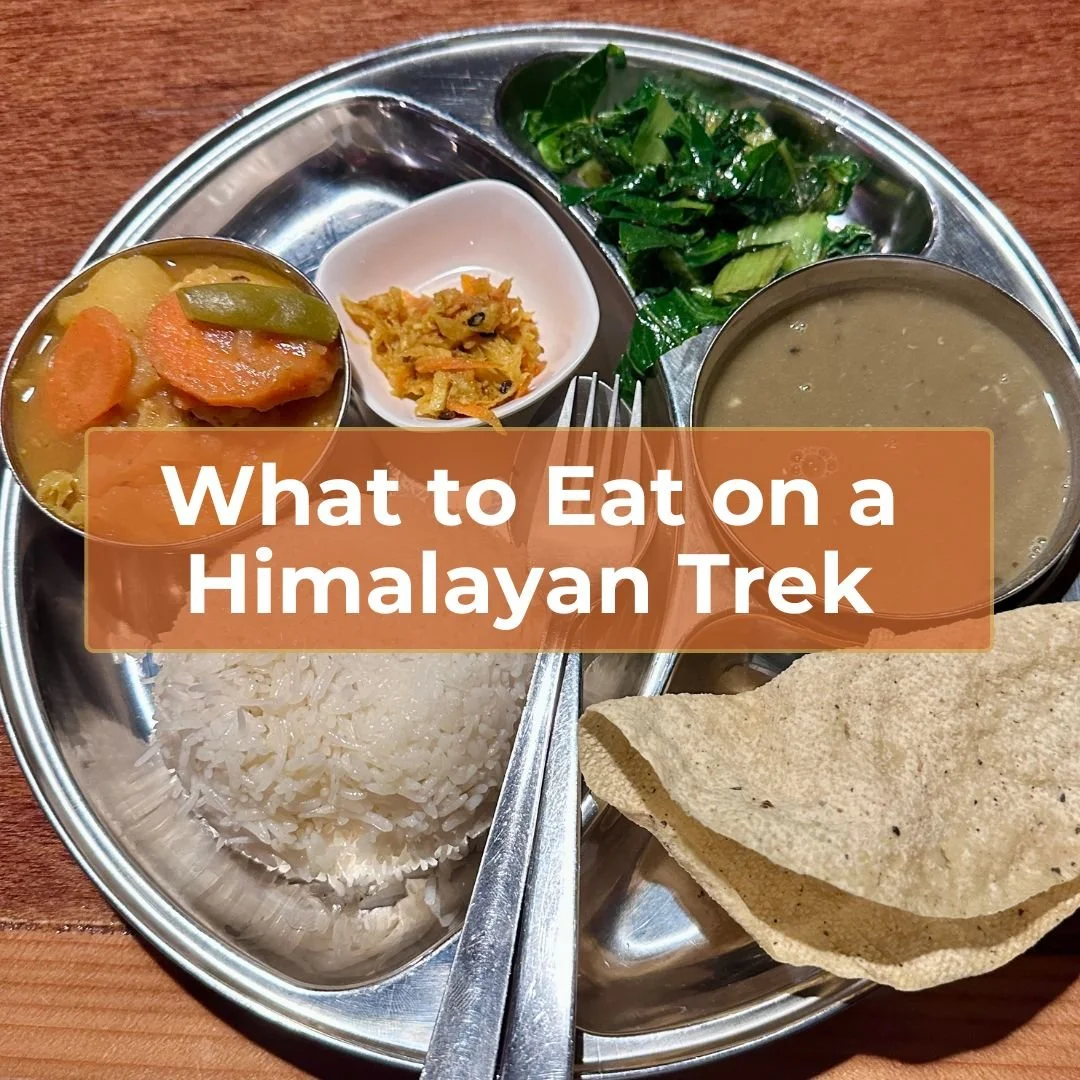
What to Eat on a Himalayan Trek (And Why It Actually Matters)
EVEREST BASE CAMP ⚡️ LIMITED SPOTS LEFT ⚡️ BOOK NOW ⚡️ ANNAPURNA BASE CAMP ⚡️ LIMITED SPOTS LEFT ⚡️ BOOK NOW ⚡️
EVEREST BASE CAMP ⚡️ LIMITED SPOTS LEFT ⚡️ BOOK NOW ⚡️ ANNAPURNA BASE CAMP ⚡️ LIMITED SPOTS LEFT ⚡️ BOOK NOW ⚡️
Trekkers spend months thinking about fitness. They research boots, sleeping bags, altitude medication, and layering systems. They train on hills and climb stairs with a loaded pack.
And then they get to Nepal, start walking, and stop thinking about food.
It's understandable. There's a lot going on. But food on a Himalayan trek is not a background detail. At altitude your body is working harder than it ever has, your appetite is going to take a hit right when your energy demands go up, and the decisions you make at the tea house table matter more than most people realise.
Whether you're heading to Everest Base Camp or Annapurna Base Camp, here's what you need to know.

Tea, sunshine, prayer flags, and people who were strangers not that long ago.
How the Tea House System Works
On both the EBC and ABC routes, your meals follow a simple and sensible structure. Breakfast and dinner are eaten at the tea house where you spend the night. This is expected, and if you choose to eat elsewhere your accommodation cost goes up considerably. Lunch is taken at a tea house in one of the villages you pass through during the day's walk.
It works well. The food comes out hot, the portions are generous, and you're sitting down to eat with your group, which matters more than you might think after a long day on the trail.
The menus are broader than most first-time visitors expect. You'll find traditional Nepali dishes alongside pasta, soup, fried rice, eggs prepared several ways, noodles, and yes, pizza and burgers if that's what you're after. As a general rule, choose the Nepali options. They're better value, they're more nutritious, and frankly they're often better.
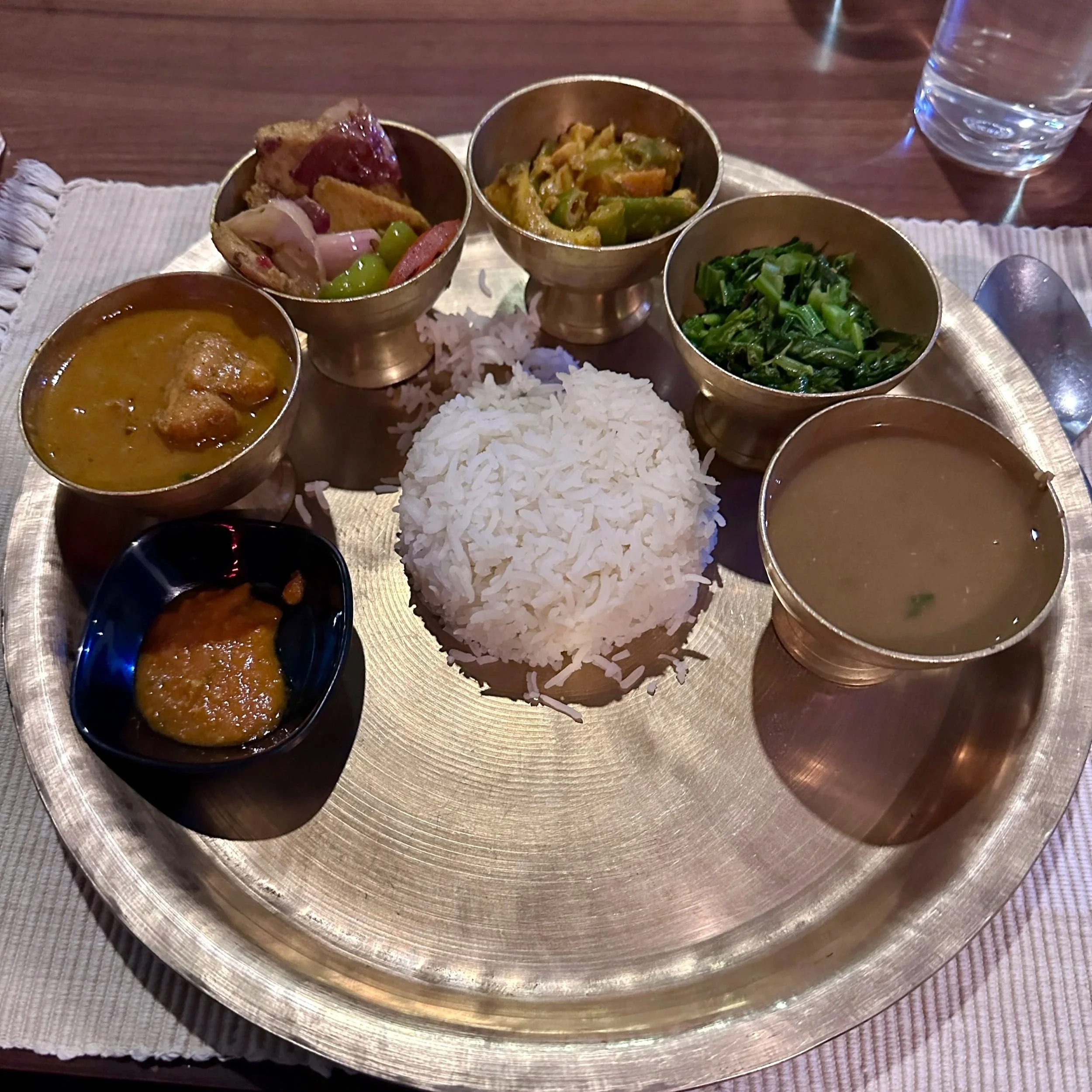
Dal bhat. It looks beautiful, it tastes incredible, and it will carry you further than anything else on that menu.
Dal Bhat: The One Dish to Know
Dal bhat is Nepal's national dish and it is the meal that powers the Himalayas.
The base is simple: lentil soup (dal) served with rice (bhat). From there it varies depending on the cook and what's available, often arriving with steamed or curried vegetables, pickle, poppadoms, and curd. No two cooks make it exactly the same, and I have eaten many versions of this dish over many treks and never once been disappointed.
The thing that tells you everything you need to know about dal bhat is this: our guides and porters eat it three times a day. These are the people doing the hardest physical work on the mountain, day after day, at altitude, in all weather. They could eat anything on that menu. They choose dal bhat, every time.
Part of that is cultural, and part of it is practical since it is inexpensive and widely available. But a large part of it is that dal bhat simply works. It is carb-heavy, genuinely filling, and almost always comes with free second helpings. The Nepali saying captures it perfectly: dal bhat power, 24 hour.
I was so taken with this dish that when I was in Kathmandu I attended a private cooking class to learn how to make it properly. I wanted to be able to cook it at home, and I do.
If you eat nothing else on the trail, eat dal bhat. Eat it often.
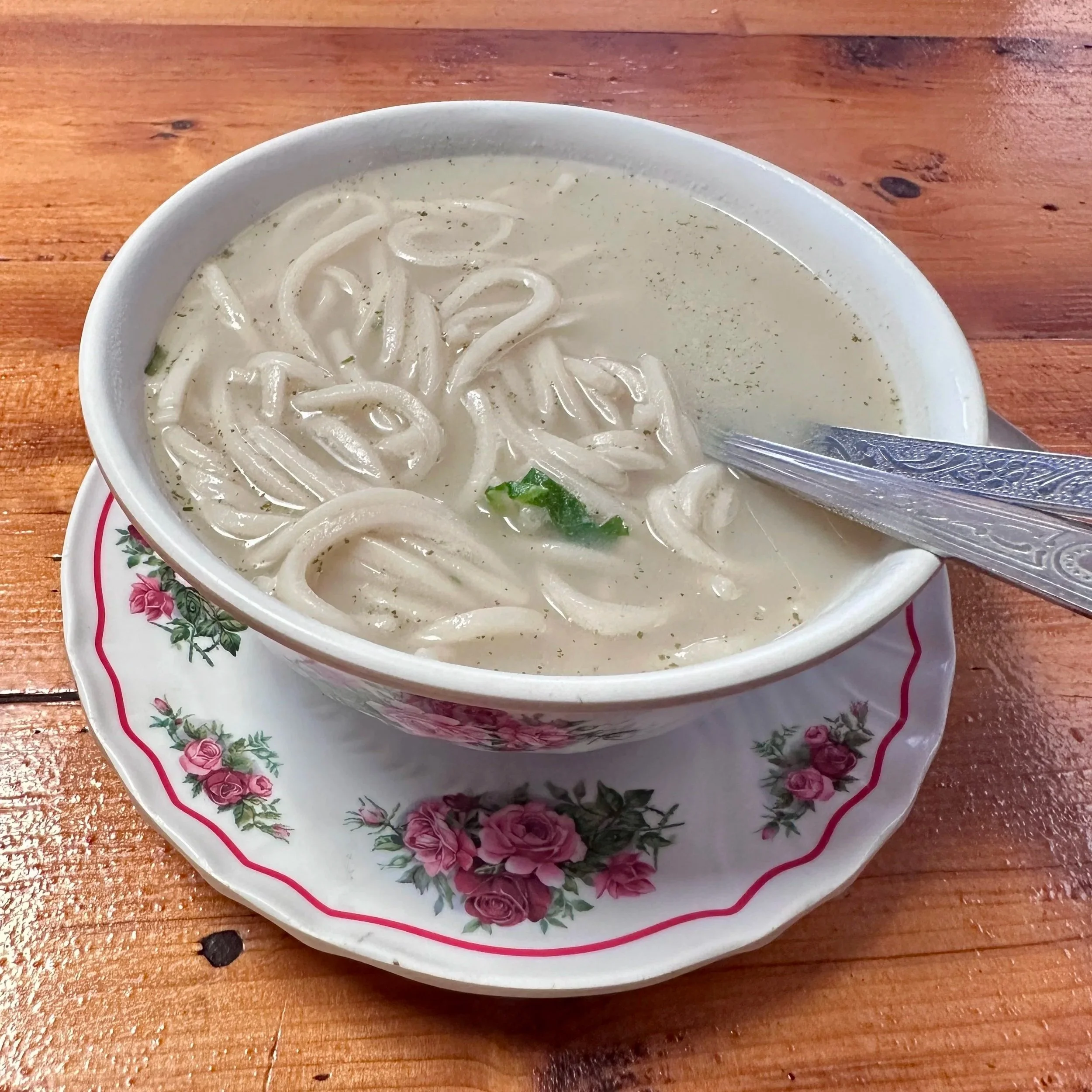
When your appetite is struggling at altitude, a bowl of something warm and simple is your best friend.
What Altitude Does to Your Appetite (And Why You Need to Eat Anyway)
This is the part most trekking guides skip over, and it's important.
As you gain altitude, your appetite drops. It happens to almost everyone and it is a normal physiological response to being at height. The problem is that your body's caloric demand is going up at exactly the same time, because it is working harder to function, to keep you warm, and to keep moving day after day.
The result is that you stop feeling hungry right when you need fuel most.
You have to eat anyway. This is not optional. Sit down at every meal and eat what's in front of you, even if you don't feel like it. Warm foods are easier to manage than cold ones. Soups, rice, noodles, and porridge tend to go down better than heavy proteins when your appetite is suppressed. Pay attention to what your body tolerates and choose accordingly.
Skipping meals at altitude is one of the things that catches people out. It compounds fatigue, makes acclimatisation harder, and contributes to the kind of low-grade suffering that makes a hard day feel impossible.
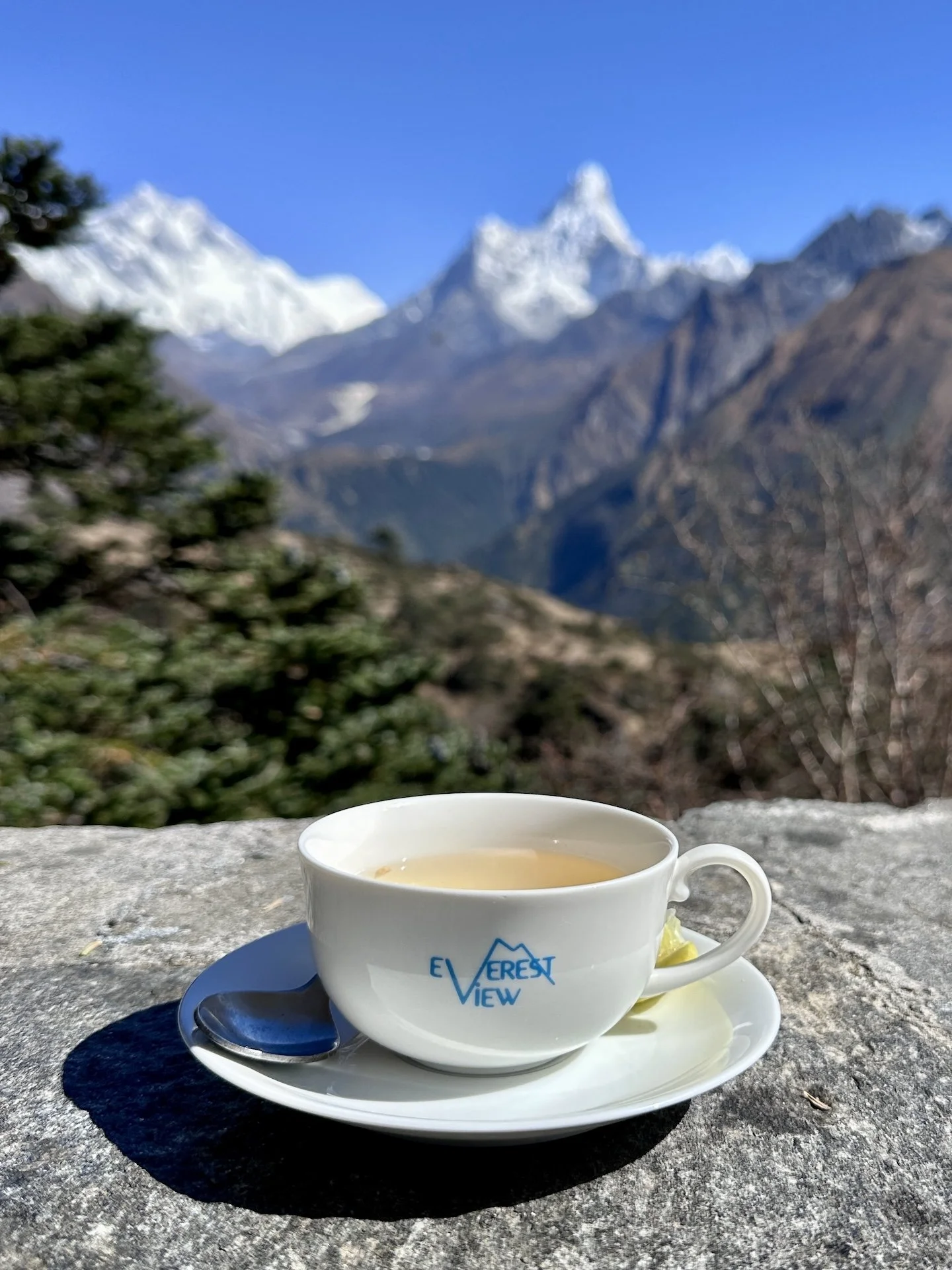
Tea at the Everest View Hotel, with Ama Dablam doing her thing in the background. Your office for the next few weeks.
What to Drink
Water. More than you think you need.
Staying hydrated at altitude is one of the most important things you can do for your acclimatisation, your energy levels, and your ability to tell the difference between dehydration and early altitude sickness, since the symptoms overlap significantly.
The good news is that filtering and refilling your water bottle at the tea houses along the way is straightforward, inexpensive, and much better for the environment than buying bottled water. Bring a good filter or purification tablets and use them.
On caffeine: if you are a regular coffee or tea drinker, do not give it up on the trail. Caffeine withdrawal headaches at altitude are unpleasant in a way that is hard to describe. Keep your usual intake. Just don't increase it dramatically, and be aware that caffeine is a mild diuretic, so your water intake needs to compensate.
On alcohol: it is widely recommended to avoid it at altitude and I back that advice fully. Alcohol at height raises your risk of acute mountain sickness, disrupts sleep, and dehydrates you. Save it for Kathmandu.
On carbonated drinks: they can also contribute to dehydration for the same diuretic reason as caffeine. Water is your best friend up there. Keep it simple.
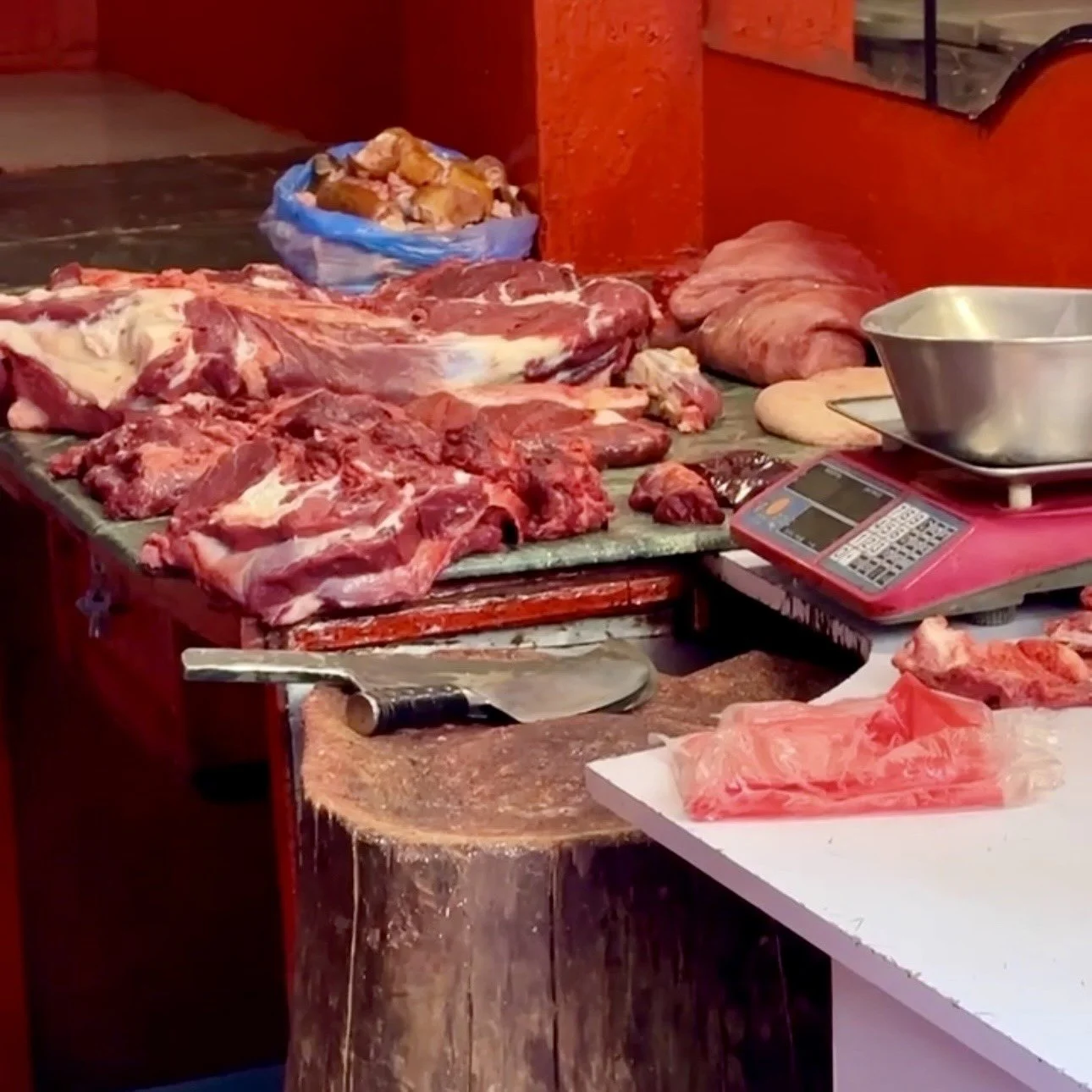
Kathmandu butcher. The further up the trail you go, the further this meat has travelled to reach your plate.
The Meat Question
This one requires a straight answer.
On both the EBC and ABC routes, everything you eat has been physically carried in, whether by porter, yak, or mule. The higher you go, the further that food has been transported, often under conditions that are not exactly refrigerated.
I once followed a porter carrying fresh buffalo meat in an open basket on his back. It was neither covered nor chilled, and we were on a section of trail that gets warm before the altitude kicks in. That image has stayed with me.
On the other hand, Andrew and I ate meat throughout our first EBC trek and had no issues at all. People make this call every day without consequence.
What I would say is this: be more cautious the higher you are and the further you are from the supply point. Lower on the trail, the risk is lower. At higher elevations, where meat has been in transit for days, I lean towards vegetables, eggs, and dal bhat. But it is your decision, and how risk-averse you are is something only you can answer.
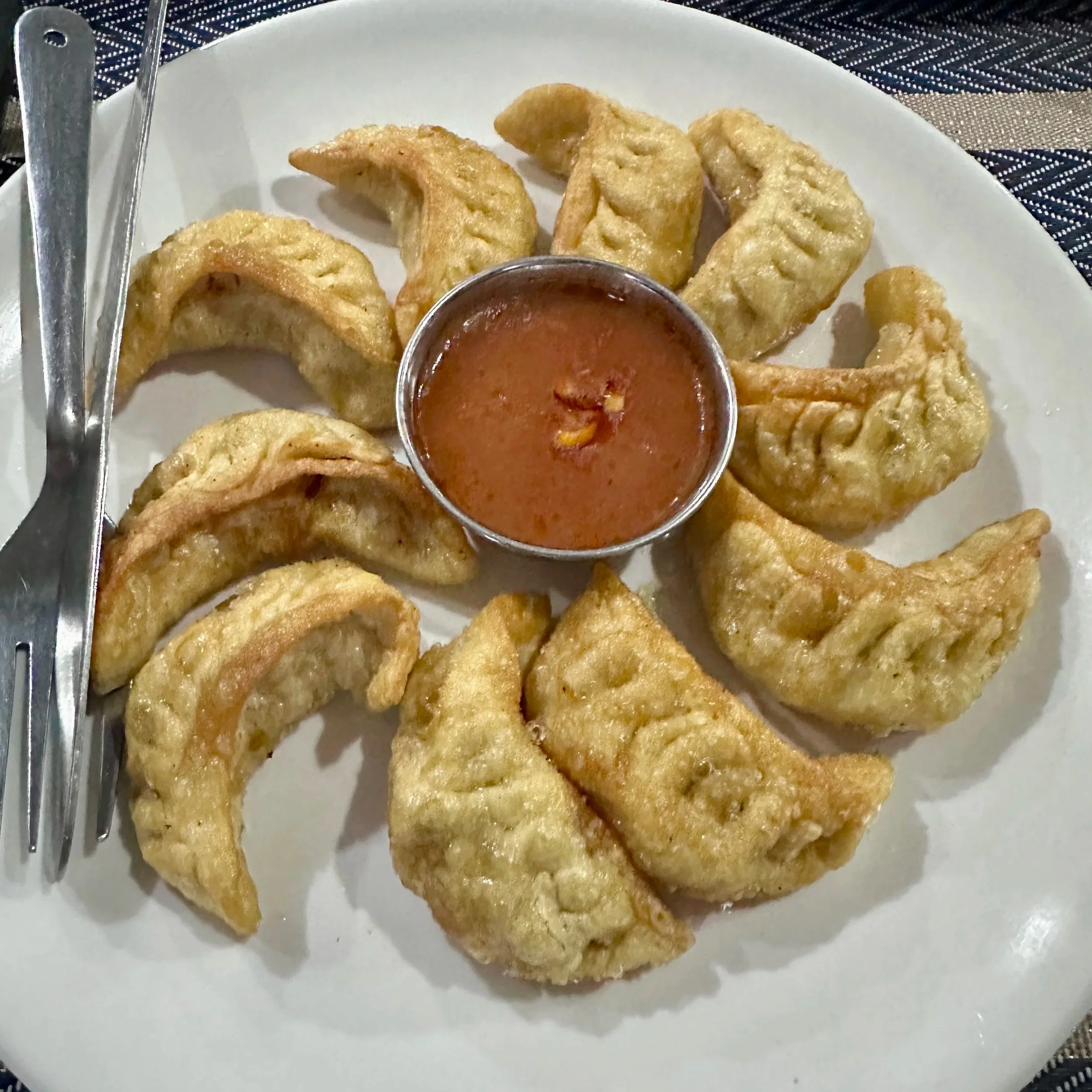
Vegetable momos with achar. Proof that eating plant-based on a Himalayan trek is no hardship at all.
Vegetarian and Vegan on the Trail
Better catered for than you might expect.
Both routes offer plenty of plant-based options. Lentil dishes, vegetable curries, tofu, stir-fries, soups, and of course dal bhat are all widely available. If you follow a vegetarian or vegan diet you will not struggle to find food, particularly on the lower sections of both trails.
A couple of things to check: the oil or fat being used in cooking, since animal fat is sometimes used, and whether curd (yoghurt) is an ingredient if you are strictly vegan. It is worth asking, and the tea house staff are generally very accommodating.

Yes, that is black forest cake. Yes, you are at altitude. No, you should not feel guilty about it.
Snacks: Do You Need to Bring Them From Home?
Probably not, assuming you are not on a particularly restrictive diet.
The meal portions at tea houses are generous and the menus include snack options beyond the main meals: chocolate, potato chips, apples, bananas, and cake appear in most villages and at most tea houses along both routes. The bigger stops, Namche Bazaar on the EBC trail and Pokhara and Chhomrong on the ABC side, have cafes and bakeries where you can treat yourself properly.
The one practical consideration if you are doing EBC is the baggage allowance on the flight from Kathmandu or Ramechhap to Lukla, which is fifteen kilograms per person. Every gram counts. Filling your bag with snacks from home at the expense of something else is rarely worth it.
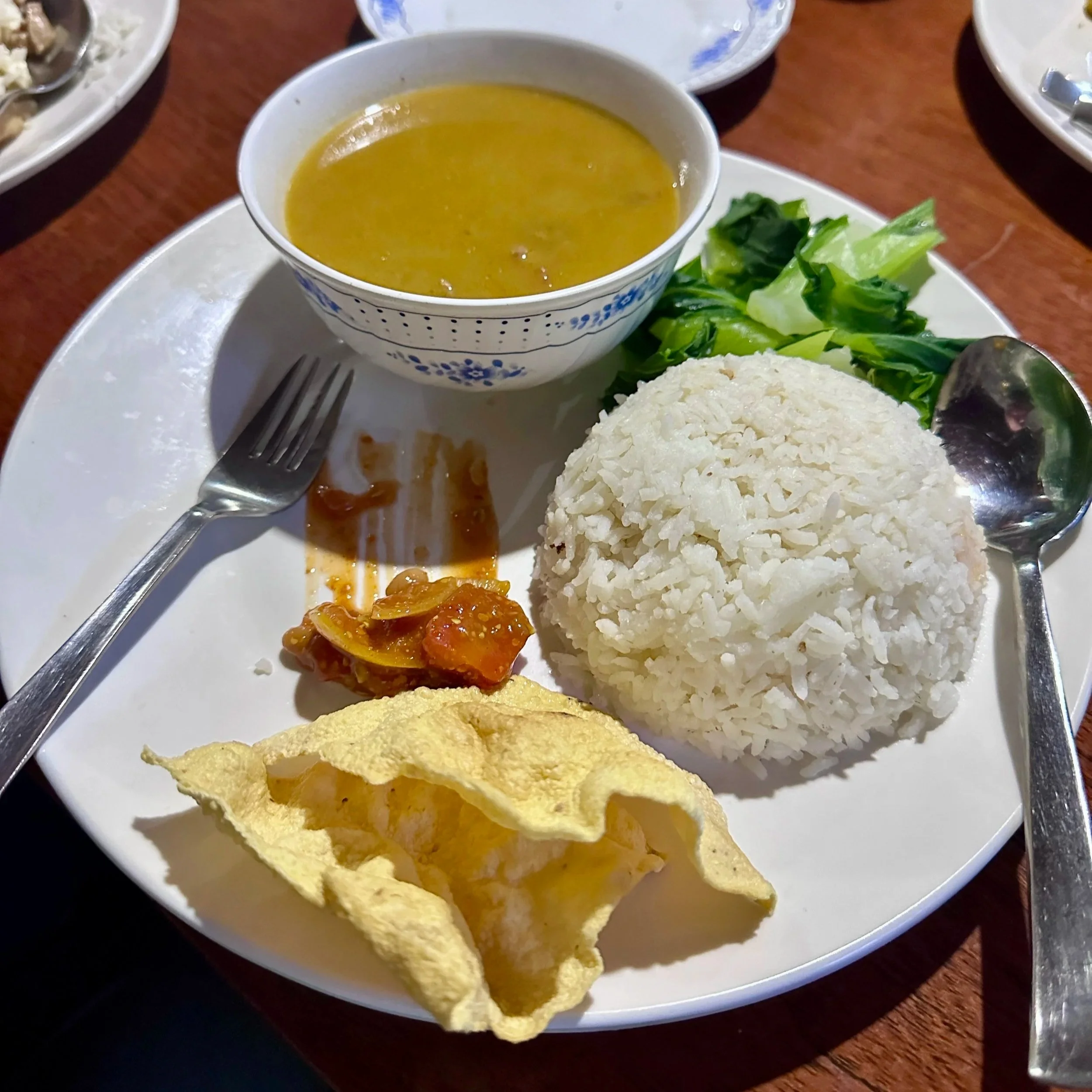
Dal bhat. Rice, lentil soup, greens, pickle, poppadom. This is what our guides choose, every single day. There's your answer.
What Your Guides and Porters Eat, and What That Tells You
Come back to the dal bhat.
Our guides and porters, the people who know these trails better than anyone alive, who carry extraordinary loads at altitude, who do this week after week across an entire season, eat dal bhat three times a day. They are not doing this out of lack of choice. They are doing it because it works.
There is something worth paying attention to in that.
When you are sitting in a tea house at 4,000 metres, feeling a bit flat, looking at a menu full of options, and wondering what to order, ask yourself what Raju or Narayan or Ram would choose.
Dal bhat. Every time.
If you are heading to Everest Base Camp and want the full detail on food at every stage of the trail, including what's available at the highest tea houses and a look at the menu at Gorak Shep, read Everest Base Camp: Taste of Nepal.
And if you want to work through your preparation properly before you leave, including nutrition, gear, altitude, and the mental side of the trek, Trek Prep is my 1:1 coaching package built for exactly this.
Sharon Evans is an HRT Adventure Leader and Himalayan trekking guide. She has led multiple groups to Everest Base Camp with a 100% summit success rate and is leading her first Annapurna Base Camp group trek in October 2026. She offers 1:1 Trek Prep coaching for people preparing for their Himalayan adventure.
The gear question starts early. Sometimes before the booking is even confirmed. And it should, because getting it wrong is expensive, uncomfortable, and entirely avoidable.
I have trekked to Everest Base Camp and into the Annapurna Base Camp trail and led multiple groups to each. This is what I actually pack, what I leave behind, and where the two treks differ in ways that matter.