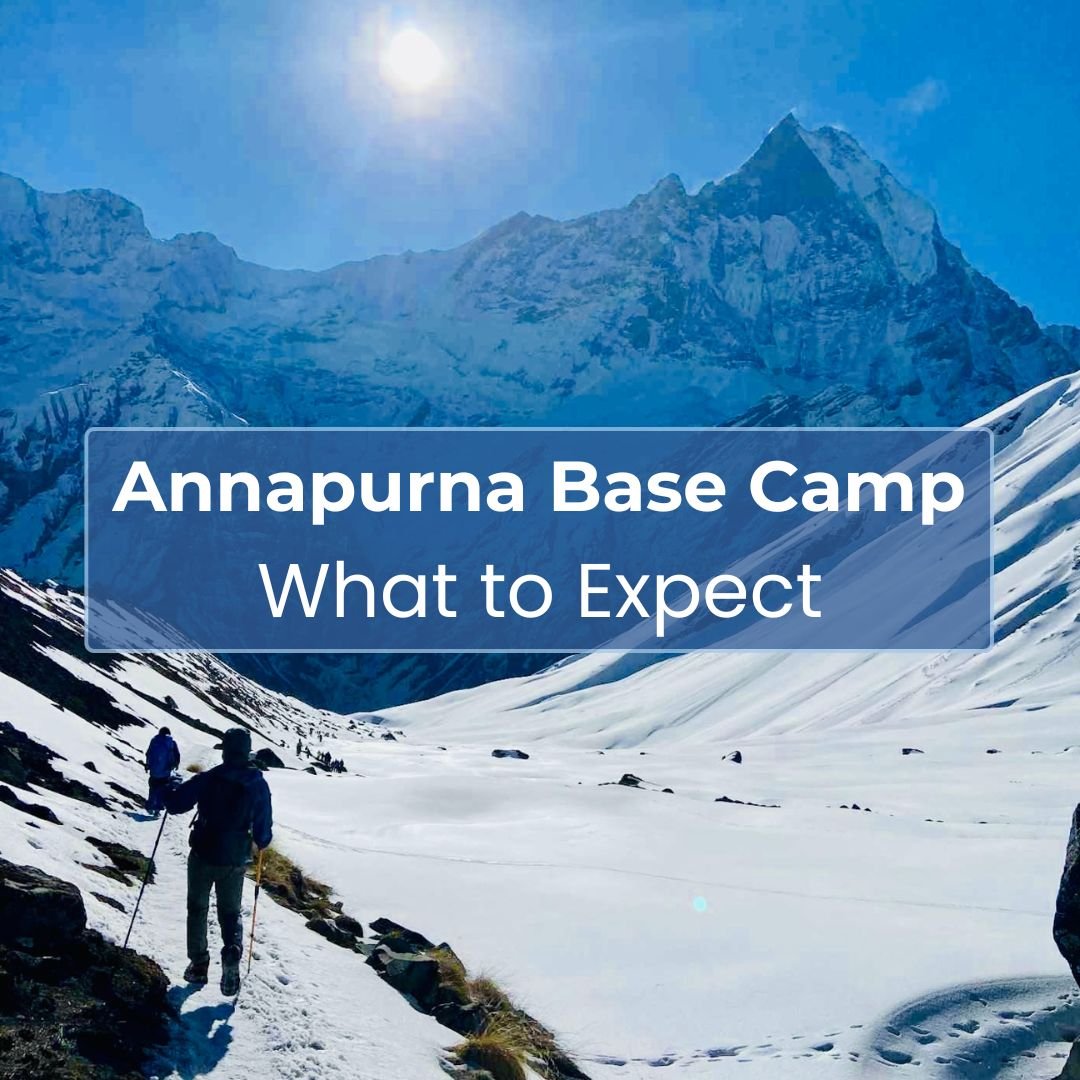
People ask me what the Annapurna Base Camp trek is actually like. Not the glossy brochure version. The real version. What are the days like, what will I see, what will I feel, what will surprise me?
Here's the full picture, day by day, based on our 10-day itinerary departing 28 October 2026.
Day 1: You Land in Kathmandu
The adventure begins the moment you touch down at Tribhuvan International Airport. I will be there to meet you, which means the first thing you'll see after clearing customs is a familiar face.
You'll be transferred to your 3-star hotel in Kathmandu where we'll have a briefing together. We go through the full itinerary, trekking safety, your gear, acclimatisation strategy, and the permits you'll need. Nothing is left to chance and no question is too small.
If time and energy allow, Kathmandu's streets are right there waiting. The bazaars, the smells, the colour, the chaos. It's one of the most extraordinary cities in the world and it will get under your skin immediately.
Maximum altitude: 1,350m
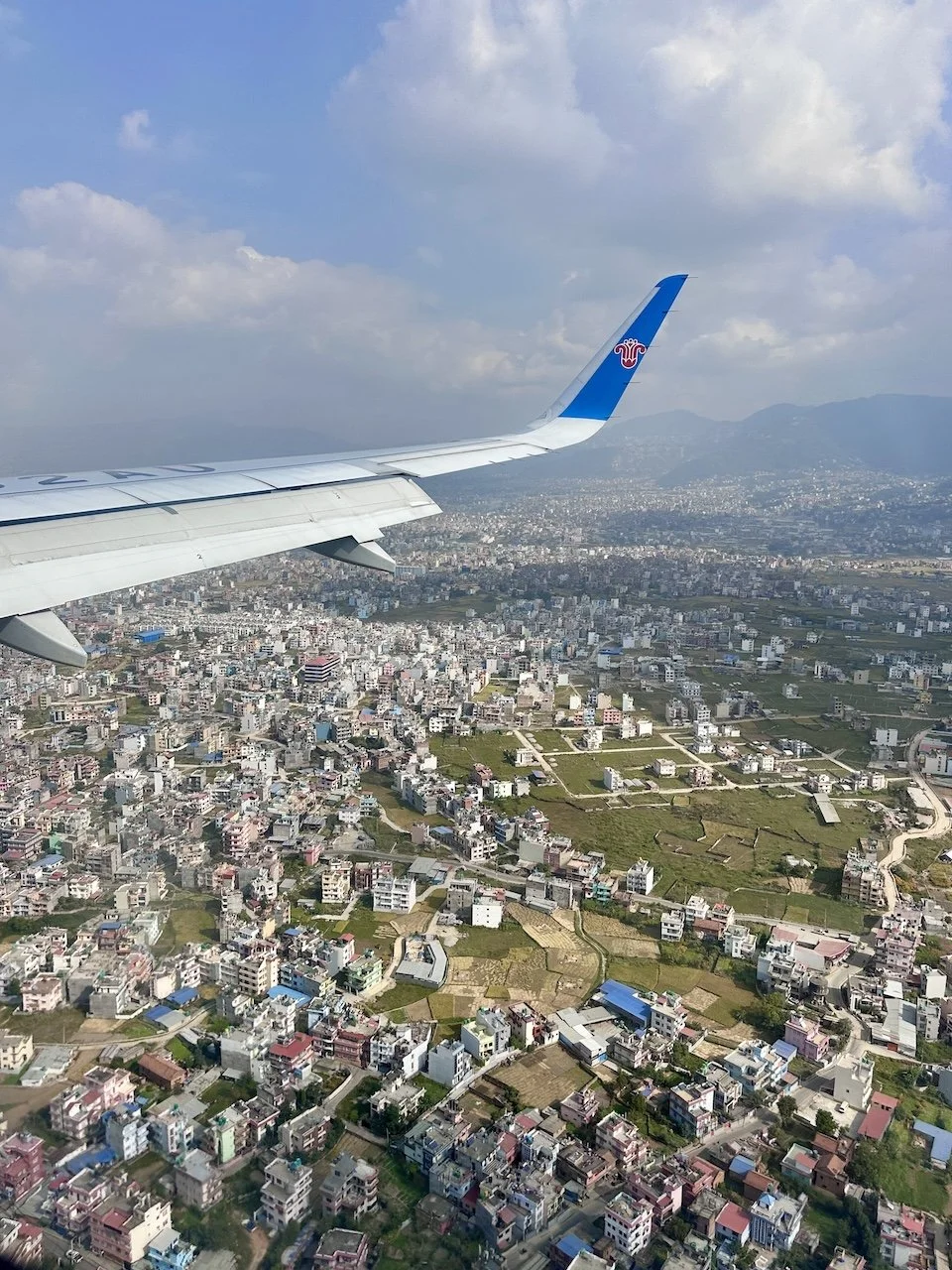
Kathmandu from the air. This is the moment it stops being a plan and starts being real.
Day 2: The Road to Pokhara
Today is a travel day with serious scenery. A 6 to 7 hour tourist bus journey from Kathmandu to Pokhara winds through terraced rice fields, hilltop villages, and stretches of highway where the Annapurna and Dhaulagiri ranges appear suddenly on the horizon like something from another world.
Pokhara is stunning. Your hotel sits on the shores of Phewa Lake, calm and reflective, with snow-capped peaks mirrored in the water. After the intensity of Kathmandu, Pokhara feels like a deep breath.
The lakeside is worth a stroll, the International Mountain Museum is genuinely excellent, and a boat ride on Phewa Lake with the Himalayas reflected in front of you is one of those moments you don't forget.
Maximum altitude: 820m
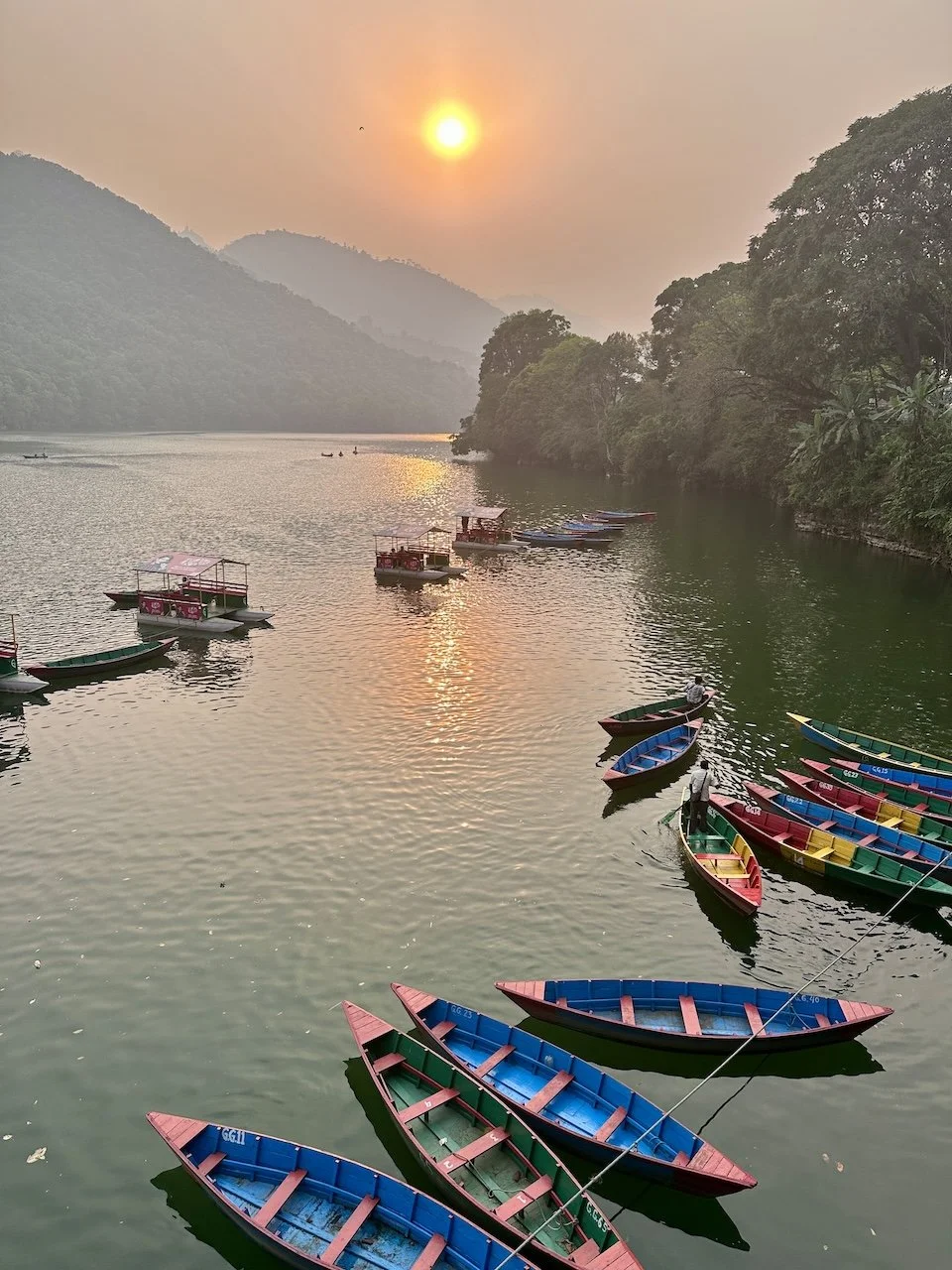
Sunset over Phewa Lake, Pokhara. After the intensity of Kathmandu, this is exactly what you need.
Day 3: The Trek Begins — Sauli Bazaar to Chhomrong
This is the day the walking starts and it's a good one.
A shared jeep from Pokhara takes you to Sauli Bazaar, and from there you're on foot. The trail winds through terraced fields and rhododendron forests, past traditional Gurung villages where life moves at a pace that makes you immediately recalibrate your own.
After 5 to 6 hours you arrive at Chhomrong, perched on a hillside at 2,170 metres with panoramic views of Annapurna South and Machhapuchhre, the sacred Fishtail peak that you'll be walking toward for the next two days. Chhomrong is a beautiful village and a proper introduction to teahouse life.
Today is graded medium. Your legs will know they've worked but you won't be wrecked.
Maximum altitude: 2,170m
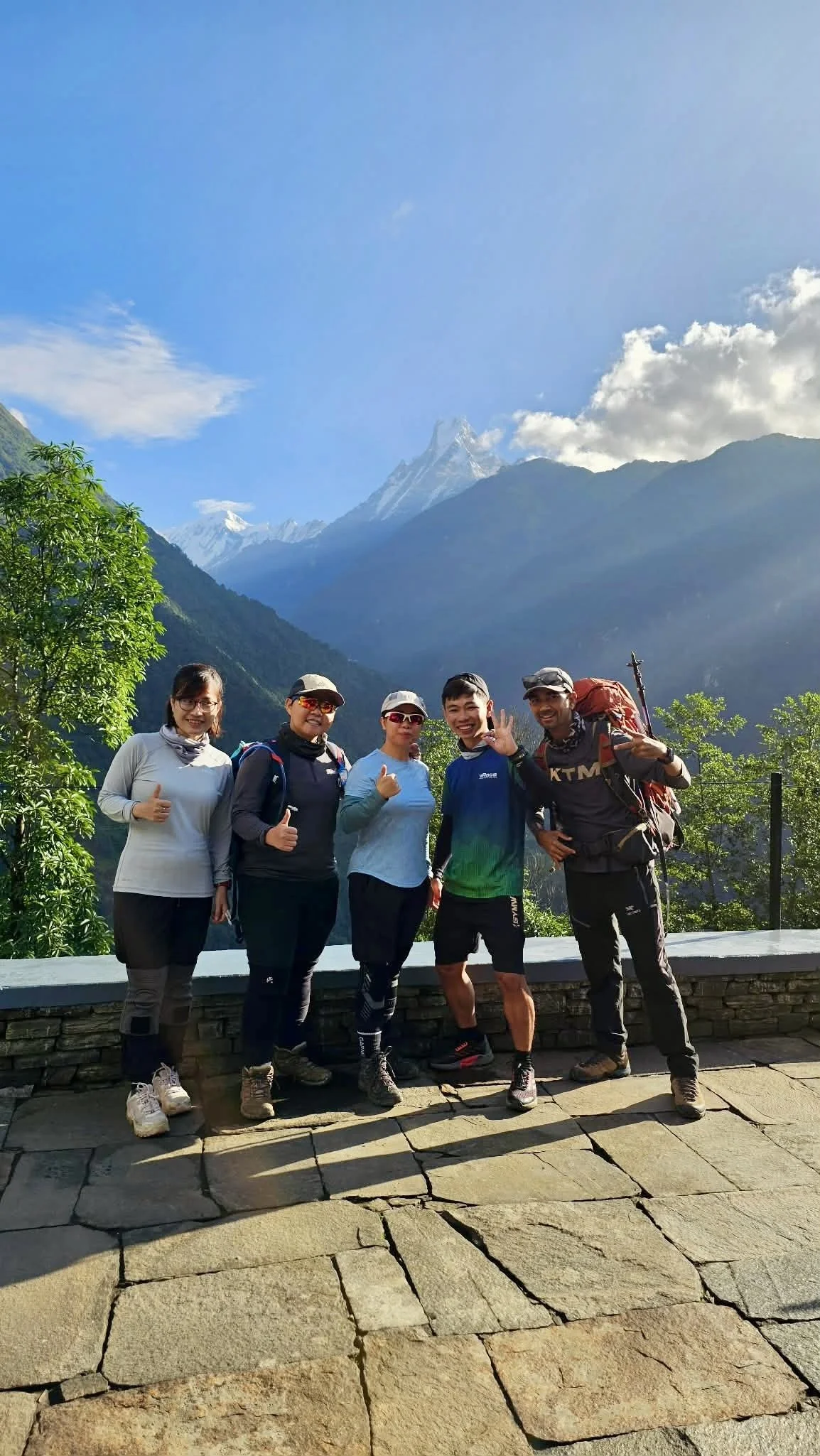
The team at Chhomrong, Machhapuchhre watching over us. The forest climbs ahead, the mountains are getting closer. Photo Credit: Narayan Baniya
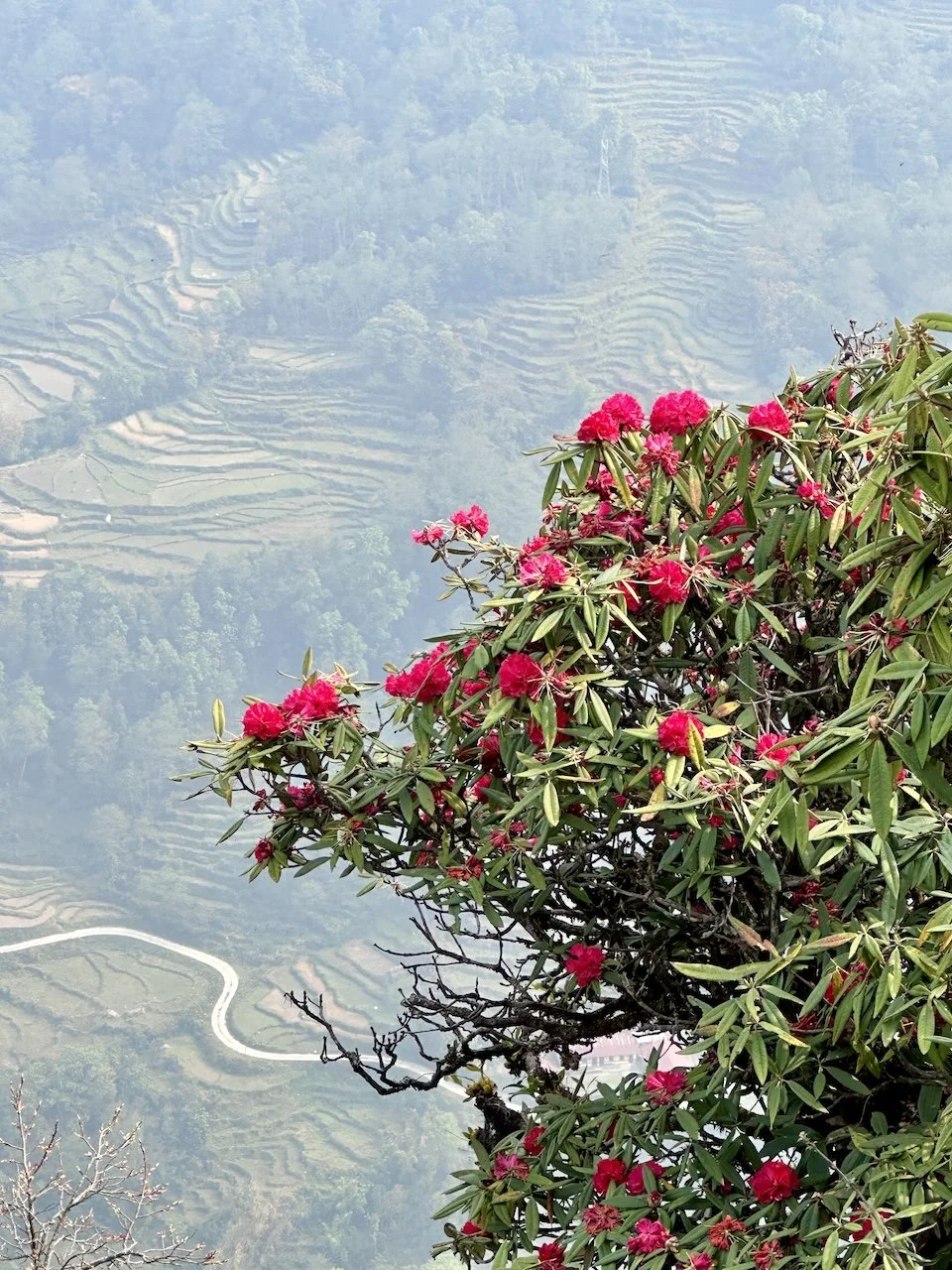
Rhododendron forest and terraced fields below Chhomrong. Nepal's national flower in its element.
Day 4: Into the Forest — Chhomrong to Himalaya Hotel
The scenery shifts today as you climb through dense rhododendron forest and the landscape becomes wilder and quieter. The villages thin out, the tree line begins to change, and alpine meadows start to appear as you gain altitude.
It's a longer day, 6 to 7 hours, but the gradient is steady and the surroundings carry you. By the time you reach the Himalaya Hotel at 2,900 metres the air is noticeably thinner and the mountains feel closer than they have any right to.
Sleep well tonight. Tomorrow is the big one.
Maximum altitude: 2,900m
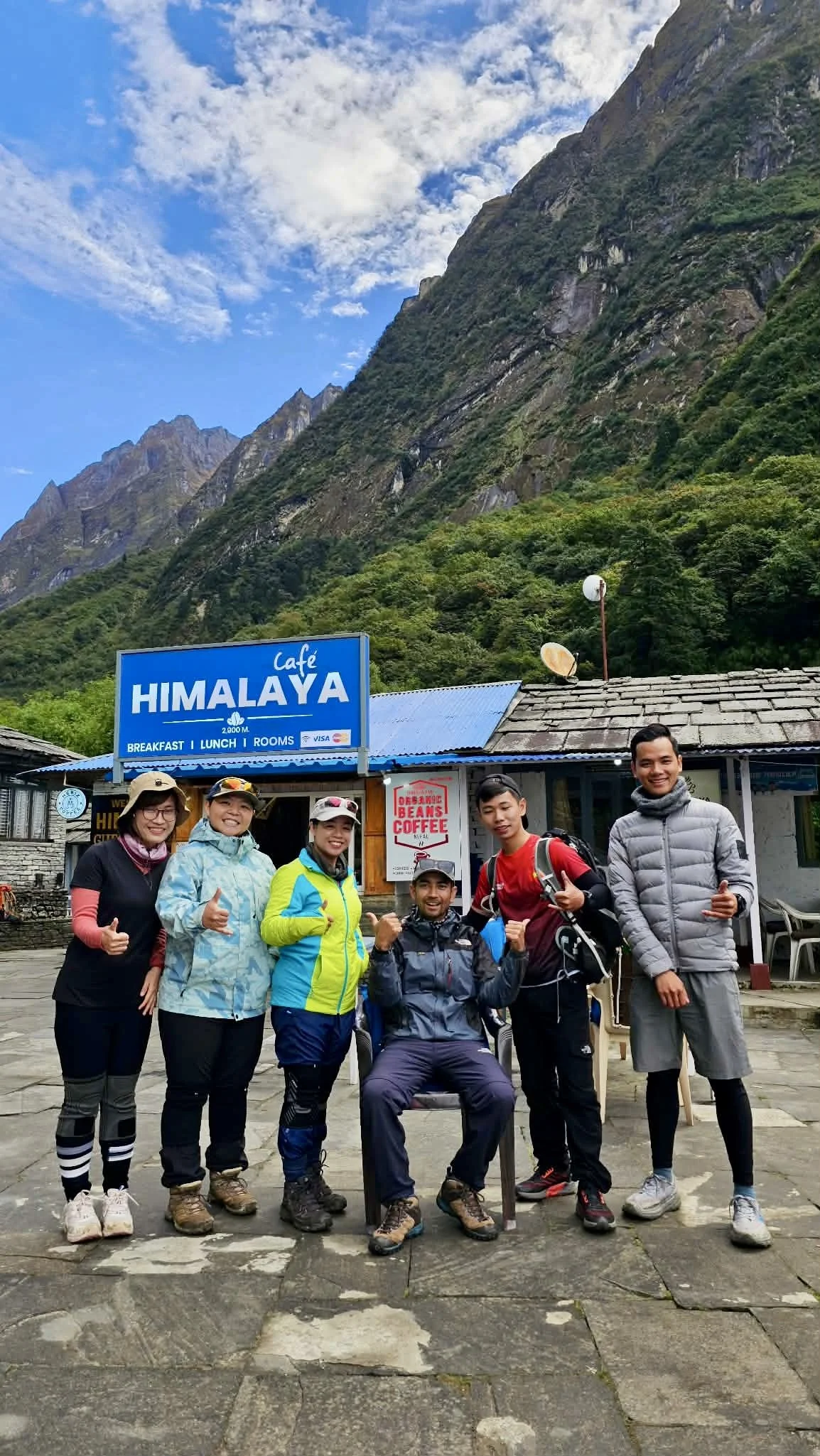
Café Himalaya, 2,900 metres. Day 4 done. Sleep well tonight — tomorrow is the big one. Photo Credit: Narayan Baniya
Day 5: The Sanctuary — Himalaya Hotel to Annapurna Base Camp
This is the day everything has been building toward.
The trail from Himalaya Hotel climbs steadily through glacial moraines and rocky paths as you make your way into the Annapurna Sanctuary, one of the most dramatic natural amphitheatres on earth. The mountains close in around you as you enter: Annapurna I at 8,091 metres, Annapurna South, Hiunchuli, and the sacred Machhapuchhre towering directly ahead.
There is a moment, somewhere in that final approach, when you realise you are completely surrounded by Himalayan giants in every direction. Nothing can prepare you for it.
En route you pass through Machhapuchhre Base Camp where the views of the glaciers stop you in your tracks. And then you push on to Annapurna Base Camp itself at 4,130 metres.
If the timing is right, you will watch the sunset from Base Camp. The light on the Annapurna massif at that hour is extraordinary. Take as many photos as you like, you won't capture it fully and that's fine.
This is a 5 to 6 hour day and every step of it earns its place.
Maximum altitude: 4,130m
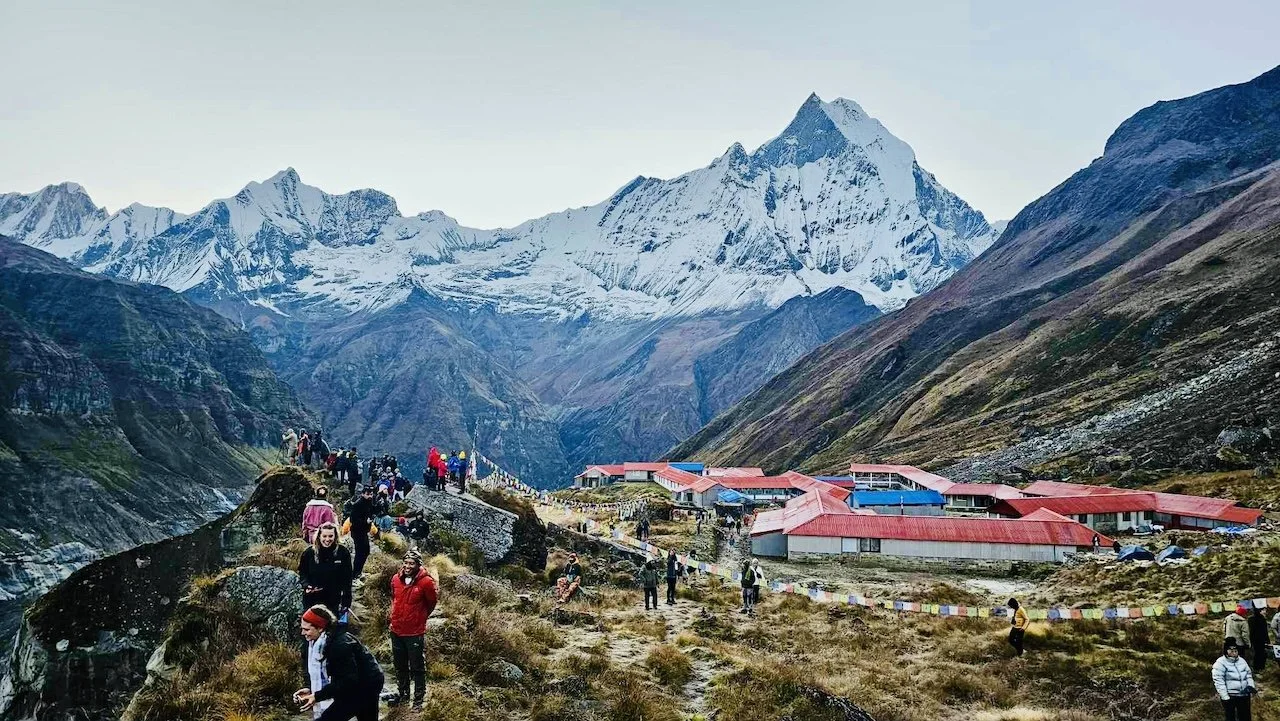
Annapurna Base Camp at 4,130 metres. Everyone out for the light show. You earned this. Photo Credit: Narayan Baniya
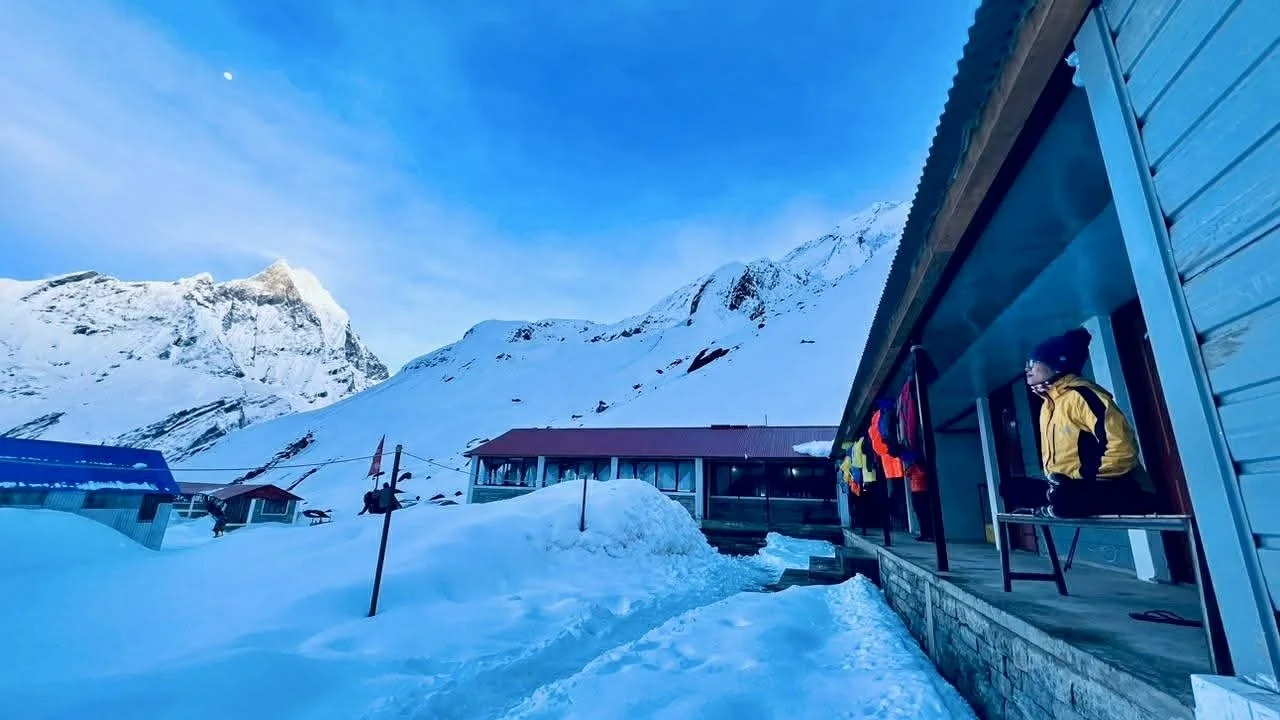
Annapurna Base Camp, 4,130 metres. The Sanctuary opens up around you and nothing can prepare you for it. Photo Credit: Narayan Baniya
Day 6: The Long Way Down — ABC to Bamboo
After an early sunrise at Base Camp, one of the finest morning light shows the Himalayas offer, you begin the descent.
Everything looks different on the way down. The same landscape you climbed through yesterday reveals new angles, new perspectives, new details you missed on the way up. You pass through Machhapuchhre Base Camp again and drop down through open valleys and into bamboo forest.
Bamboo village at 2,310 metres is peaceful and unhurried. After the altitude of the previous days, the air feels thick and generous.
Maximum altitude: 2,310m
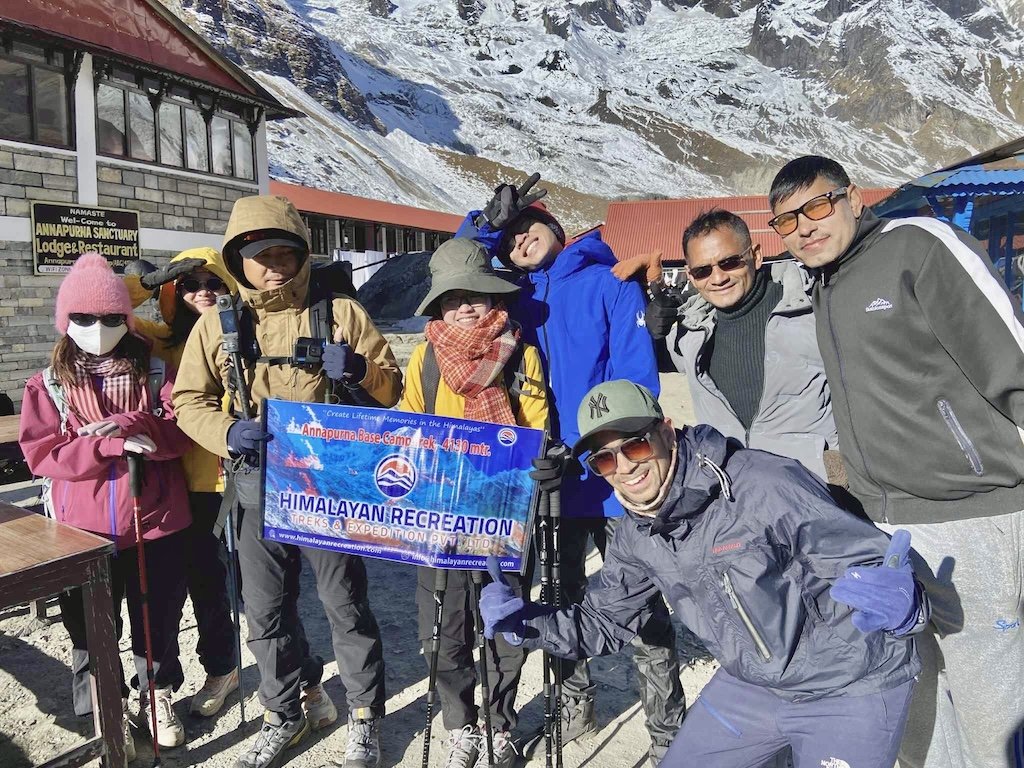
Happy trekkers at Annapurna Base Camp Sanctuary. Photo Credit: Narayan Baniya
Day 7: The Hot Springs — Bamboo to Jhinu Danda
This day has a reward built into it and everyone knows it.
The trail follows the Modi Khola river through lush forest and mountain villages for 5 to 6 hours, dropping steadily to Jhinu Danda at 1,780 metres. The valley scenery is lush and warm after the high country.
And then: the hot springs.
Natural thermal pools beside the river, medicinal and deeply restorative for legs and feet that have earned every blister. Sitting in hot water surrounded by jungle and mountains after days at altitude is one of those simple pleasures that becomes a highlight of the entire trip. Don't underestimate it.
Maximum altitude: 1,780m
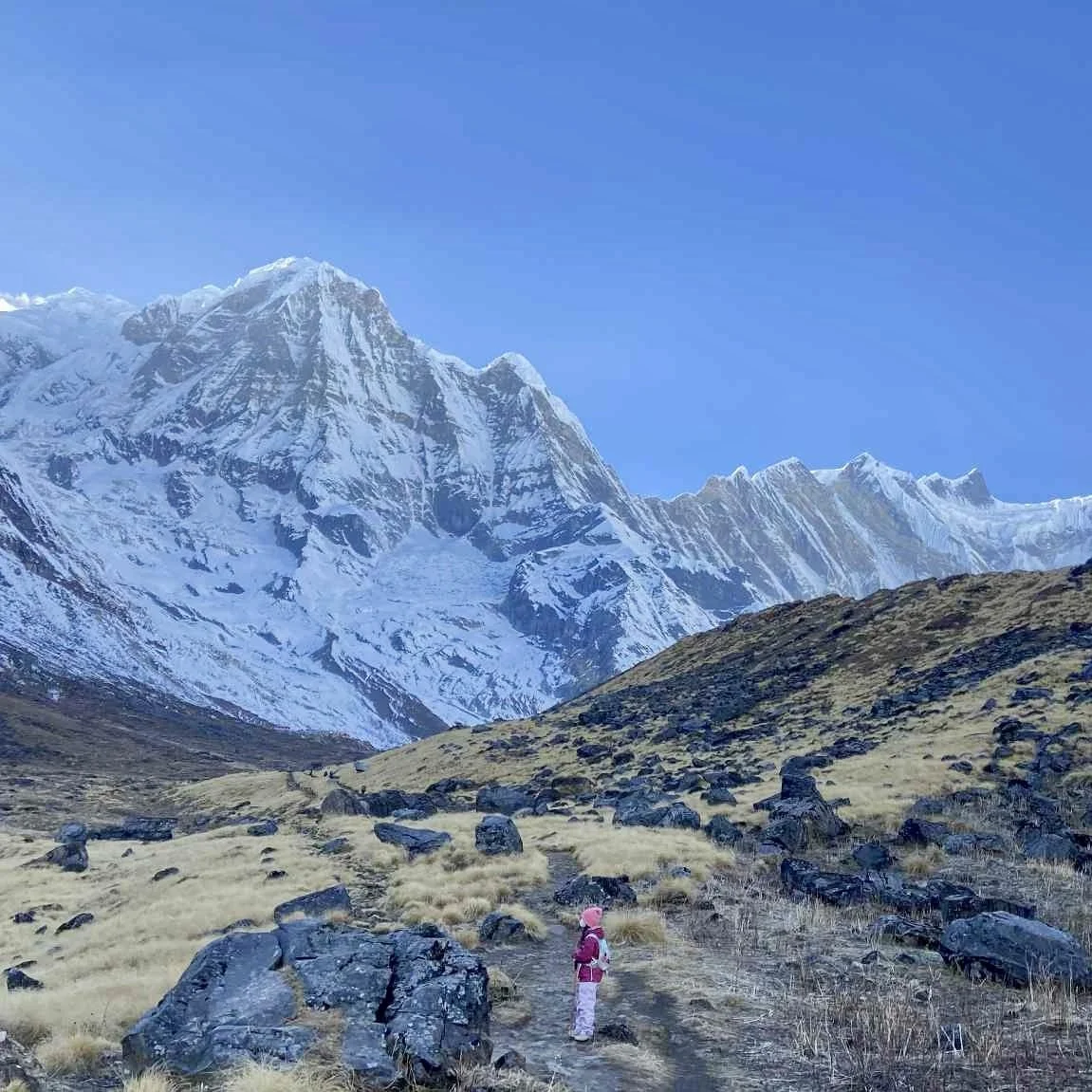
One person, one mountain, 8,091 metres of Annapurna I behind her. The Sanctuary has a way of putting things in perspective. Photo Credit: Narayan Baniya
Day 8: The Final Trek — Jhinu Danda to Nayapul and Back to Pokhara
The last walking day is a gentle 5 to 6 hour descent through terraced farmland and rural villages to Nayapul. The path is straightforward and the pace is easy. This is the wind-down, the time to let the experience settle.
A jeep from Nayapul takes you back to Pokhara for your final night in the mountains. The lakeside is waiting, the local restaurants are excellent, and you will have stories worth telling over dinner.
Maximum altitude: 820m
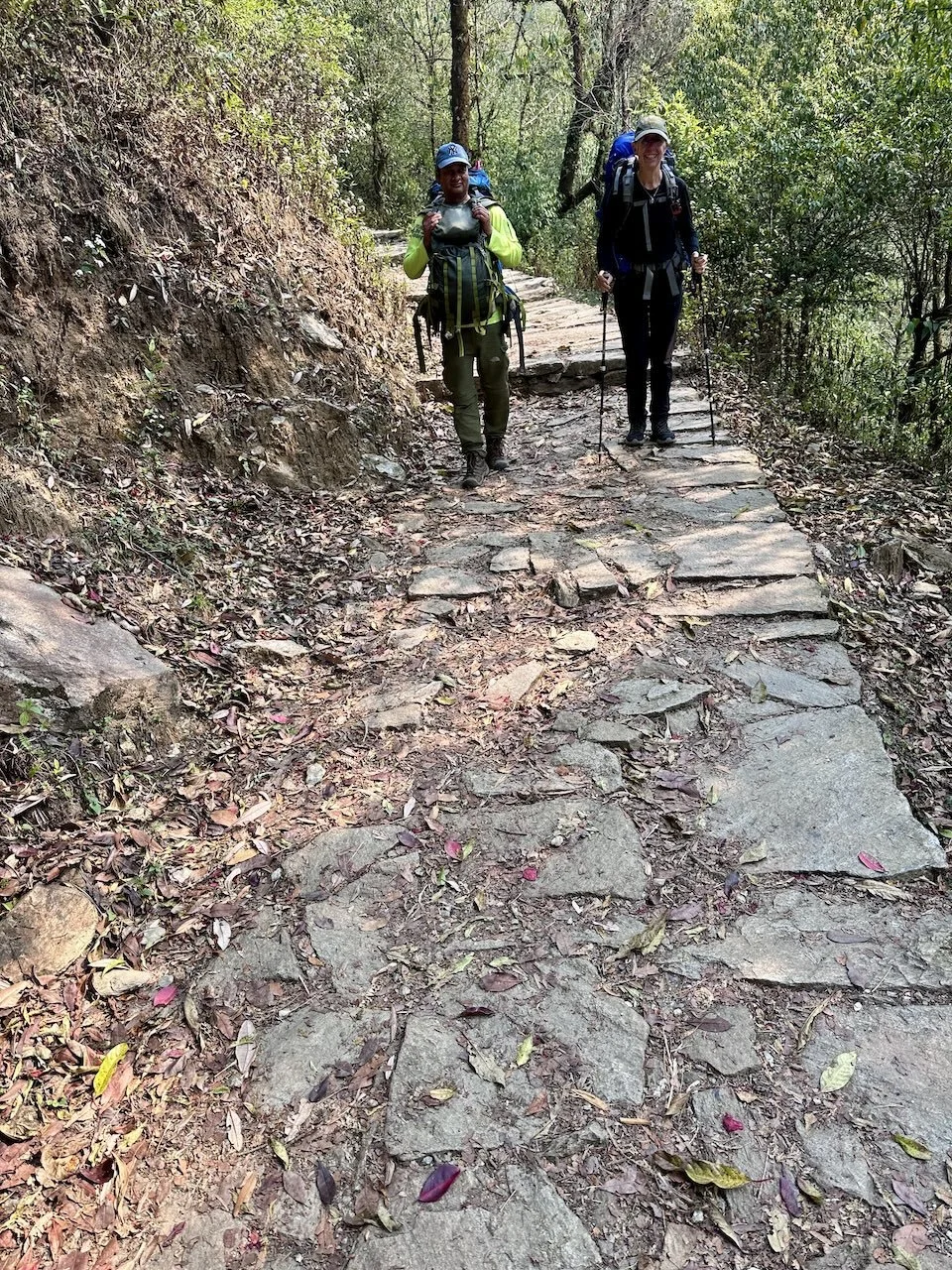
Stone trail, forest shade, and the quiet satisfaction of legs that know what they've done.
Day 9: Pokhara to Kathmandu
The return bus journey gives you 6 to 7 hours of mid-hill scenery, terraced farms, and those distant Himalayan peaks that look completely different now you've been up there among them.
Back in Kathmandu, your farewell dinner awaits. A traditional Nepali meal with a live cultural performance, a proper celebration of what you've just achieved. This is the night for stories, for laughter, for looking around the table at the people you walked into the Annapurna Sanctuary with.
Maximum altitude: 1,350m
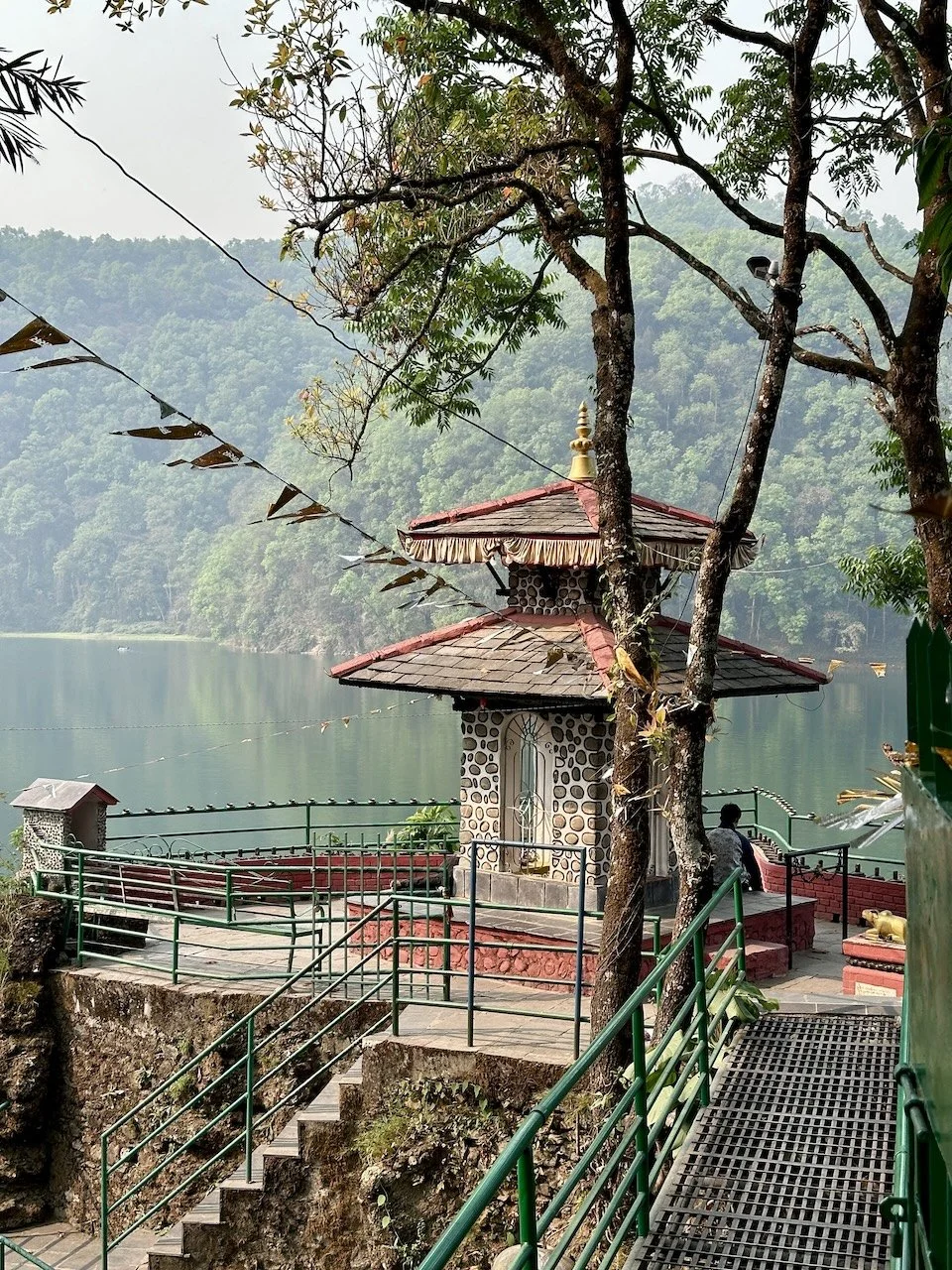
Phewa Lake, Pokhara. The mountains are behind you. The stories are just beginning.
Day 10: Departure
A private car is arranged to take you to the airport for your onward flight, the logistics are sorted and all that's left is to go.
You'll reminisce about it for longer than you expect. The mountains, the villages, the hot springs, the moment the Sanctuary opened up around you. The people, the team and the version of yourself that showed up when the trail got hard.
That's what Annapurna Base Camp does. It gives you something to carry home.
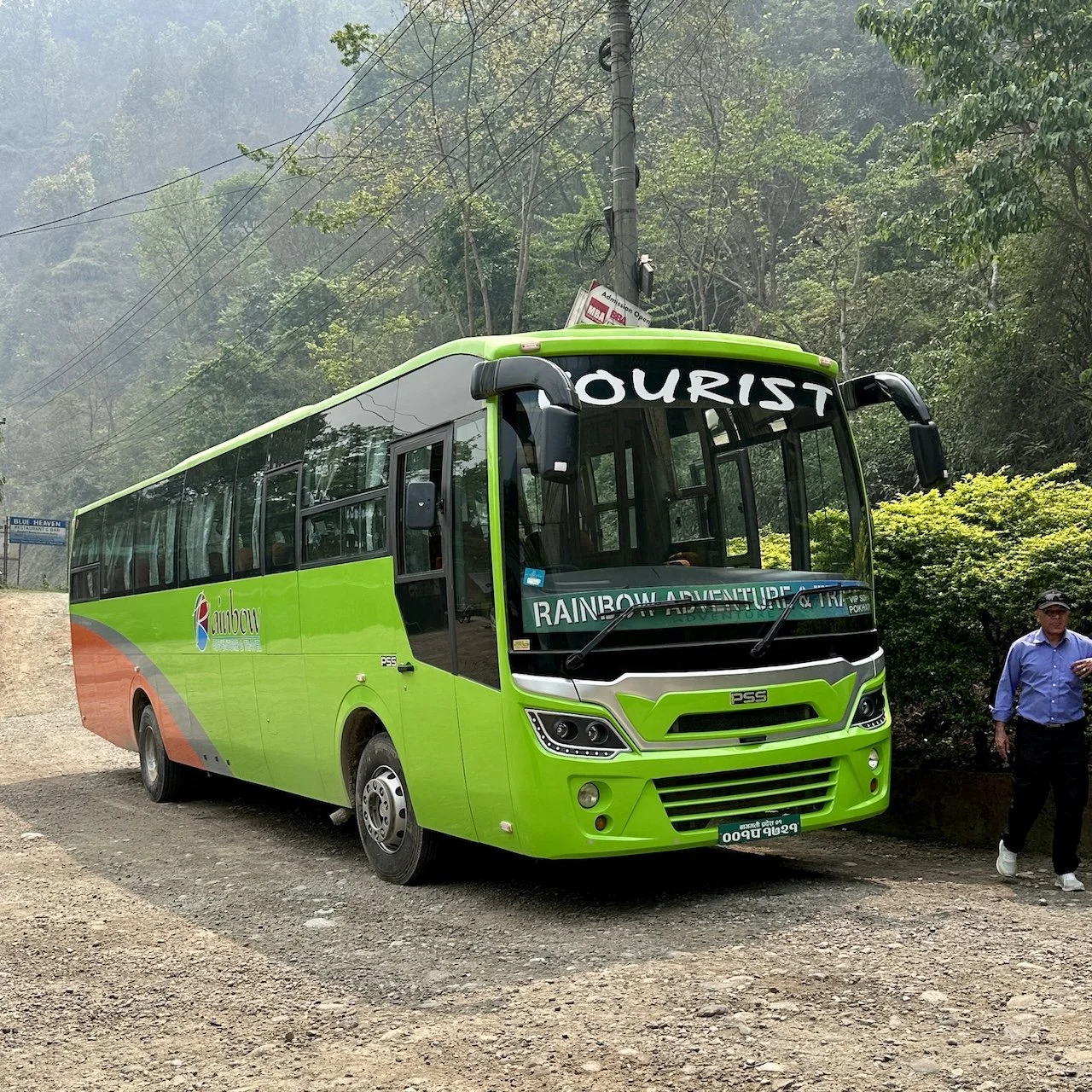
The tourist bus to Pokhara. Six to seven hours, terraced fields, hilltop villages, and your first proper glimpse of the Annapurna range. Settle in.
Ready to Join Us?
Our Annapurna Base Camp group trek departs 28 October 2026. Spots are limited and filling up.
If this is the year you stop wondering and start doing, the first step is simple. Apply for a spot and we'll have a chat to make sure it's the right fit for you.
Apply for the 2026 Annapurna Base Camp Trek here.
Not quite ready to commit but want to start preparing? Trek Prep is where to begin.
Sharon Evans is an HRT Adventure Leader and New Zealand's small group Himalayan trekking specialist, trusted by trekkers across Australasia. She leads small group treks to Annapurna Base Camp and Everest Base Camp, and offers 1:1 Trek Prep coaching for people preparing for their Himalayan adventure.
Food is always the first thing trekkers stop thinking about and the last thing they should.
At altitude your body is working harder than it ever has, your appetite drops off right when you need fuel most, and the decisions you make at the tea house table matter more than most people realise.
Here's what you need to know before you go.