What to Pack for a Himalayan Trek: Gear Advice from Someone Who Has Done Both
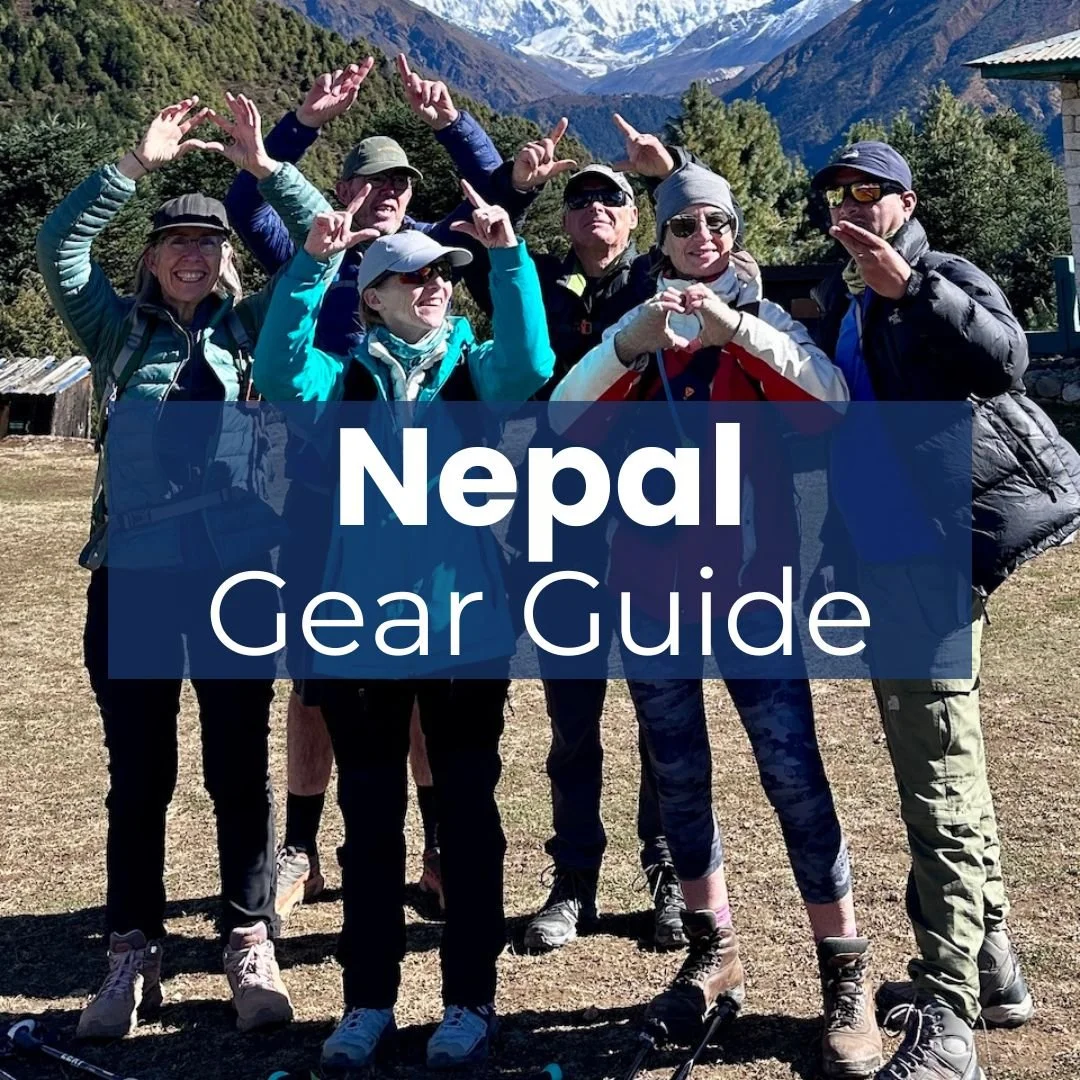
The gear question starts early. Sometimes before the booking is even confirmed. And it should, because getting it wrong is expensive, uncomfortable, and entirely avoidable.
I have trekked to Everest Base Camp and into the Annapurna Base Camp trail, and I have led multiple groups to each. I know what works, what stays at the bottom of the duffel unused, and what people wish they had packed more of. This post covers both treks honestly, notes where the two differ, and points you toward the free gear list download at the end for the full printable version.
The short version: you need less than you think, and the right things matter more than expensive things.
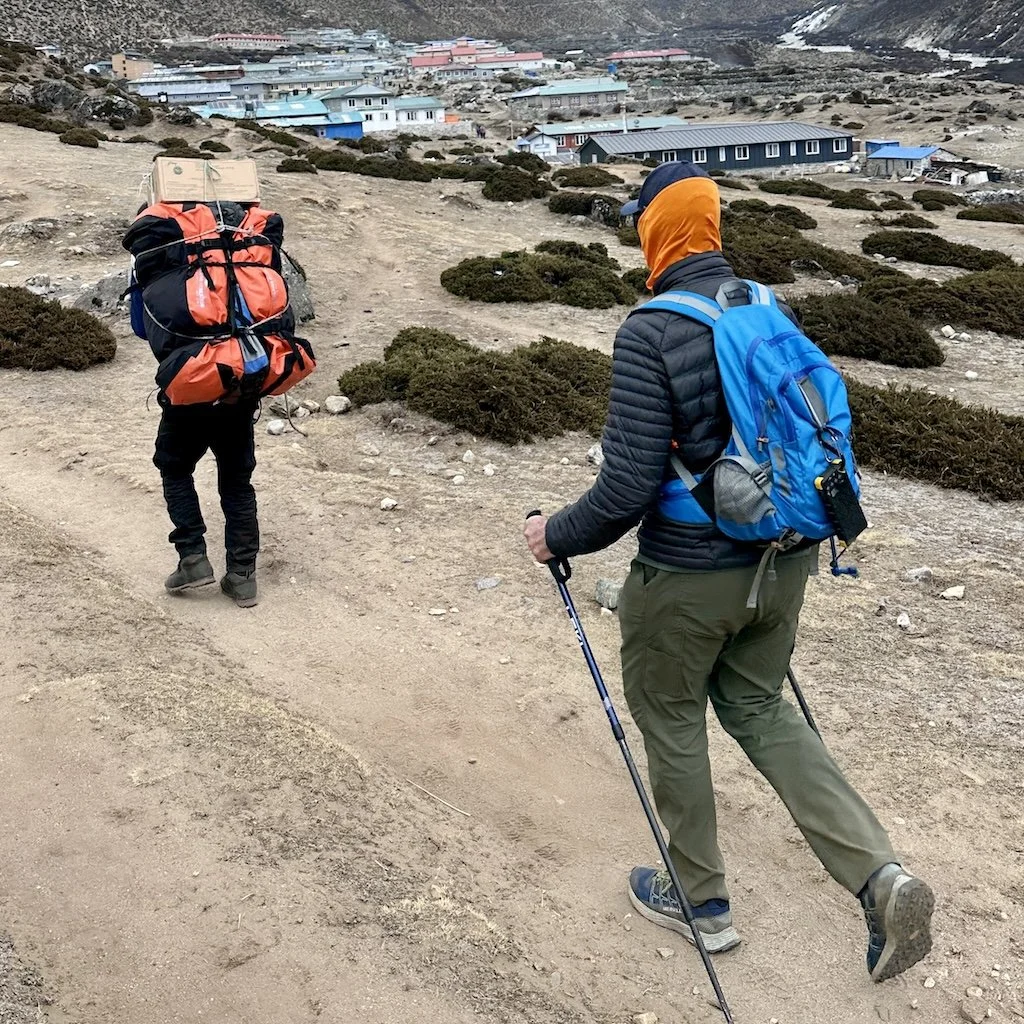
Phurtenji Tamang, Himalayan Recreation Porter and Andrew approaching Dingboche, Everest Base Camp Trek
The Duffel and Daypack System
On both the EBC and ABC treks, your gear travels in two bags. The porter carries your duffel bag, which holds the bulk of your clothing and equipment, and you carry a daypack with what you need for that day's walk.
This is one of the genuine pleasures of trekking with a guide and porter team. You are not hauling everything you own up a mountain. You are walking with a comfortable daypack of around five kilograms while your porter carries the rest.
There is one critical difference between the two treks that shapes everything about how you pack for EBC. Because you fly into Lukla on a small aircraft, your duffel bag must not exceed ten kilograms. This is a hard limit and it is enforced. It is also worth understanding why the ten kilogram limit matters beyond the flight: your porter carries two trekkers' duffel bags plus their own pack, with a total load limit of twenty-five kilograms. Keeping your duffel at or under ten kilograms is not just about the aircraft, it is about being fair to the person carrying it up a mountain.
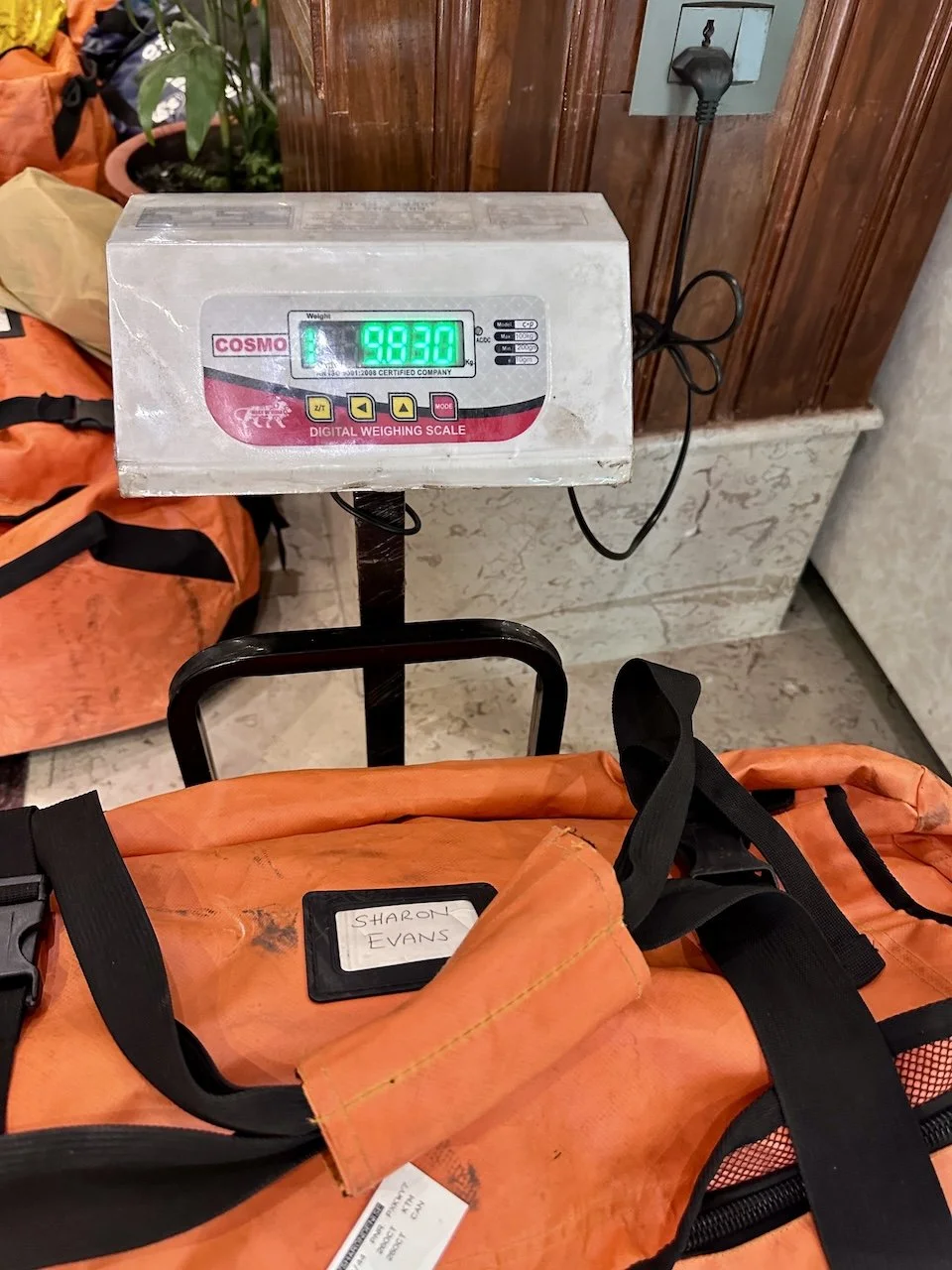
Almost to the limit! The final weigh in before the flight to Lukla.
On the ABC trek there is no flight weight restriction, so you have a little more flexibility, though the same principle applies: your porter's total load across two duffel bags and their own pack is twenty-five kilograms. Keeping your duffel to around ten kilograms is respectful and the right thing to do regardless of which trek you are on.
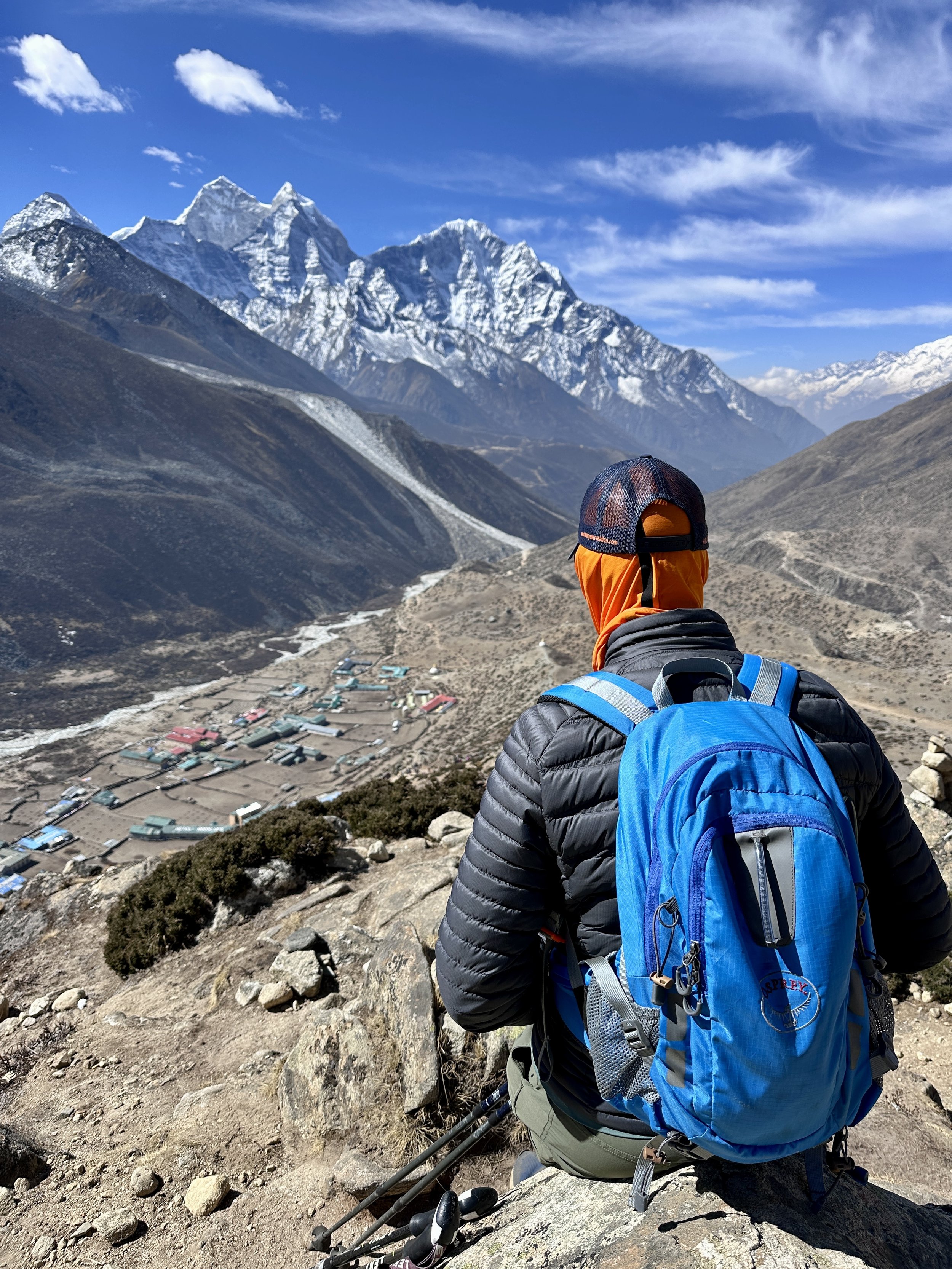
Andrew high above Dingboche, this day pack was bought in Kathmandu and has done many treks
Your daypack should stay under five kilograms. It carries your water, snacks, camera, medications, wet weather gear, and anything you pull out of the duffel that day's weather demands.
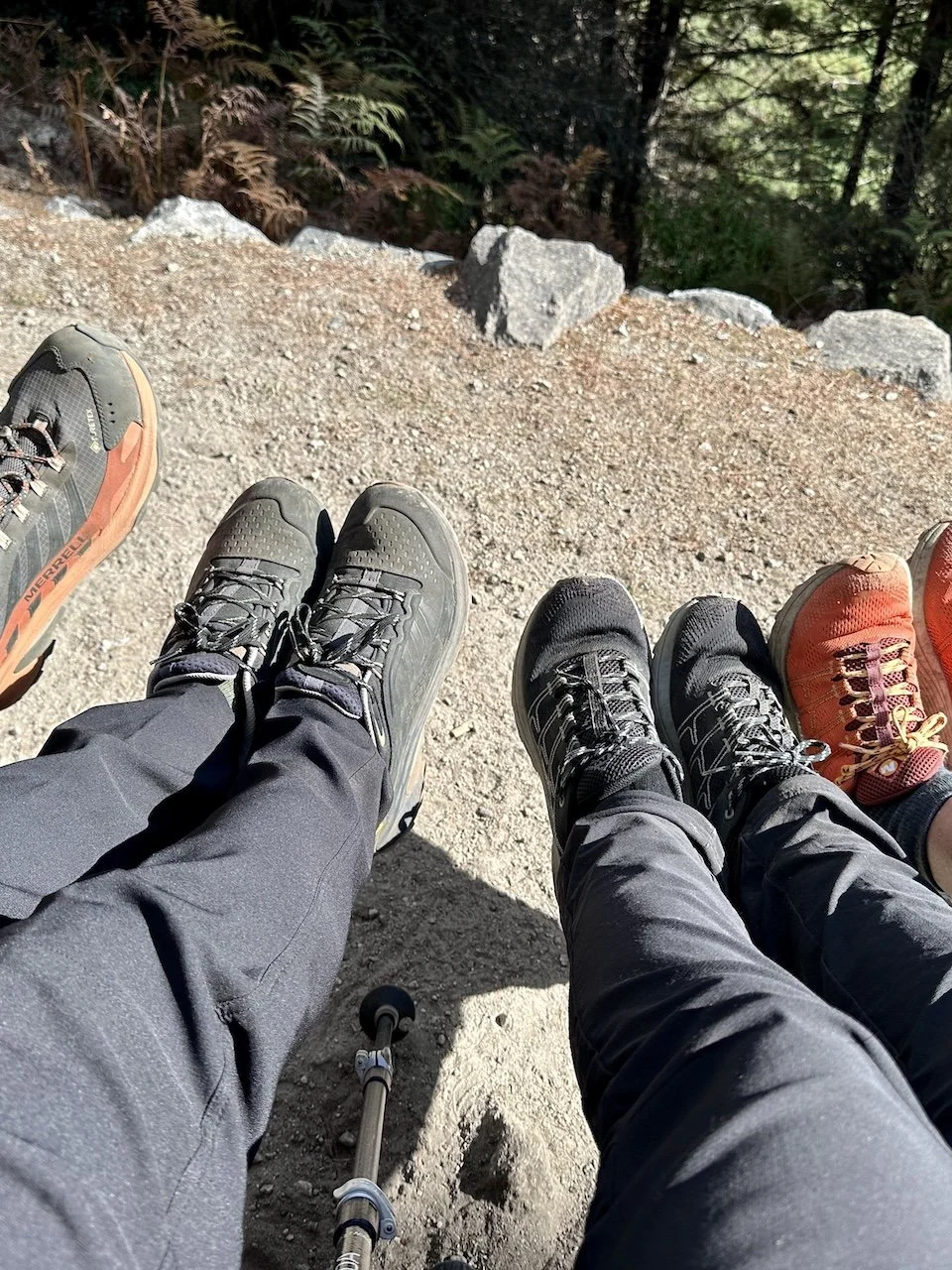
Whatever you wear, be sure it’s thoroughly broken in before you arrive in Kathmandu
Footwear: The Decision That Matters Most
There is an ongoing debate in trekking circles about trail runners versus boots, and I will tell you where I land: I wear trail runners on both EBC and ABC, and so do many experienced trekkers who know these trails well.
Trail runners are lighter, more comfortable from day one, and dry faster when wet. The trails on both routes are well established and you do not need the ankle support of a heavy boot for the terrain you will encounter. At the higher elevations on EBC where conditions can be icy, good traction matters more than boot weight.
That said, some people feel more secure in boots and that is a perfectly valid choice. What is not valid is arriving in Kathmandu with brand new footwear, whatever kind you choose. The single most important thing about your footwear is that it is thoroughly broken in before you land. A blister that starts on day two of a fifteen-day trek is miserable in a way that is hard to overstate.
Bring one pair of lightweight camp shoes or slides as well, something your feet can breathe in at the end of the day. Your hiking feet will thank you.
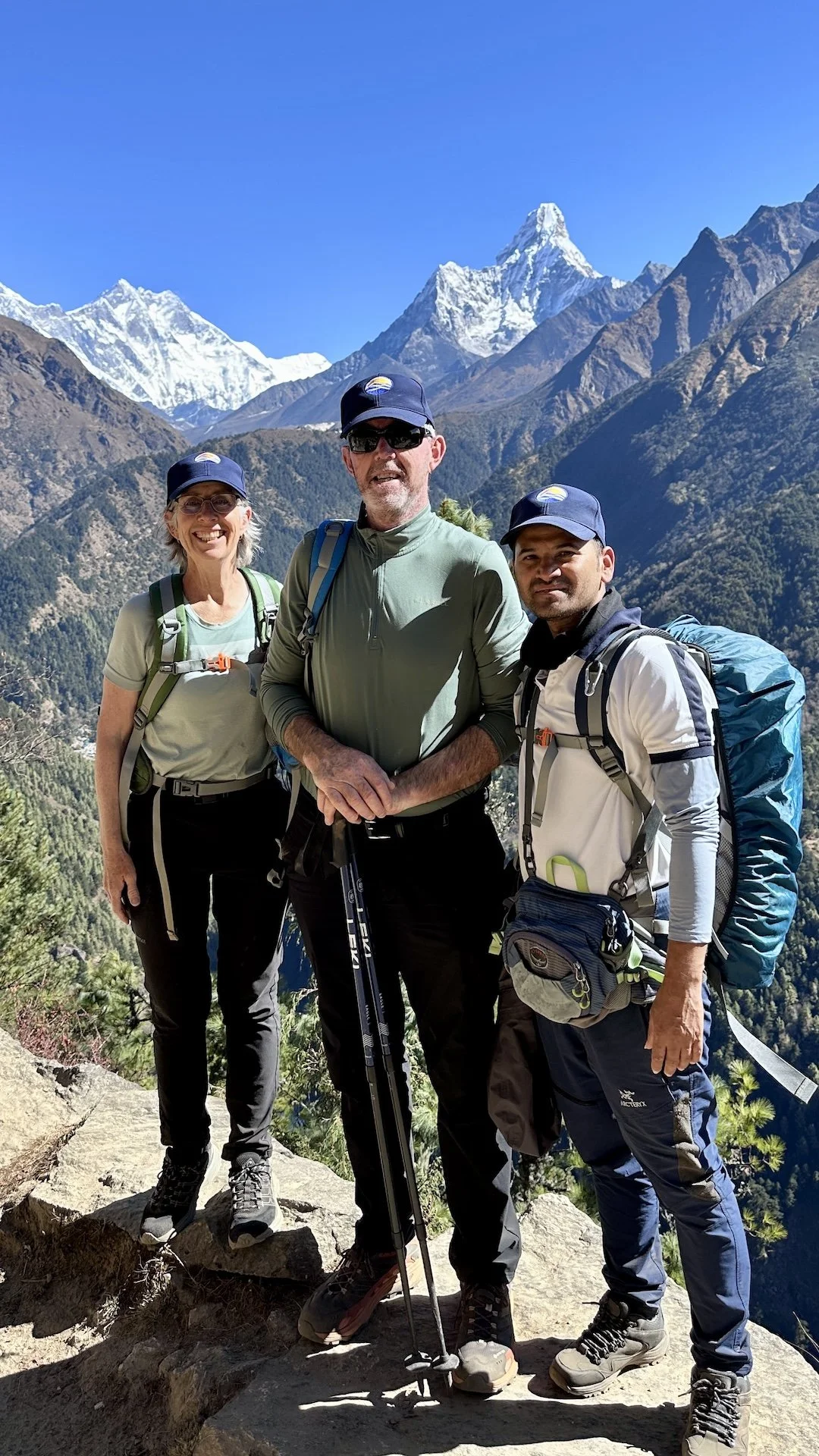
Lighter layers on the lower trail, Ama Dablam doing her thing in the background. The layering system works when you get it right.
Layering: The Principle That Covers Both Treks
Both EBC and ABC require a layering system because the temperature range across either trek is extreme. You can be warm enough for a t-shirt in the lower valleys and facing conditions well below freezing at the higher elevations.
The system is simple: base layer, mid layer, outer layer.
Your base layer should be merino wool, both top and bottom. Merino regulates temperature, manages moisture, and does not hold odour the way synthetic fabrics do, which matters a great deal on a multi-week trek with limited laundry options.
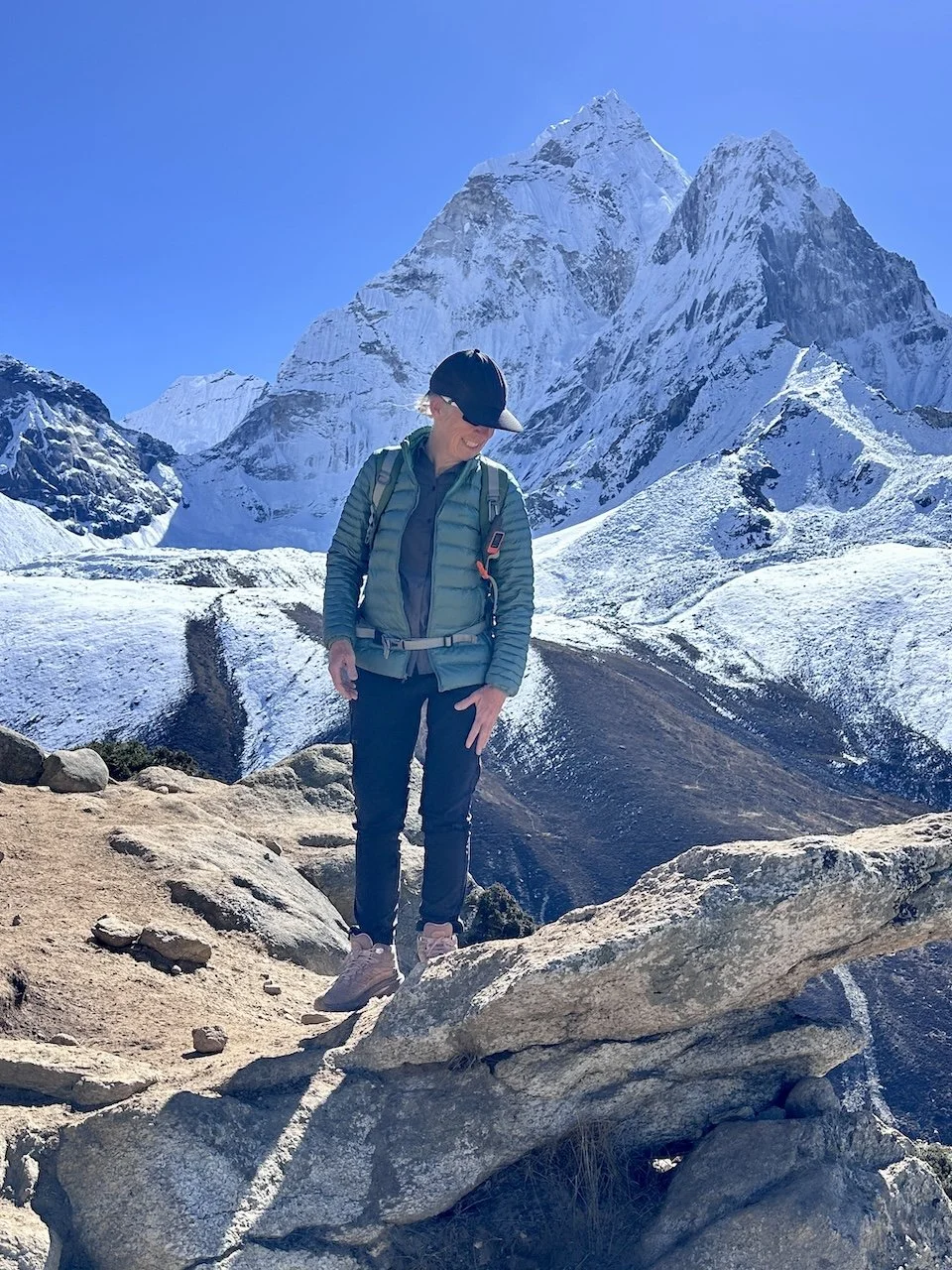
Mid layer on, trail runners doing their job, somewhere above 4,000 metres. This is what the right gear feels like.
Your mid layer is your fleece or lightweight down jacket. This is the layer you add when you stop moving and the cold comes in quickly, which it does at altitude.
Your outer layer is your waterproof jacket and waterproof over-trousers. Even if it does not rain, you will wear this at higher elevations for the wind protection alone. On the morning I walked to Everest Base Camp the temperature was minus twenty-two degrees celsius at Gorakshep. My wet weather gear went on over everything else and earned its place.
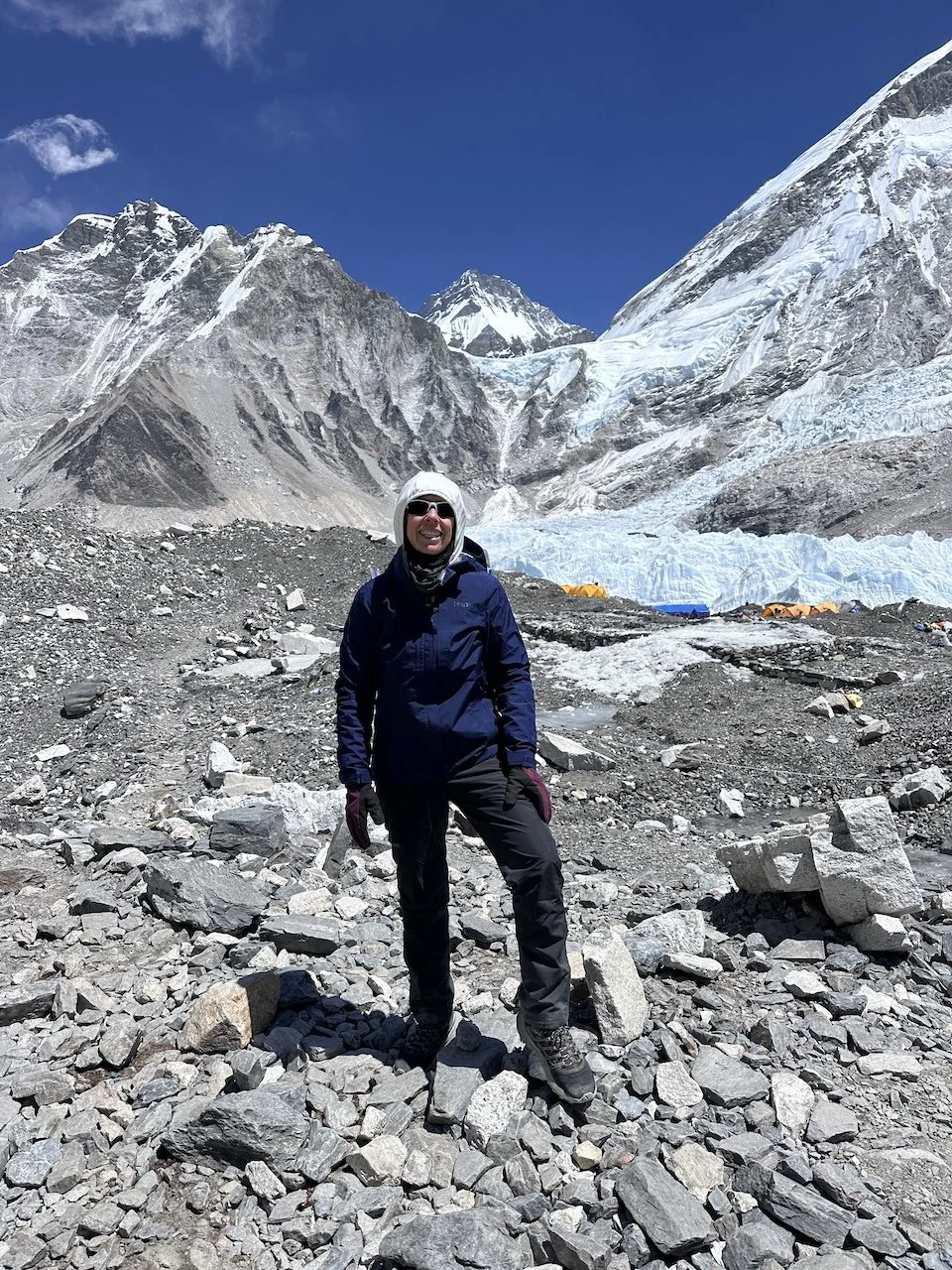
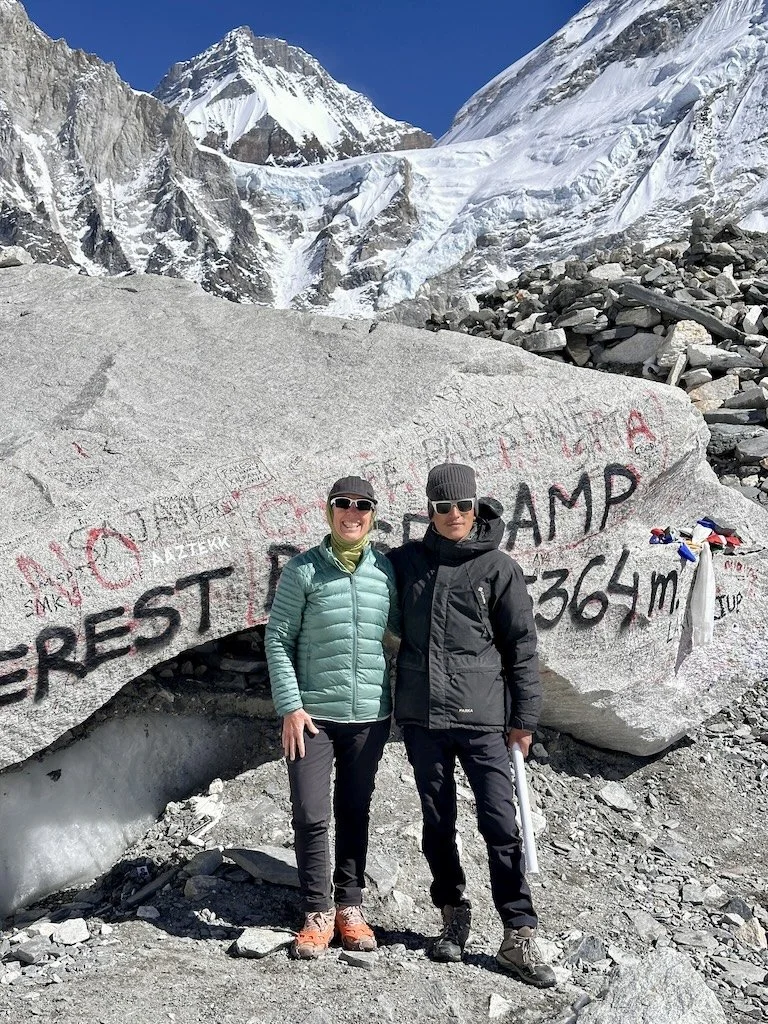
Everest Base Camp, 5,364 metres. Every layer on, gloves on, buff up. Minus twenty-two degrees celsius is not a day for half measures.
The key difference between the two treks is temperature. EBC reaches significantly colder conditions, particularly at Gorakshep and Base Camp itself. ABC tops out at 4,130 metres at Base Camp, which is cold but considerably more forgiving than the 5,364 metres of EBC. If you are doing ABC, you still need a proper layering system, but the extreme cold weather gear that EBC demands is less critical.
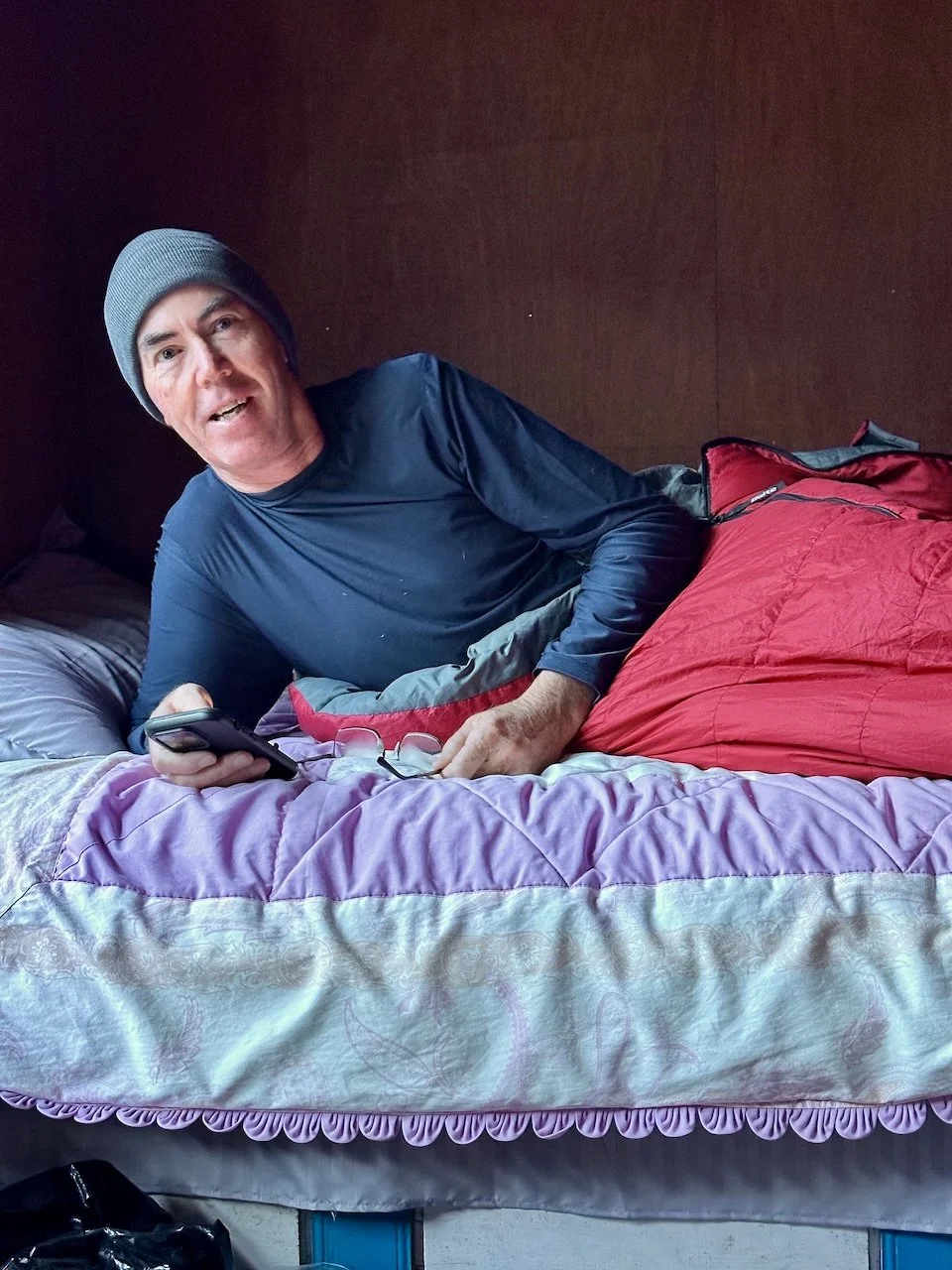
Andrew has the right idea. Merino base layer, sleeping bag, tea house quilt on top. Bring your own sleeping bag. You will not regret it.
The Sleeping Bag
Bring your own. The tea houses provide sheets, a pillow, and a quilt, but your own sleeping bag is essential for warmth and hygiene, particularly at higher elevations where the temperatures drop significantly overnight.
For EBC, you need a sleeping bag rated to at least minus ten degrees celsius, and minus fifteen is better. For ABC, a minus five degree rating is a reasonable minimum. A silk liner adds warmth and an extra layer of hygiene without much weight.
If you would rather not travel internationally with a sleeping bag, good quality options can be hired in Kathmandu before the trek begins. I would still recommend bringing your own if you can.
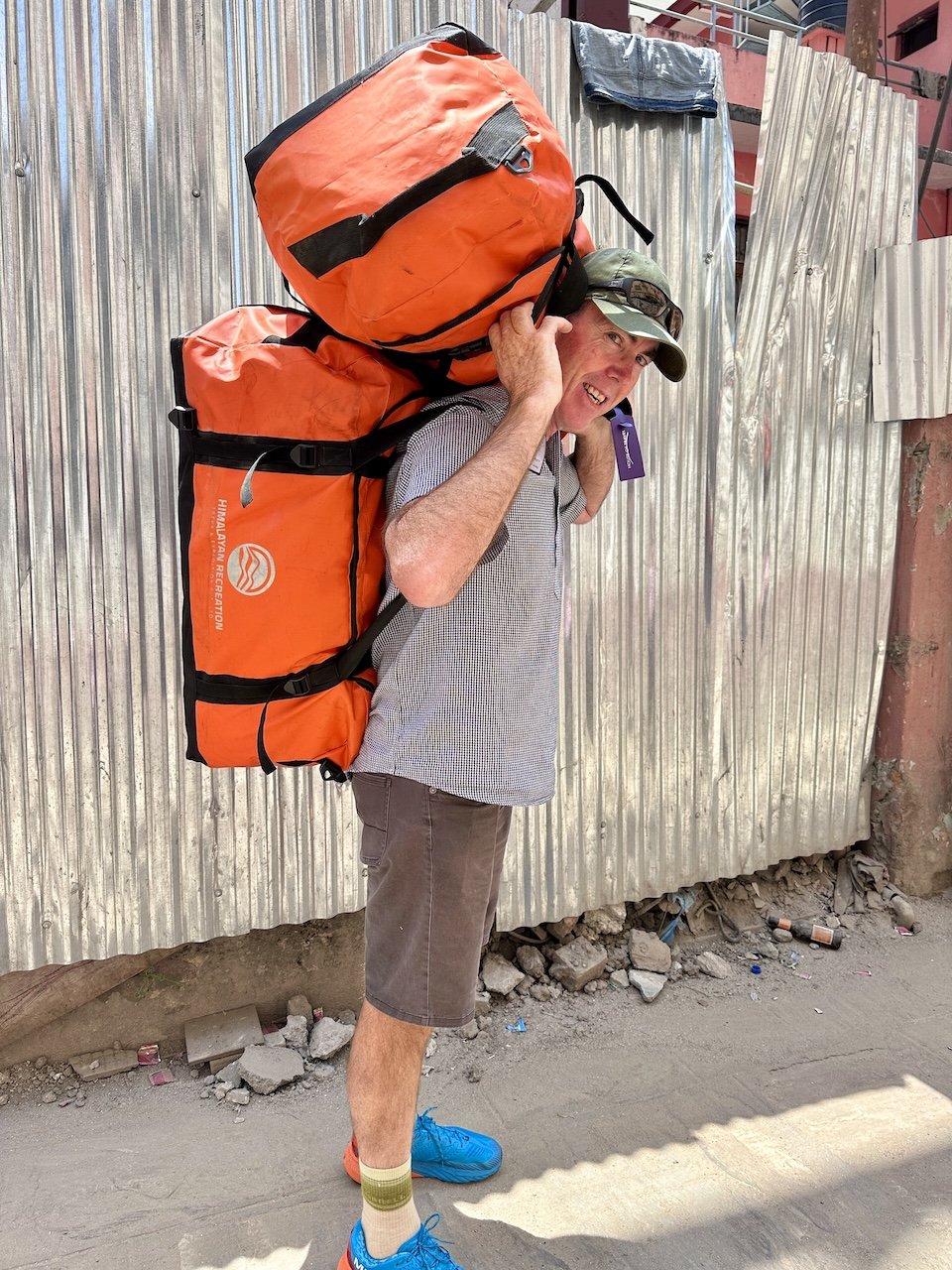
This is not what we mean by pack light. The Himalayan Recreation duffel is provided. What goes in it is entirely up to you. Choose wisely.
What Most People Overpack
Every group I have led has at least one person who arrives with a duffel that is too heavy, and it is almost always the same culprits.
Too many clothes is the most common. You will be wearing the same outer layers repeatedly and nobody minds. Two sets of base layers, two hiking shirts, and one set of camp clothes is genuinely enough. Laundry services are available in Namche Bazaar and Dingboche on the EBC trail and in Pokhara before the ABC trek begins. Higher on the trail I hand wash my merino smalls, though fair warning: at altitude and in the cold, drying anything takes considerably longer than you expect.
Cotton is another mistake. It holds moisture, takes forever to dry, and loses all insulating ability when wet. Leave it at home entirely.
A full-sized towel is unnecessary when a microfibre towel does the job at a fraction of the weight and space. Heavy books are a luxury that quickly feels less luxurious when you are weighing your duffel. And multiple pairs of hiking trousers are almost never needed, one good pair worn daily and one pair for camp is sufficient.
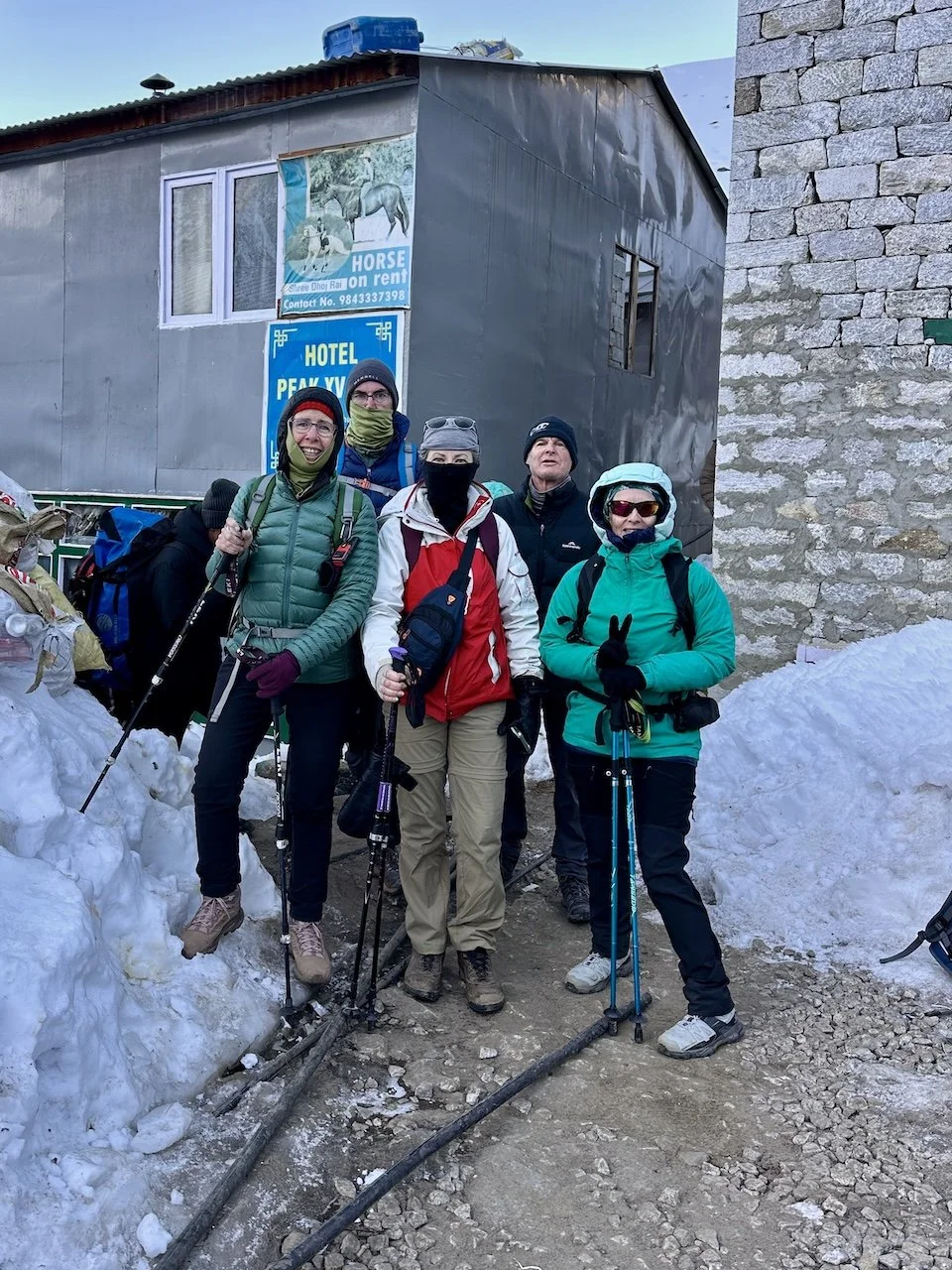
Everyone has poles and everyone is glad of it. Gorakshep, where the snow is real and the poles earn their place.
What People Forget or Underestimate
Trekking poles come first on this list. I do not go far without mine and I recommend them strongly for both treks. They reduce the impact on your knees significantly on the descents, improve your stability on uneven terrain, and help you move more efficiently on the long climbing days. If you do not own a pair, they can be hired in Kathmandu.
Sun protection is consistently underestimated. At altitude the UV intensity is significantly higher than at sea level and the reflection off snow makes it worse. A high SPF sunscreen, quality UV-blocking sunglasses, and a sun hat are non-negotiable, not optional extras.
Lip balm with SPF. Your lips will crack at altitude without it and this is a small misery that is entirely preventable.
A good headlamp with spare batteries matters more than people expect. Early starts are common and tea house corridors are dark. Do not rely on your phone torch.
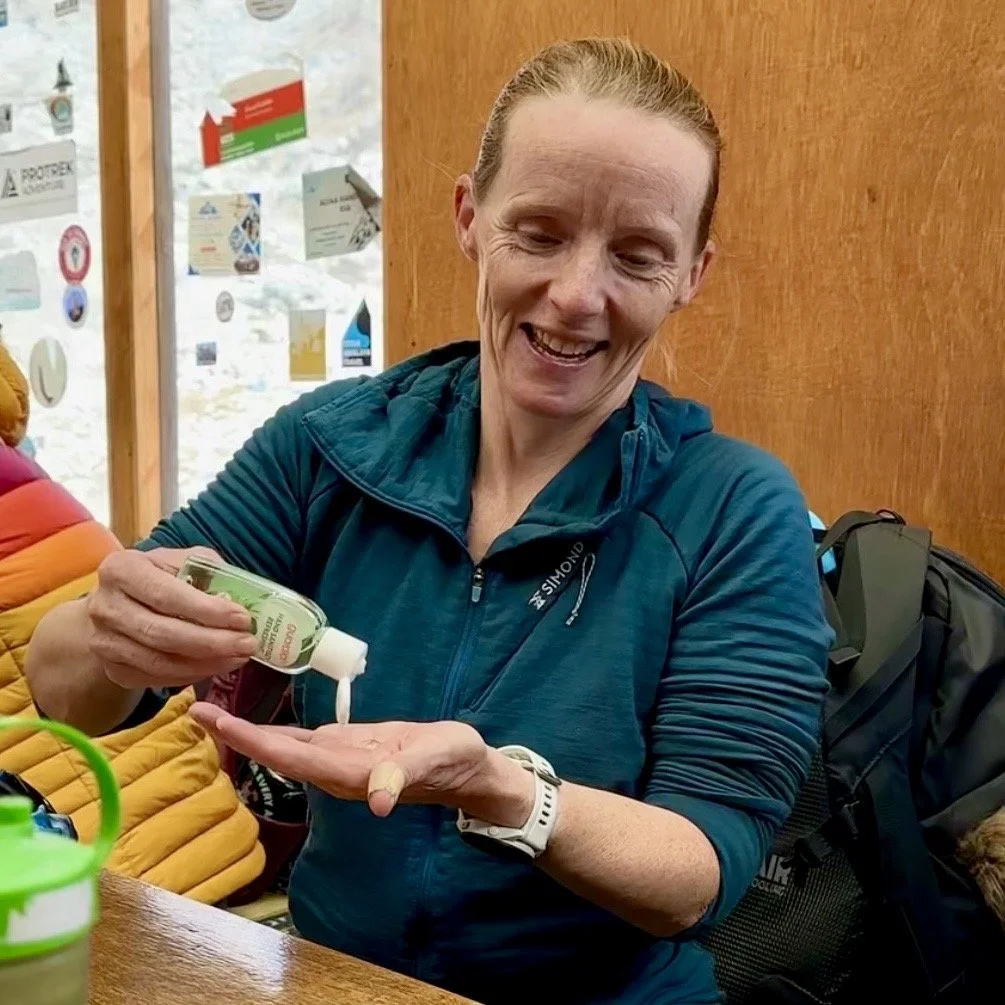
Elaine with the hand sanitiser - a little bit goes a long way!
Hand sanitiser and water purification tablets are available to buy at tea houses and villages along both routes, so you do not need to overpack these from home, though having enough to get you started before you can resupply is sensible.
Water purification tablets or a filter system are worth having from the start, though both are available to buy along the route if you run short. Refilling your bottles at tea houses and treating the water is both more economical and more environmentally responsible than buying bottled water, particularly on EBC where waste at altitude is a genuine issue.
A quality camera if photography matters to you. Your phone will do a reasonable job but the Himalayas deserve better if you have access to better.
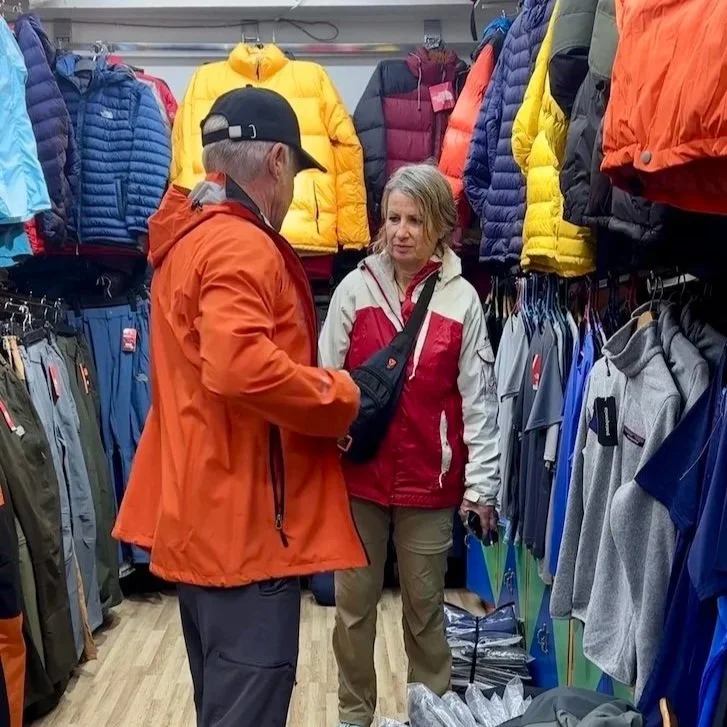
There’s many hiking shops in Kathmandu, Namche Bazaar and Phokara where you can buy or hire gear for your trek.
Kathmandu and Namche Bazaar Are Your Backup
Here is the reassuring truth: almost everything on the gear list can be bought or hired in Kathmandu before the trek begins. Sleeping bags, down jackets, trekking poles, base layers, waterproofs, headlamps, water bottles, and more are all available in Thamel, at a wide range of quality and price.
If you forget something, or if you arrive and realise your gear is not up to the conditions ahead, Kathmandu will sort you out. Namche Bazaar, two days into the EBC trek, is a further option for topping up on anything you have realised you need.
The one exception is footwear. I cannot stress this enough. Do not buy or hire shoes in Nepal and expect to walk in them the following day. Bring your own tried and tested footwear from home, broken in and ready to go.
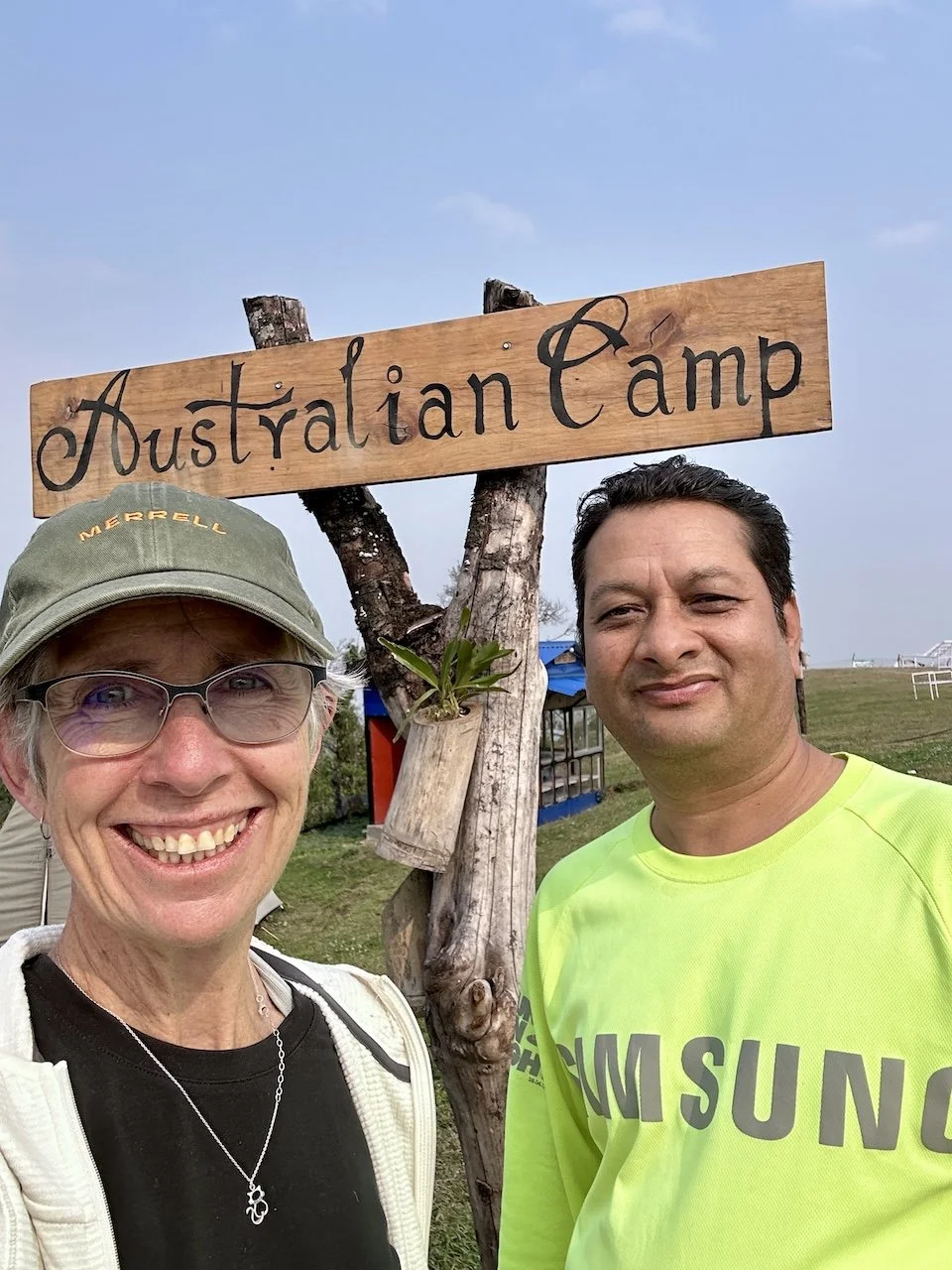
Sharon with Ram Simkhada, Himalayan Recreation Guide at the Australian Camp, Annapurna Base Camp
The Key Differences: EBC vs ABC at a Glance
EBC: Duffel weight limit of ten kilograms due to the Lukla flight. Colder conditions, particularly from Lobuche upward. Longer trek duration. A heavier down jacket and warmer sleeping bag are essential. More remote above Namche, so get your gear sorted before you leave.
ABC: No flight weight restriction, though the same porter consideration applies. Warmer overall, particularly in the lower sections through rhododendron forest. Shorter trek. A full layering system is still required but the extreme cold gear that EBC demands is less critical. Pokhara is your last major resupply point before the trail begins, so get your gear sorted there if you have not already done so in Kathmandu.
Both treks are tea house treks, which means no camping equipment, no tents, no cooking stoves. You are walking between accommodation and meals every day. Pack for a comfortable walk, not an expedition.
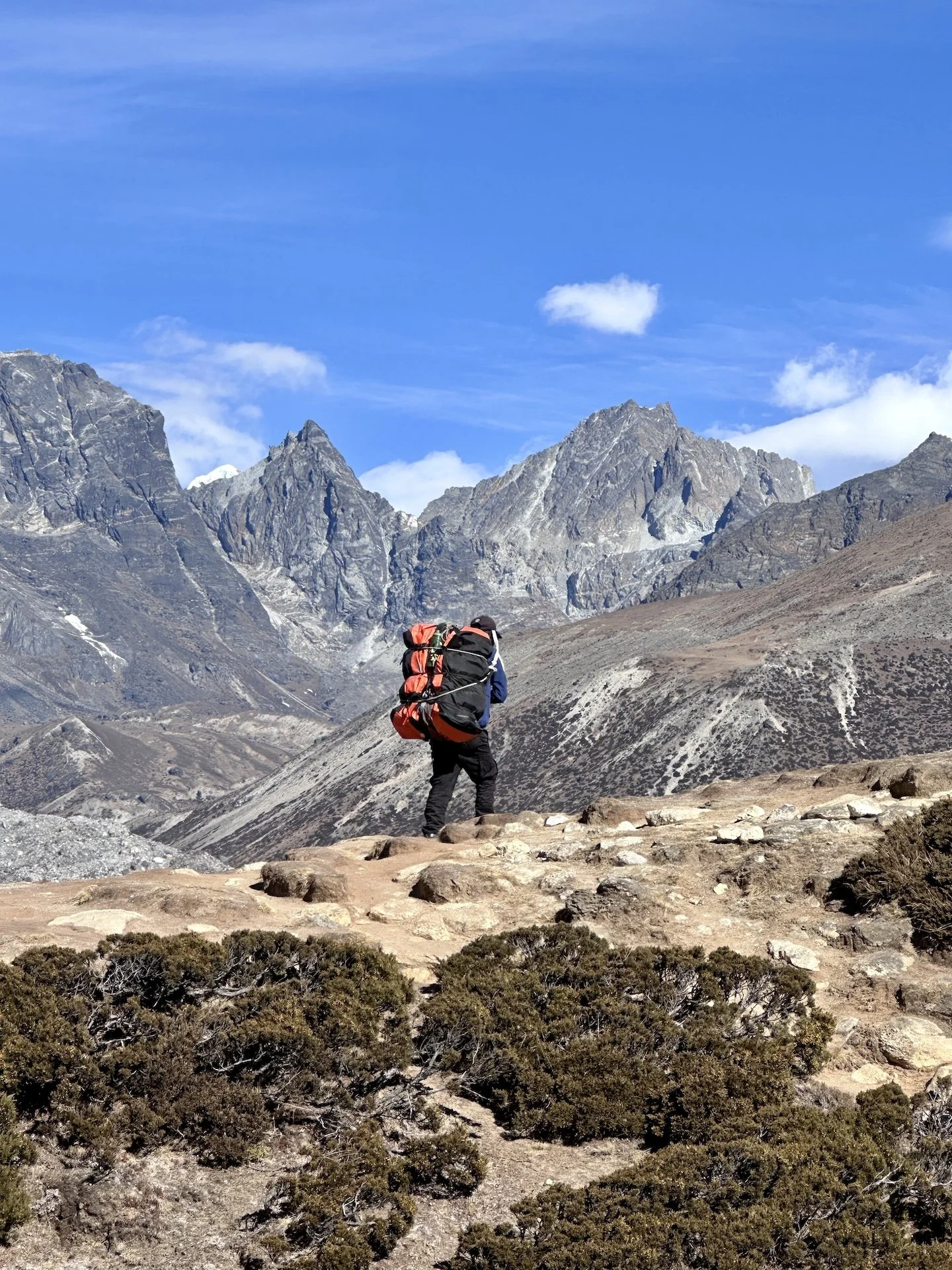
Phurtenji Tamang, Himalayan Recreation Porter, EBC trail. He carries your gear so you can carry the experience. Pack fair.
Download the Full Gear List
The complete Freewheeling Kiwi Nepal Gear List covers every item across all categories with notes on what to look for and what to skip. It is free, printable, and based on what I actually carry on these treks.
Download the free Nepal Gear List here.
And if you want to work through your preparation properly before departure, including gear, fitness, altitude, and the mental side of the trek, Trek Prep is my 1:1 coaching package built for exactly this.
Sharon Evans is an HRT Adventure Leader and Himalayan trekking guide. She has trekked to both Everest Base Camp and Annapurna Base Camp and leads small group treks to each. Her 2026 departures are EBC 9 November and ABC 28 October.
For the EBC trip: Everest Base Camp Group Trek 2026
For the ABC trip: Annapurna Base Camp Group Trek 2026
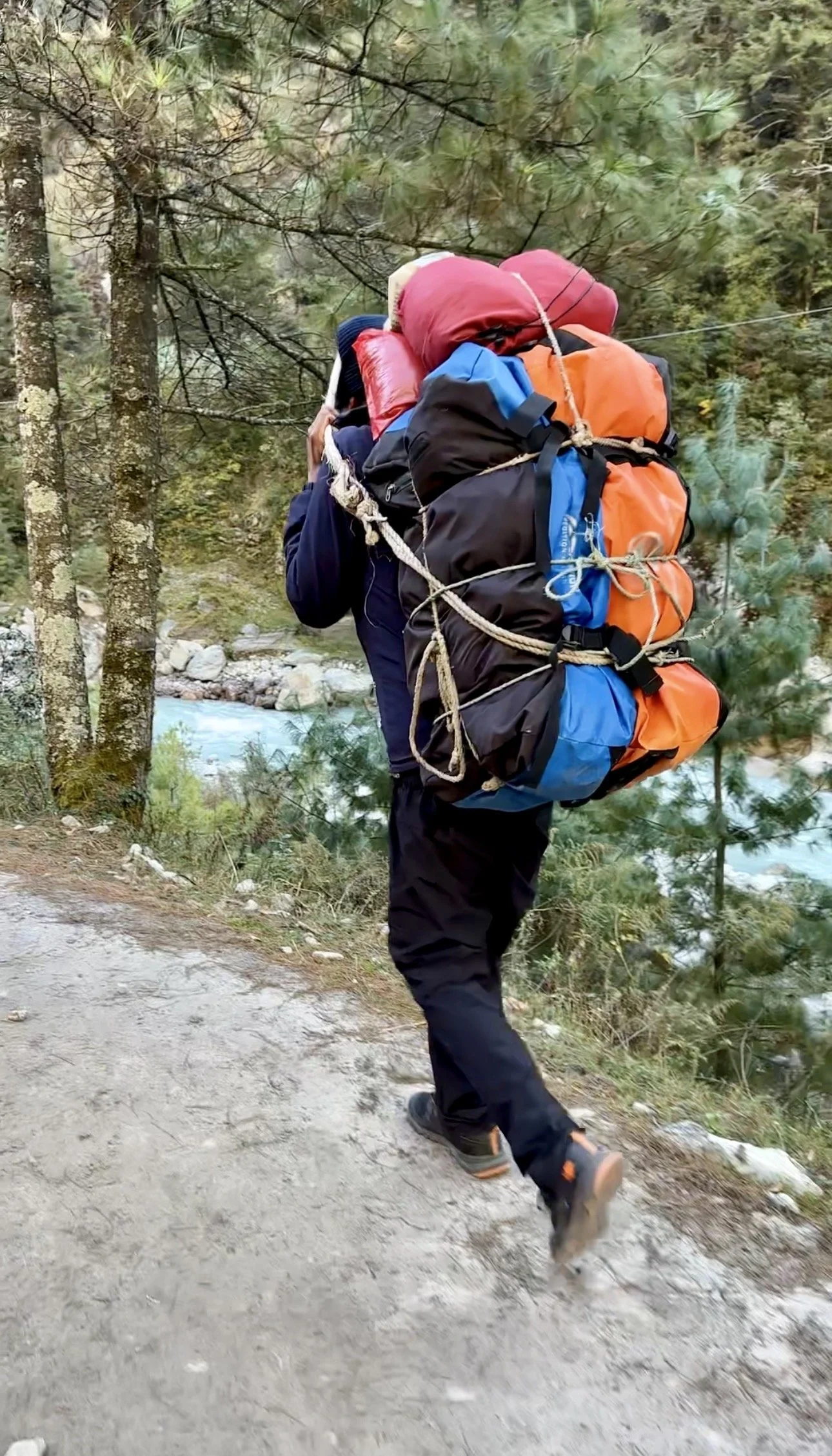
Loaded up for another big day on the trail, Phurtengi Tamang, Himalayan Recreation Porter
Food is always the first thing trekkers stop thinking about and the last thing they should.
At altitude your body is working harder than it ever has, your appetite drops off right when you need fuel most, and the decisions you make at the tea house table matter more than most people realise.
Here's what you need to know before you go.