Shambhala: Becoming Guardians of the Wild
How off-grid living taught me that biosecurity isn't a bureaucratic tick box. It's the difference between a living forest and a silent one.
The possum trap had been sprung again. I knew before I even reached it. The pigs had already been, leaving only a smear of fur and disturbed leaf litter as evidence. Fifteen possums in the first month. We weren't shocked. We'd walked every inch of Shambhala by then and understood what we were dealing with: a piece of regenerating Coromandel bush under pressure from every direction, and a responsibility we'd taken on with eyes wide open.
That morning, chainsaw already fuelled and gumboots caked from the night's rain, I found myself thinking about what it actually means to be a custodian of land. Not the romantic version (though Shambhala has plenty of romance in its moonrises over Repanga Island and its chorus of morepork at dusk). The practical version. The unglamorous, methodical, deeply satisfying version.
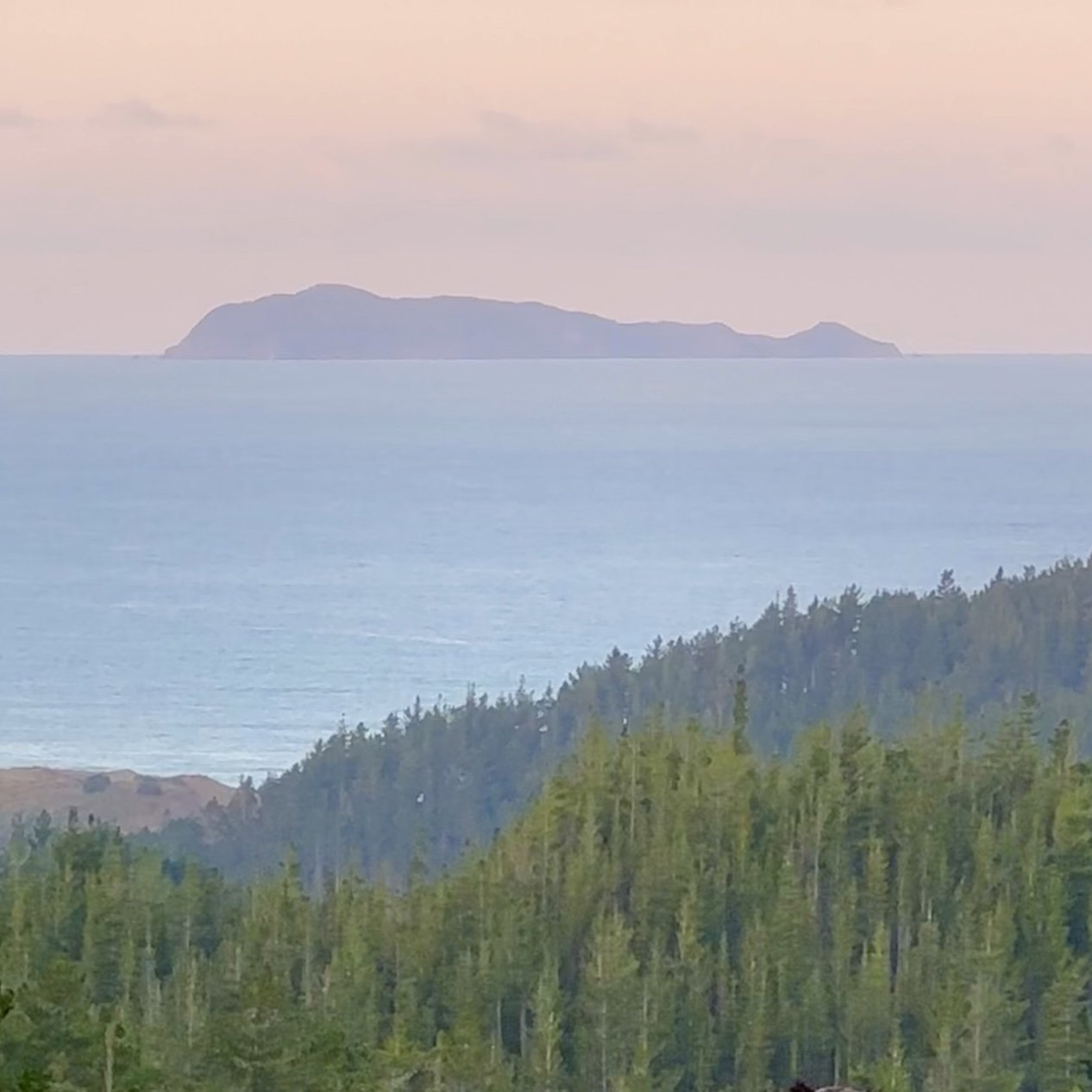
Repanga Island at dusk, seen from Shambhala — a predator-free sanctuary and a constant reminder of what we're working toward. The pine plantation in the foreground is next on the list.
The Invisible War
Most visitors to our Coromandel property see the view first: Pacific Ocean to the east, the island lighthouse blinking at its leisurely fifteen-second interval, native bush tumbling down the gullies. What they don't immediately see is the invisible war being waged across every hectare.
Possums. Stoats. Rabbits. Goats. Rats. Mice. Feral cats on the periphery. Wilding pines pushing into the mānuka from the plantation ridge. Gorse threading through the regenerating scrub. Woolly nightshade. Blackberry, beautiful in autumn and pernicious year-round.
But look in the right places and you also find what's thriving. The ford that crosses the access track is home to a family of longfin eels, our native tuna, dark and unhurried among the river stones. Longfins are nationally vulnerable, slow-growing, and extraordinarily long-lived. Some individuals reach sixty, even a hundred years old. They migrate only once to breed, travelling all the way to Tonga, and they only make that journey at the very end of their lives. Finding them in our waterway tells you something important: the stream is healthy, the pressure upstream hasn't broken it, and something is going right. That's worth protecting with the same seriousness as everything else.
When we took on Shambhala, there were no fences, no utilities, no structures, no pest detection network, nothing. Just land that had once been farmed for sheep and cattle and was now thankfully tipping back toward native forest, if we could tip it further in the right direction. The question was never whether to act. It was how to act systematically on limited resources, in a remote location, with no room for half-measures.
That question has shaped everything we've done here.
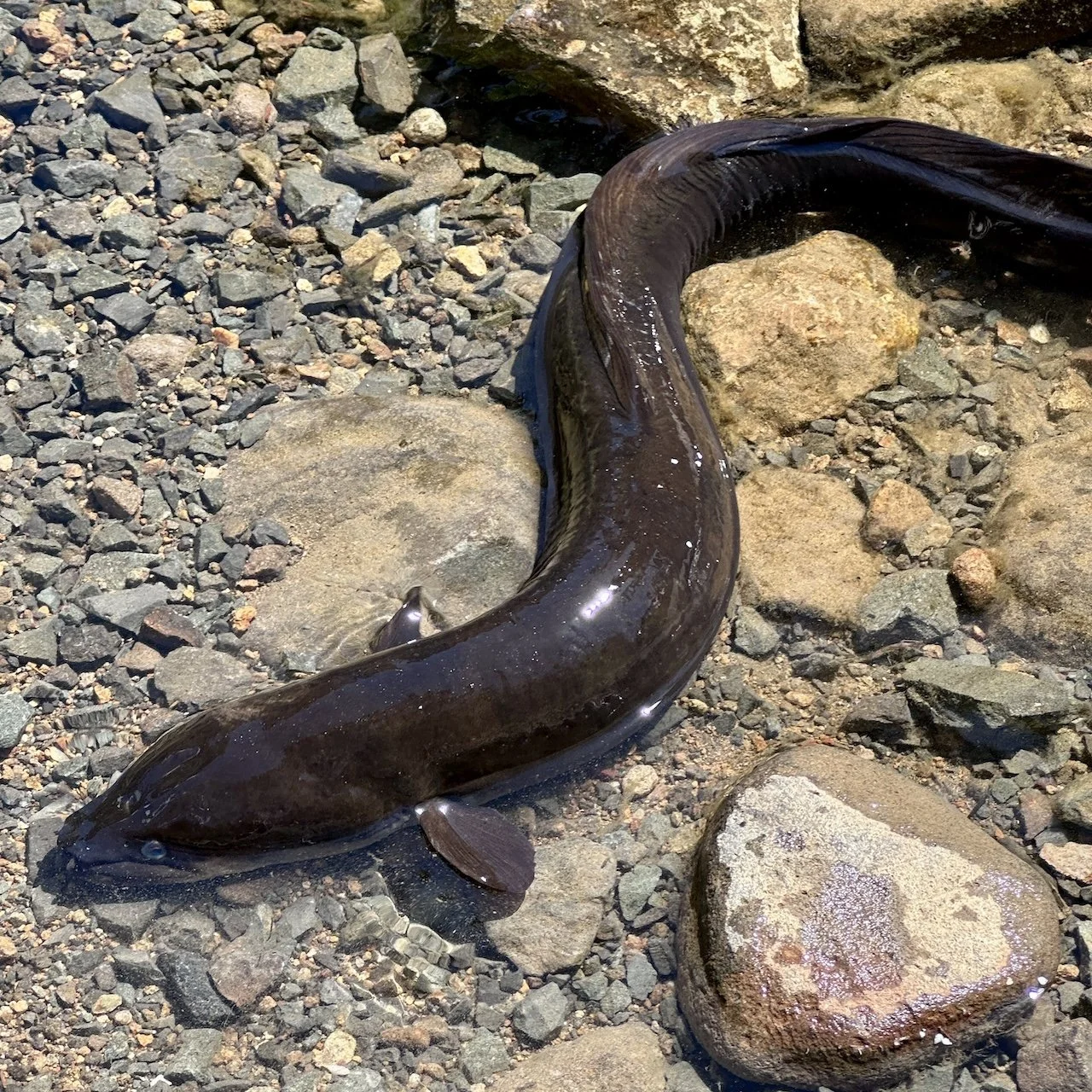
Tuna — longfin eel (Anguilla dieffenbachii) in the Shambhala ford. Nationally vulnerable and utterly magnificent
Biosecurity Starts at the Gate
Or in our case, eleven kilometres of dusty metal road and a rocky stream crossing.
Access to Shambhala is itself a biosecurity feature. Nothing arrives easily. That's both a challenge and an advantage we've learned to lean into. Every supply run requires planning. You cannot forget the critical item and duck back to town. Every piece of equipment, every person, every load of materials that crosses the ford is an opportunity for something unwanted to arrive alongside it.
We've become methodical about what comes in. Checking vehicles and gear for seeds and soil. Being deliberate about where we store things and what we might inadvertently carry from one part of the property to another. It sounds painstaking, and it is, but it's also exactly the kind of thinking that becomes second nature when you understand what's at stake.
On clear nights we can see Repanga Island off the coast. It's a predator-free nature reserve, home to tuatara and species that exist nowhere else in quite the same way. The grandparents of those tuatara were there when the lighthouse was first lit in 1889. They've survived this long because of the water between them and the mainland, and because people have taken biosecurity seriously enough to maintain that buffer. That island is a constant reminder of what's possible when a boundary holds.
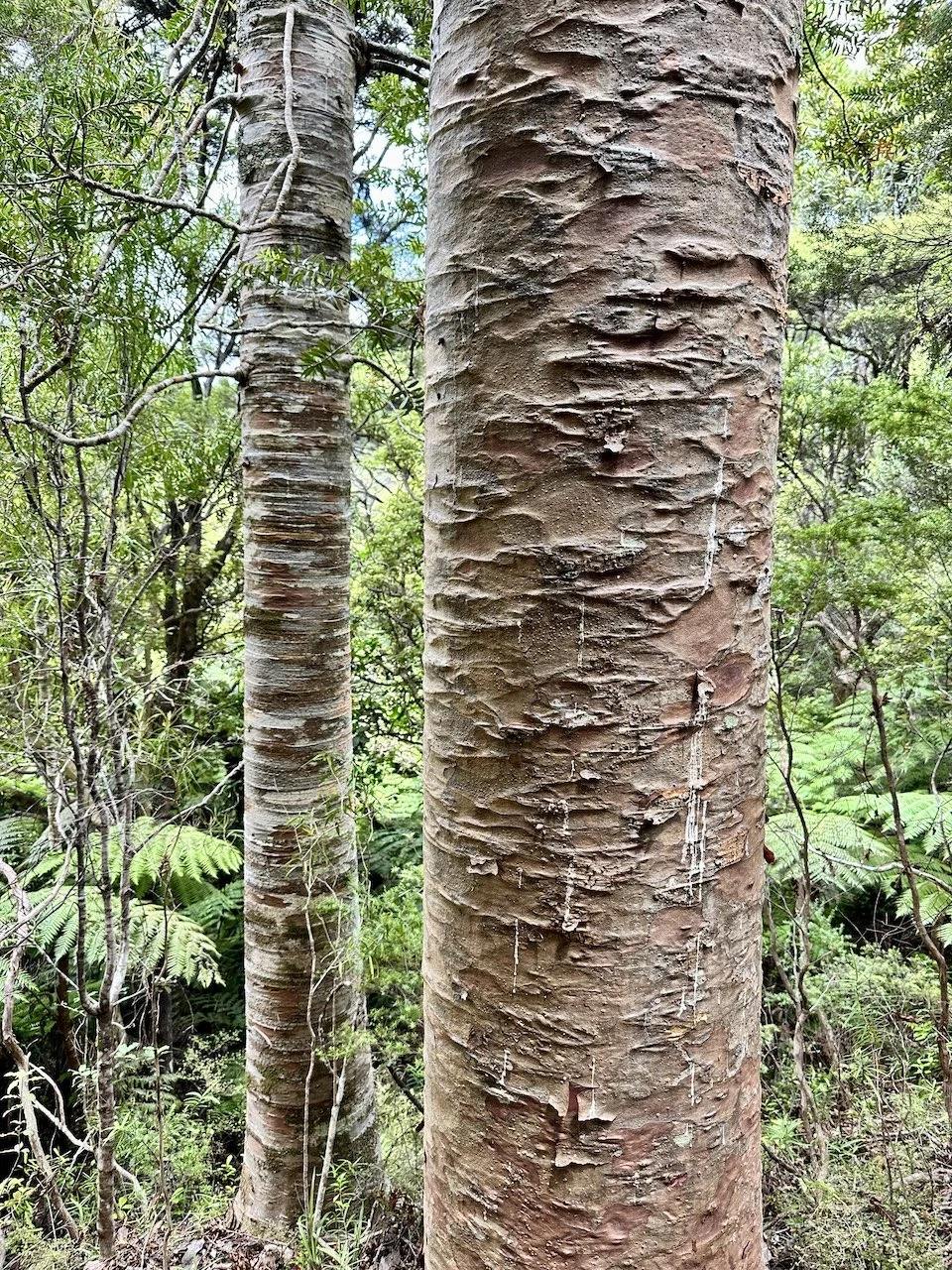
Kaurī rickers reaching for the canopy at Shambhala — young giants in the making, surrounded by the ponga and native understorey reclaiming the gullies.
The Pest Detection Mindset
Our trap network started small: one possum trap, positioned deliberately, checked regularly, recorded methodically. Fifteen kills in the first month told us what the land already knew: the pressure was significant.
We've since expanded our thinking about detection as much as about eradication. You cannot manage what you don't monitor. That means walking the same lines, noticing what's changed, keeping records that build into patterns over time. Which areas are the pigs disturbing? Where are the rats concentrating? Has something new moved through?
When you're living on the land rather than visiting it, you develop a baseline understanding that no amount of periodic surveying can replicate. The morepork that calls from a particular ridge. The section of track where the soil is always disturbed. The spring that runs dry earlier each summer as the pines above it drink more.
This observational intimacy is, I've come to believe, the most underrated tool in conservation management. Technology helps: databases, spatial mapping, incursion response protocols. But they're only as good as the eyes and instincts feeding them.
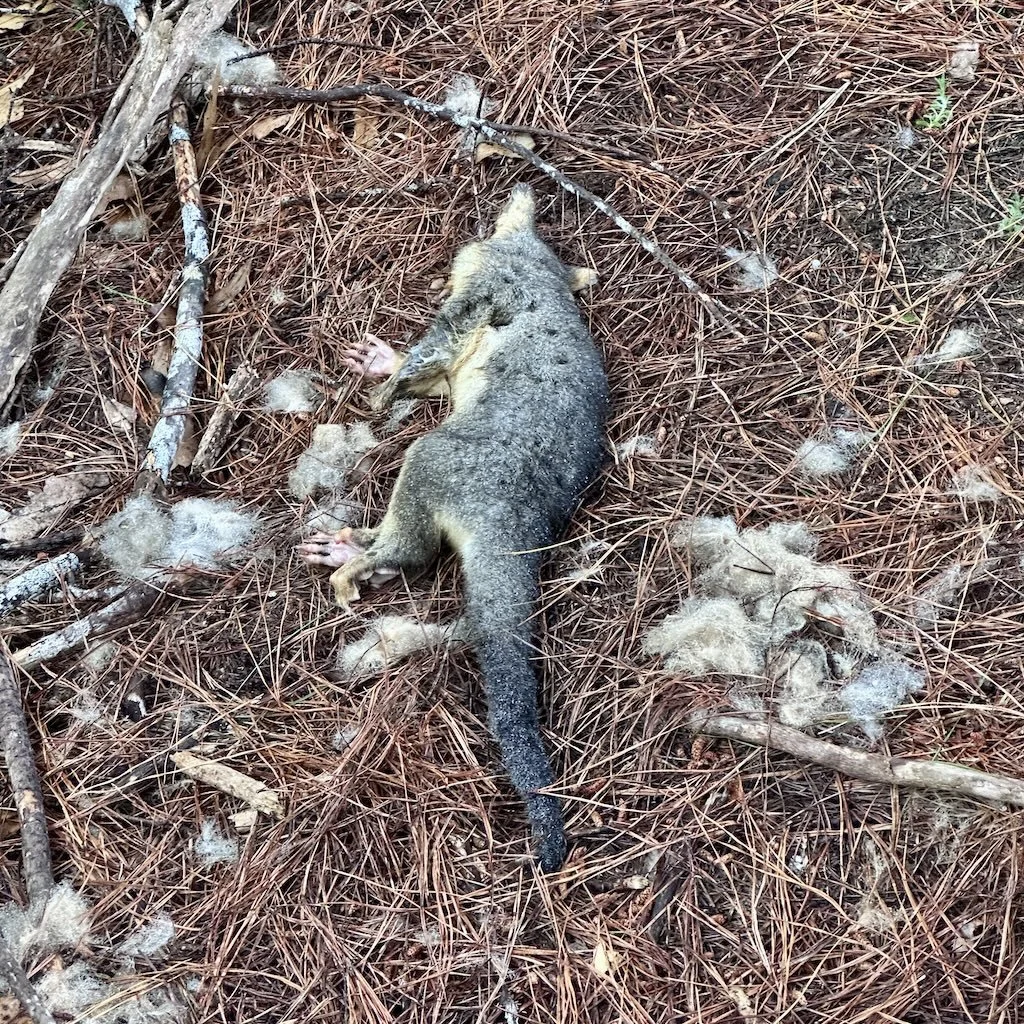
An Australian common brushtail possum (Trichosurus vulpecula) - one of many introduced pests. The unglamorous reality of conservation work at Shambhala. This possum would have eaten its way through nesting birds, eggs, and native seedlings. Not pretty — but necessary.
The Weed Problem is Also a Story Problem
Ecological weed control at Shambhala isn't simply about what you spray or when. It's about understanding why certain species are winning and what you need to do at a landscape scale to shift the balance.
The wilding pines are the most urgent concern. The plantation block on the kaka ridge is one thing, roughly twenty-five years old, poorly managed, variable in quality, and ultimately destined for removal and native replanting. But the wilding pines that have dispersed beyond the plantation into existing native forest are a different order of problem. Every year we don't act, they seed further. Every year they establish more deeply, they draw more moisture from the gullies, shade out the pūnga and nīkau, and make the eventual restoration job harder.
Gorse needs coordinated timing. You learn quickly that the wrong intervention at the wrong stage simply triggers germination from the seed bank. Woolly nightshade spreads aggressively and requires persistent follow-up after initial control. Blackberry, we've noted in our records, concentrates along the track margins where disturbance is highest, which tells you something about where to focus and what conditions favour it.
Every weed is telling you something about the land if you're listening carefully enough.
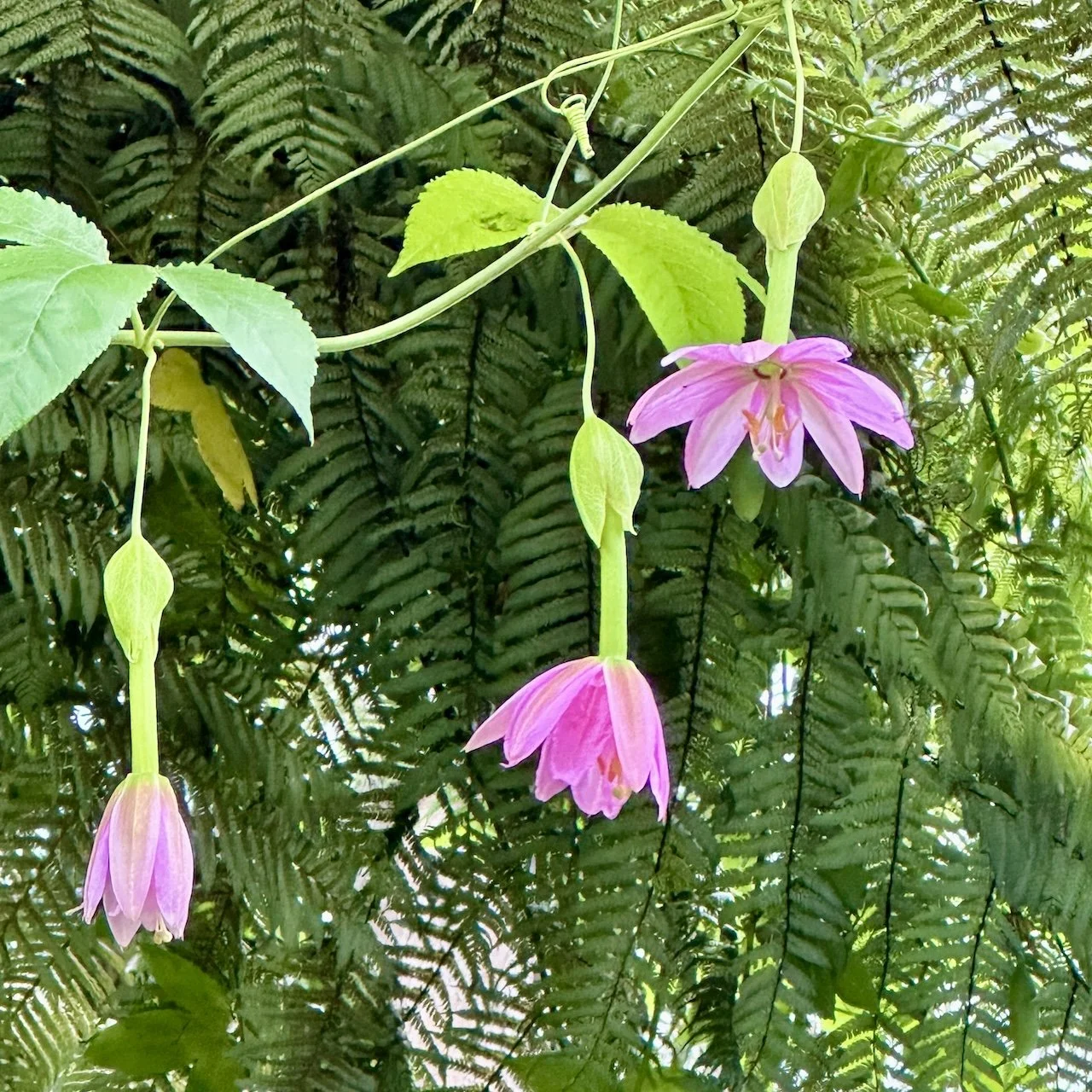
Banana passionfruit (Passiflora tripartita) in flower at Shambhala — breathtaking to look at, devastating to the bush. This South American invader smothers native vegetation and is high on our control list.
Doing It Together
Something I've reflected on a great deal since taking on Shambhala: this kind of work is not a solo endeavour. Not practically, and not philosophically.
The physical demands alone, felling, clearing, tracking, trapping, hauling, building, require more than one set of hands. But it's more than logistics. The decision-making, the problem-solving, the management of contractors and volunteers and supply runs and reporting, the advocacy to visitors about why biosecurity protocols matter, all of it benefits from complementary strengths working in close partnership.
When we have family and friends on site, one of us is invariably deep in the bush checking lines while the other is coordinating at camp, making sure the right gear goes out, the right information comes back, the records are updated, the experience is managed well enough that people want to return and contribute again. Four generations have now been on this land. That doesn't happen by accident. It requires someone to hold the operational thread while the other holds the ecological one.
The best conservation outcomes I've seen and read about come from that same combination: deep field knowledge paired with organised operational support, both oriented toward the same long-term vision.
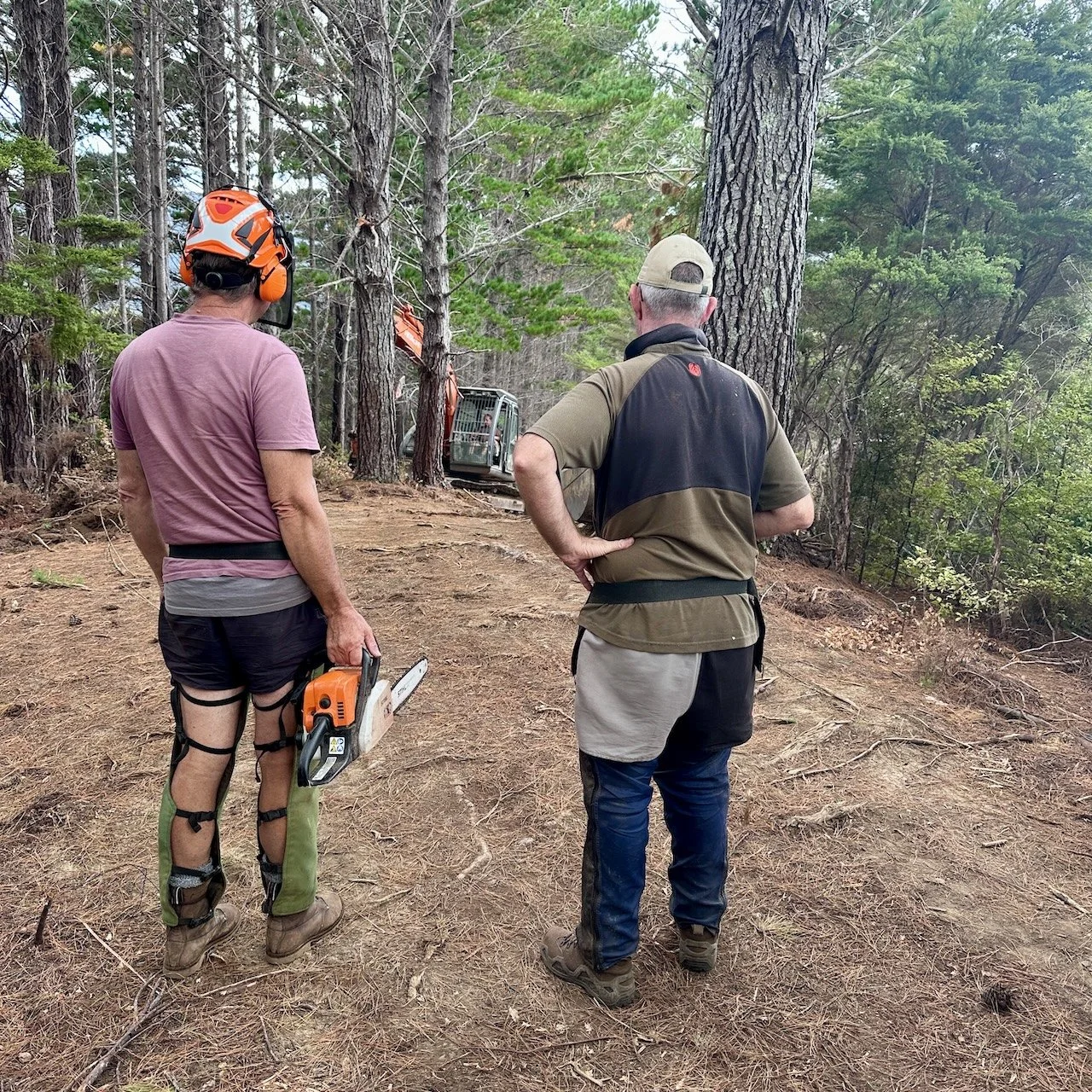
Peter and Andrew survey the work ahead as Dave brings in the digger — tackling the pine plantation as part of Shambhala's long-term ecological management plan.
What the Land Asks of You
Living off-grid at Shambhala has taught me that the land doesn't reward passivity. It rewards presence, consistency, and the willingness to do the unglamorous work: digging silt from the ford at dawn, tracking a trap line in the rain, writing up the monthly observations when you'd rather just sit by the fire.
It also rewards patience. We will not see the full results of what we're doing here in our lifetime. The long-term goal, removing the plantation, commencing native replanting, establishing a walking track network through recovering forest, will outlast us both. That's exactly the point. We are not managing for now. We are managing for the tuatara on Repanga, and for the longfin eels in our ford who may well outlive us, and for whatever equivalent of them lives quietly in these gullies, waiting for the conditions to improve enough to flourish.
Biodiversity doesn't come back in a season. But it does come back, if you get the foundations right and you're willing to stay the course.
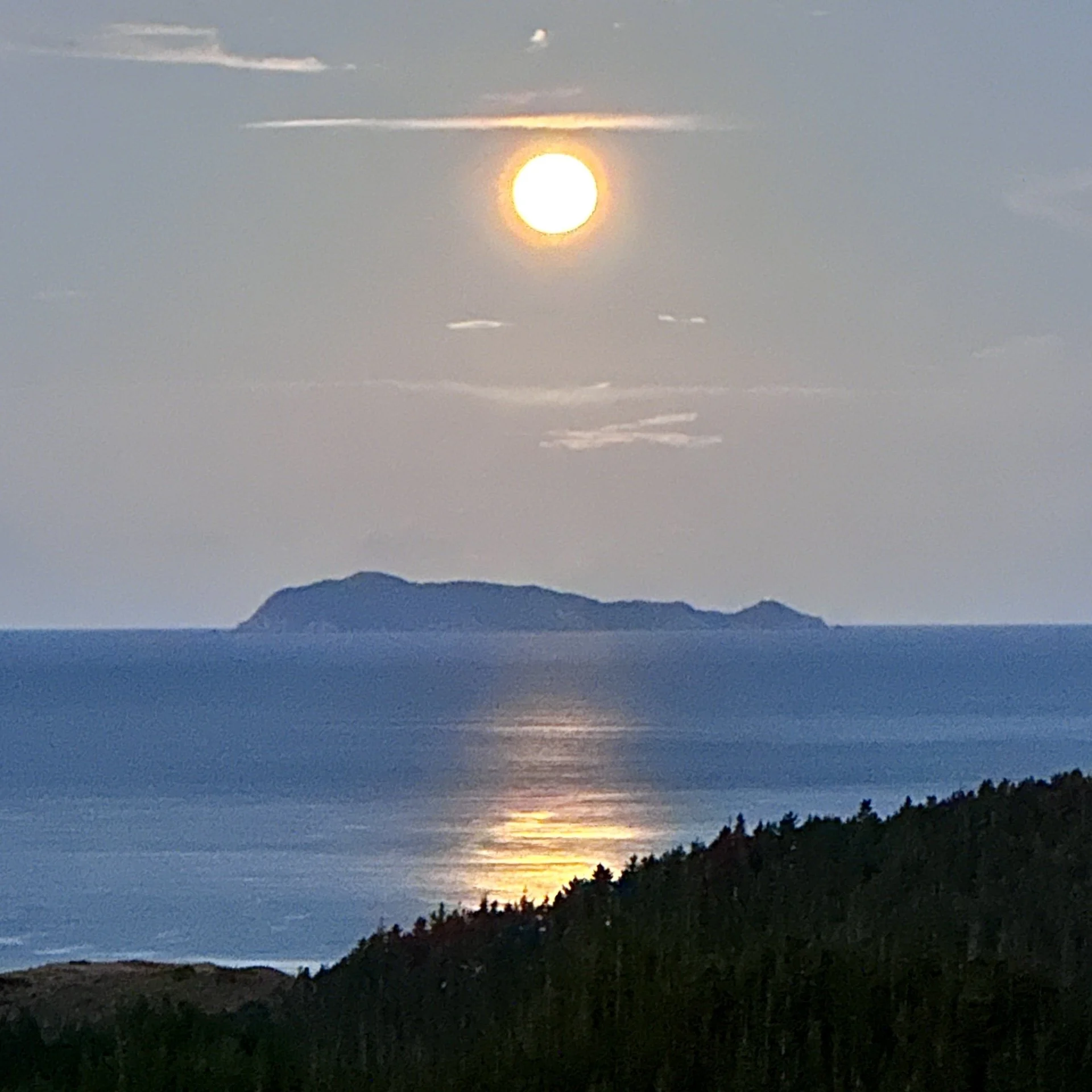
Repanga Island under a rising full moon — wild, remote, and fiercely protected. Some views stop you in your tracks and remind you exactly why this work matters.
A Note on the Island
I think often about the predator-free reserve visible from our campsite. Everything we're learning at Shambhala, the biosecurity mindset, the weed control discipline, the patient observation, the operational partnership, the advocacy to every person who sets foot on the land, would apply even more acutely on an island where the stakes of a single incursion are existential.
You cannot undo a rat landing on a predator-free island. You cannot undo an introduced pest establishing in a fragile coastal ecosystem. The prevention is everything, and the prevention is built from exactly the habits, systems, and values we're practising here on the mainland.
That, I suppose, is what Shambhala has really been teaching us all along.
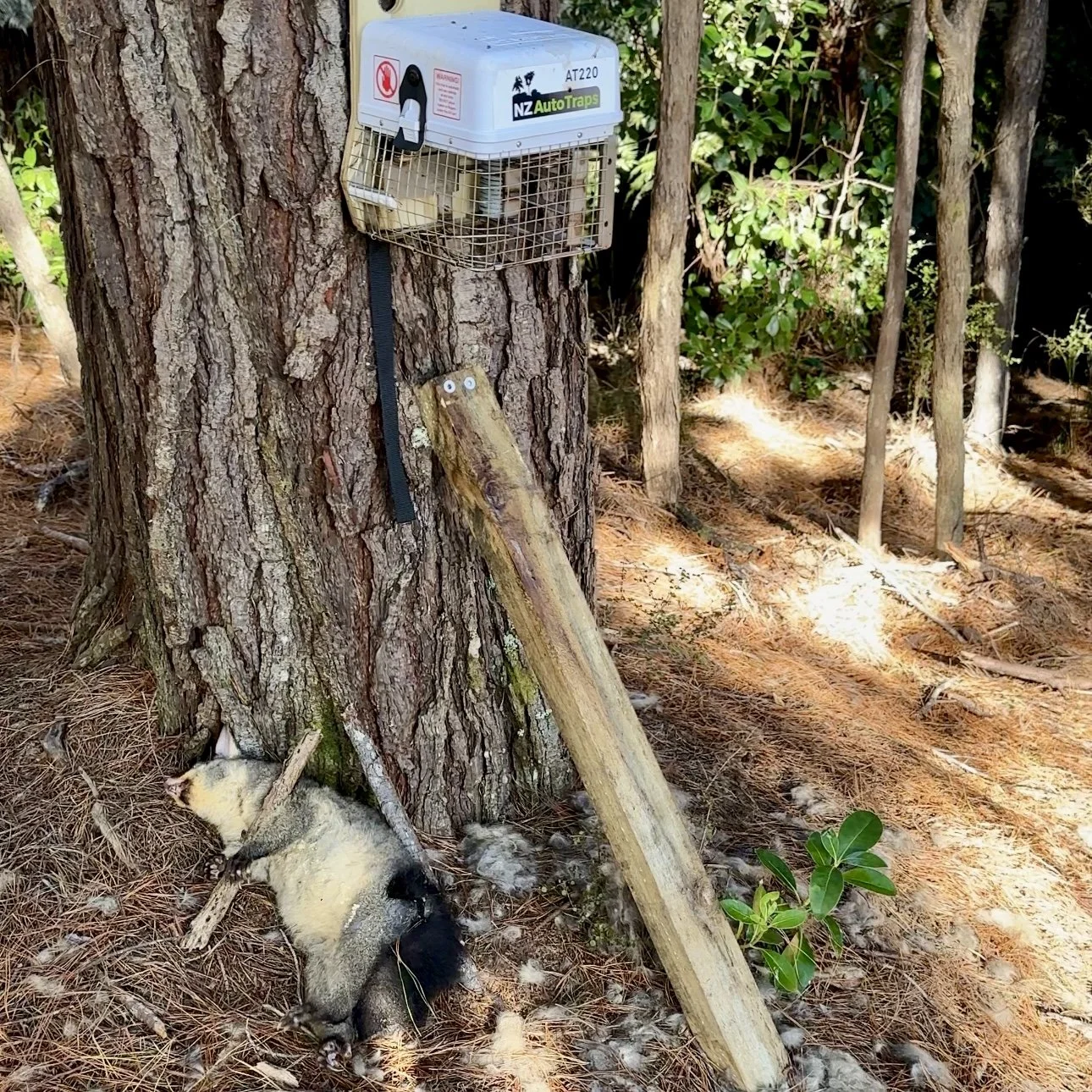
An NZ AutoTrap AT220 doing its job at Shambhala — one less possum in the bush. Every kill is a few more eggs in a nest, a few more chicks fledged, a few more native seedlings that make it through the night.
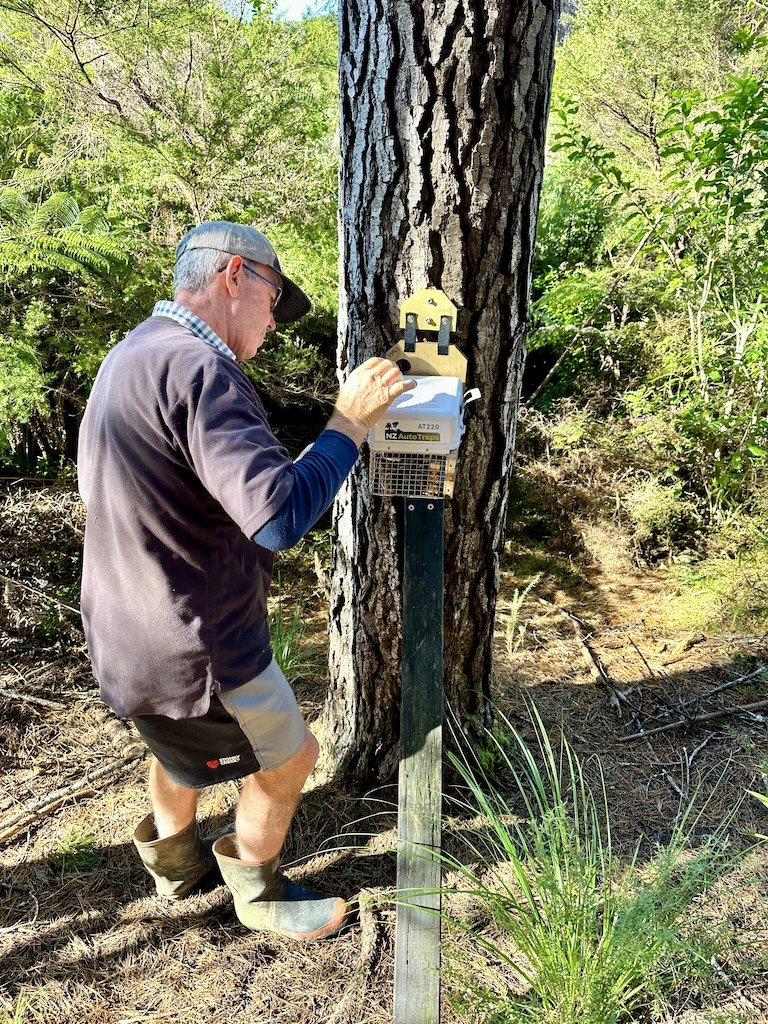
Andrew checking one of the NZ AutoTrap 220’s at Shambhala. The traps are battery operated and contain a liquid bait which attracts a range of pests including possums, rats, mice, stoats, feral cats and hedgehogs.
Shambhala is an ongoing conservation project and off-grid build on the Coromandel Peninsula. If you have experience in native planting, pest management, or sustainable land management and would like to contribute, get in touch.
Follow the Shambhala journey on Instagram, Facebook, and YouTube.
Keep Exploring the Shambhala Series
Pest Control → Wildlife Encounters
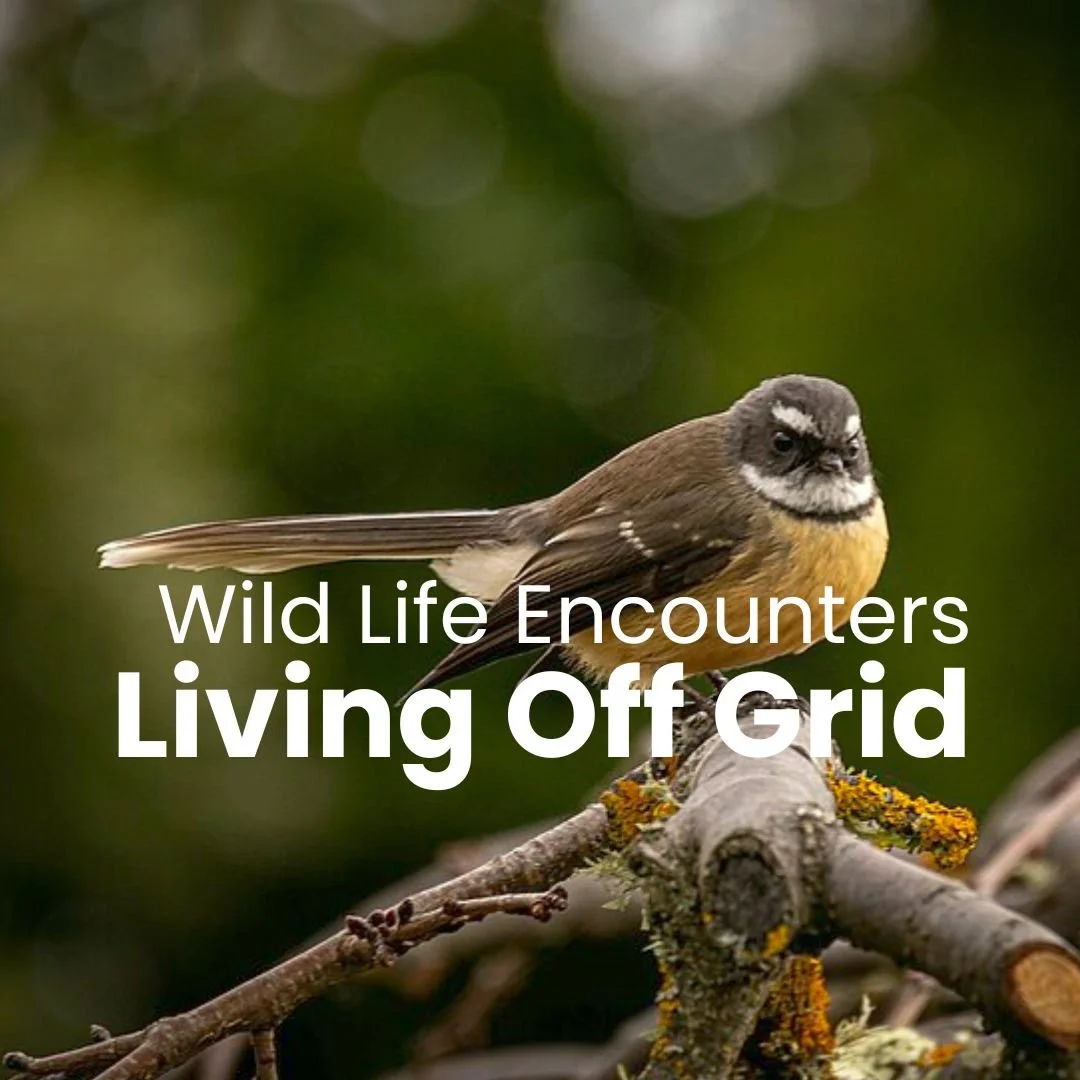
Curious about the wildlife that calls Shambhala home? Discover the ruru, kākā, and other creatures we encounter daily in the bush.
[Read Wildlife Encounters]
Wildlife Encounters → Tent Life
From dawn bird calls to night-time rustles, life in the bush is full of surprises. See what it’s like living in a tent at Shambhala.
[Read Tent Life in the Bush]
Tent Life → Cabin Build
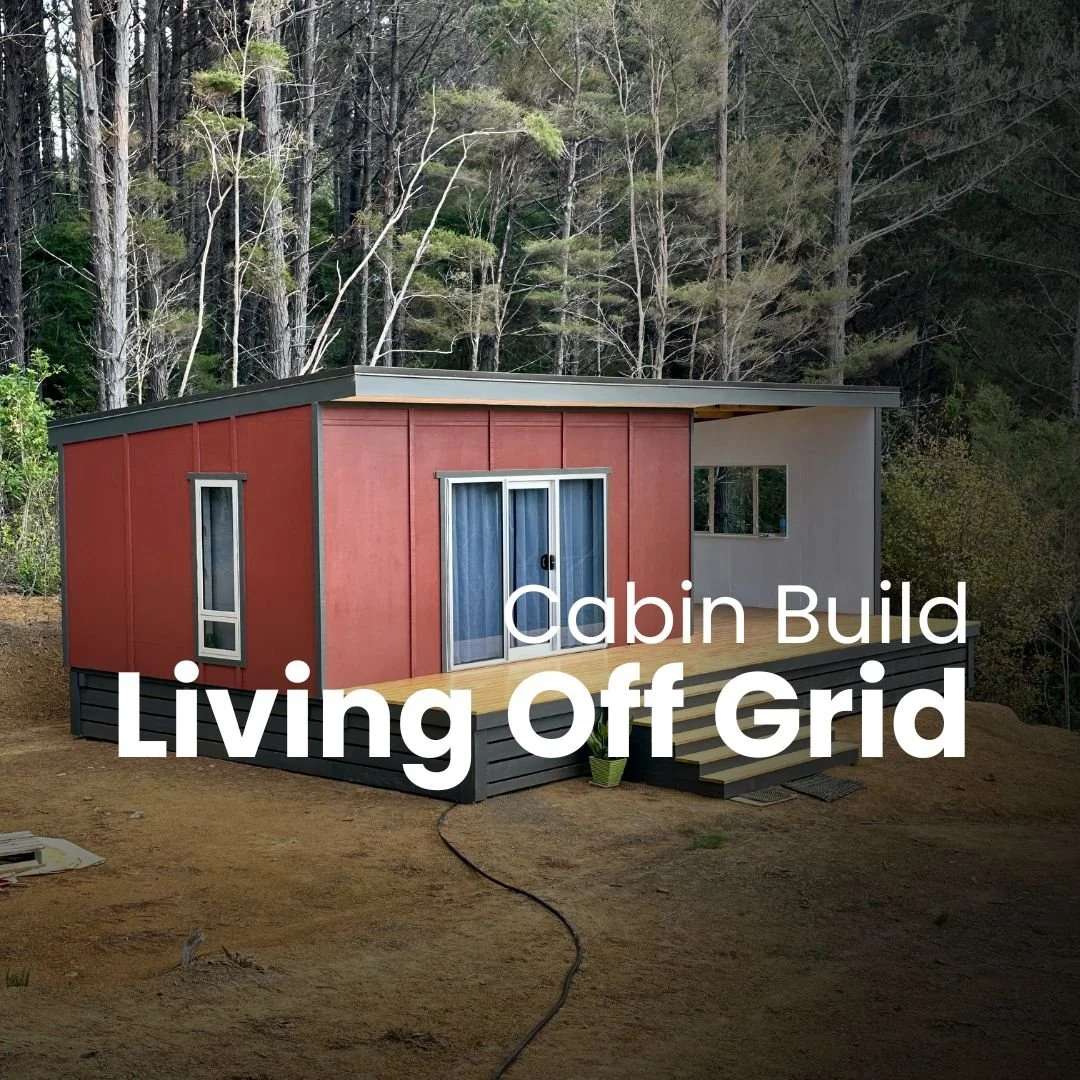
Living simply in a tent is just the beginning. Follow the journey as we build our off-grid cabin in the Coromandel bush.
[Read Cabin Building]
Cabin Build → Reflections
Building and living off-grid teaches you more than just practical skills. Read my reflections on what life close to nature has shown me.
[Read Reflections from Shambhala]
Reflections → Pillar Blog / Main Hub
Want the full picture of life off-grid in the Coromandel bush? Head back to the main pillar post and explore all the adventures, wildlife, and lessons.
[Read The Wild Beauty of Living Off-Grid in New Zealand]
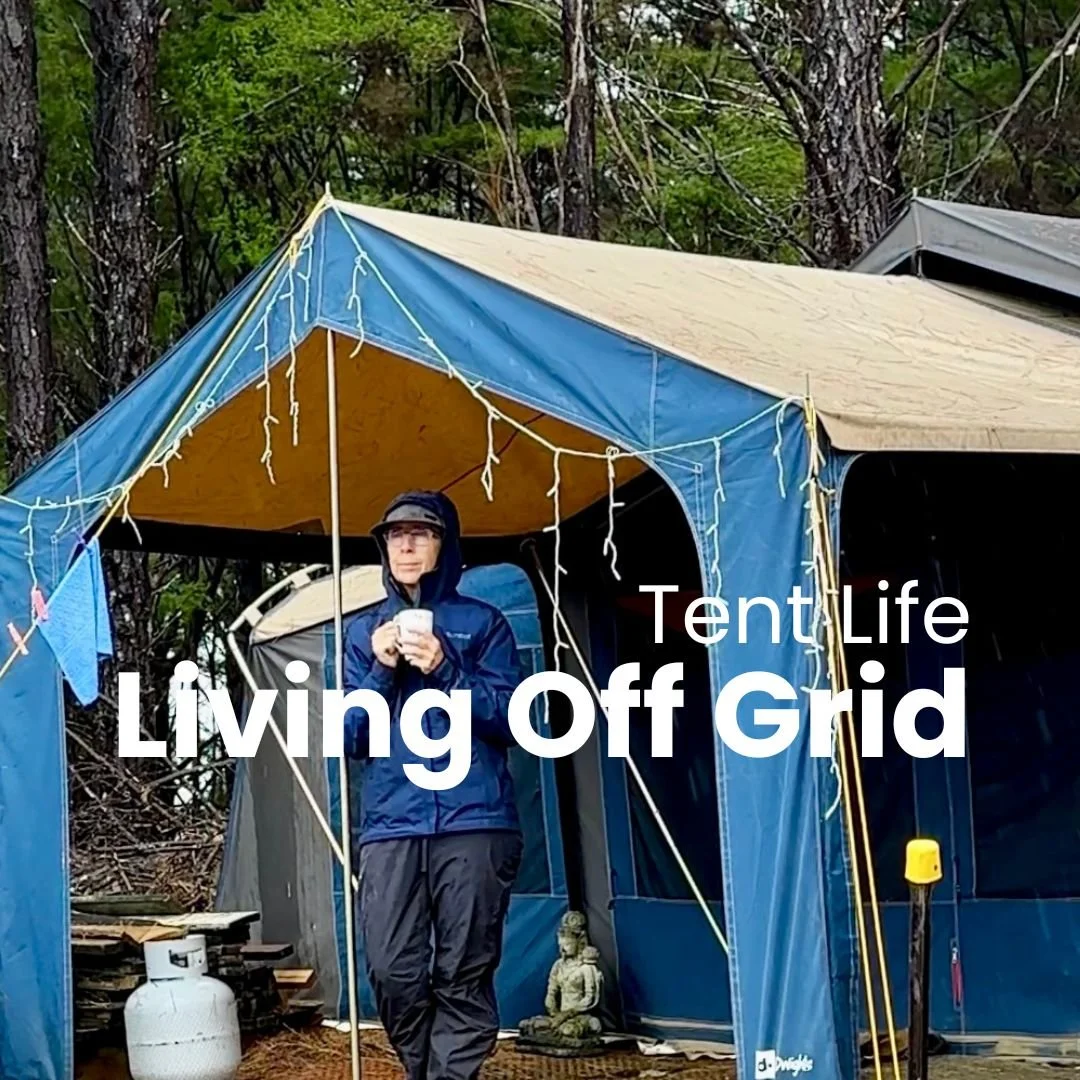
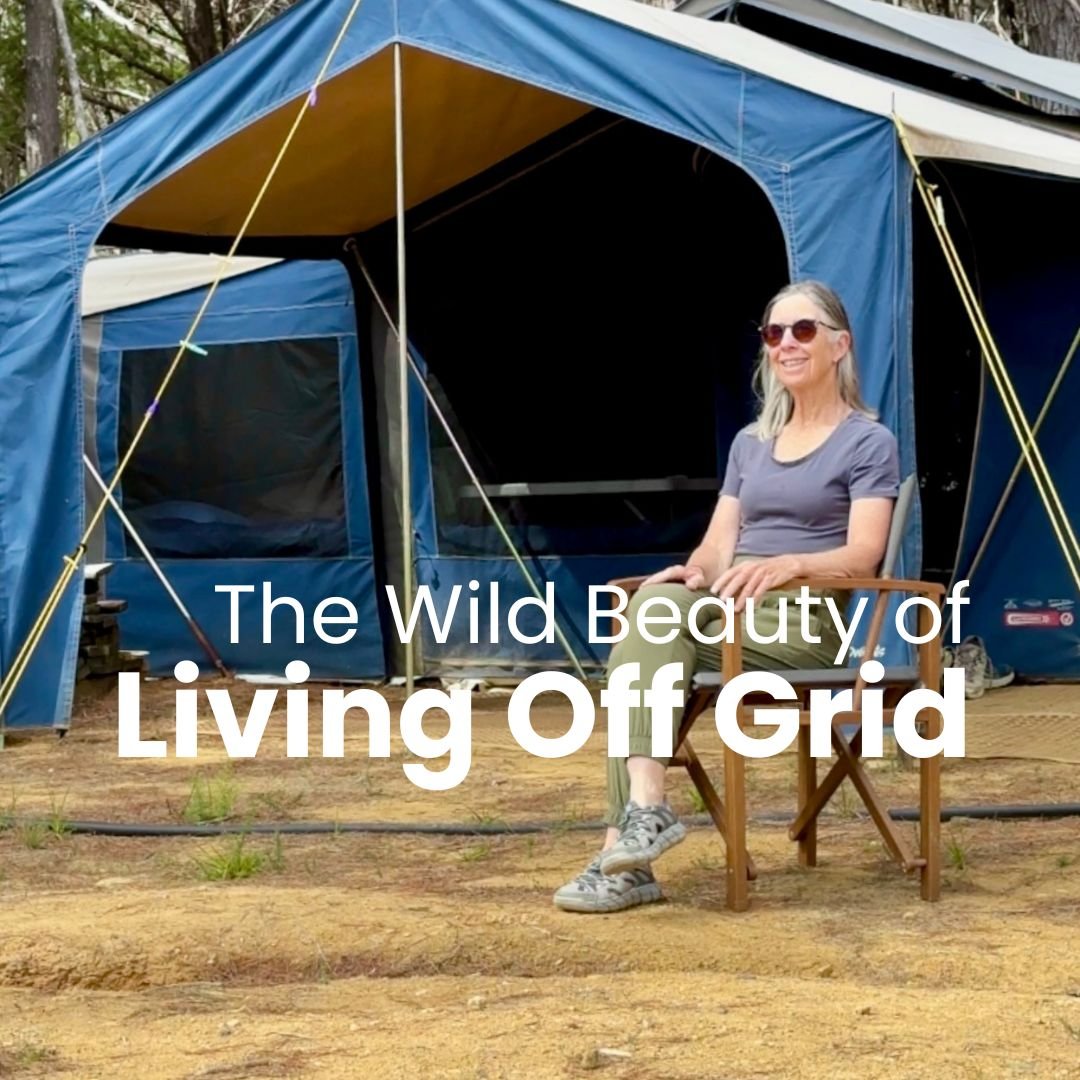
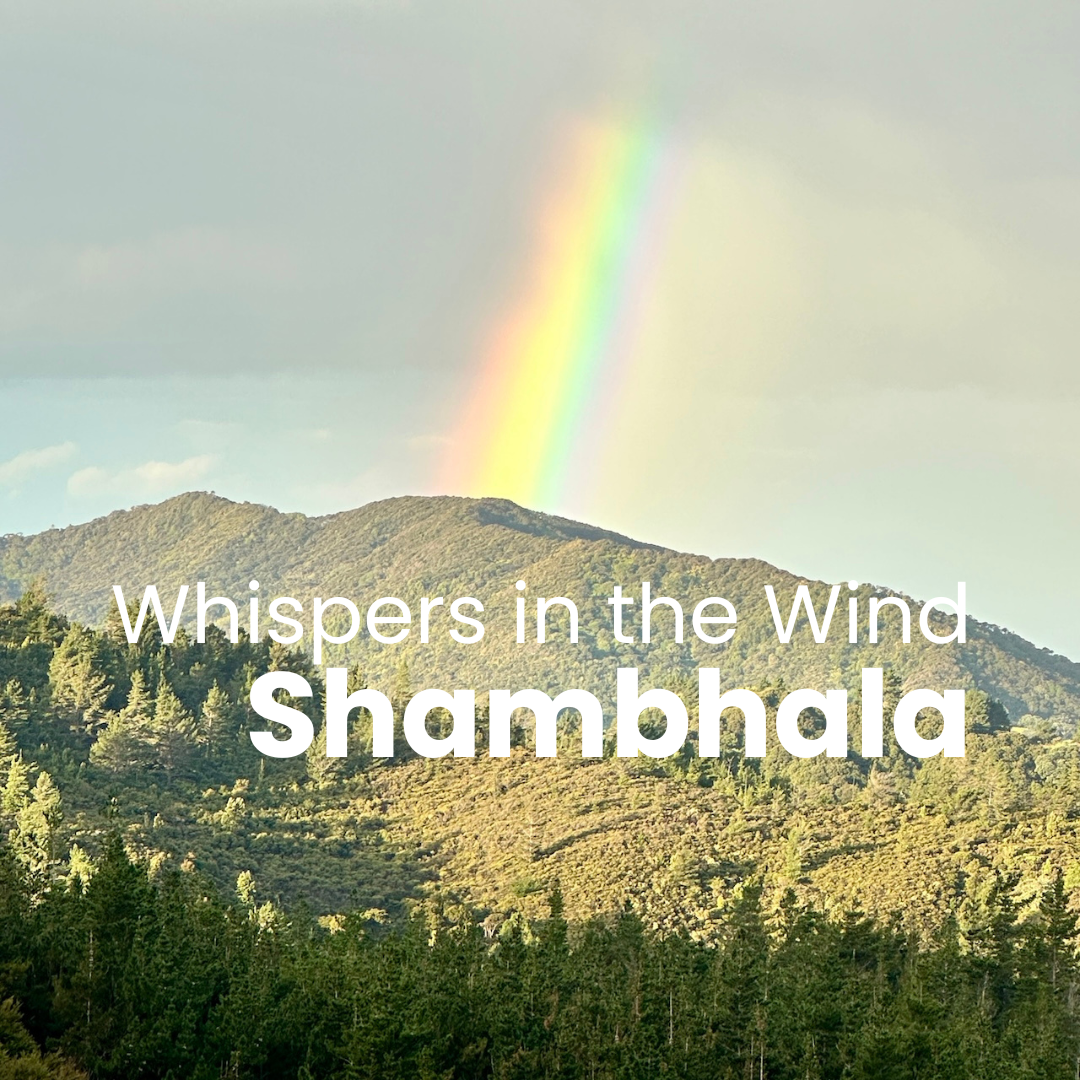
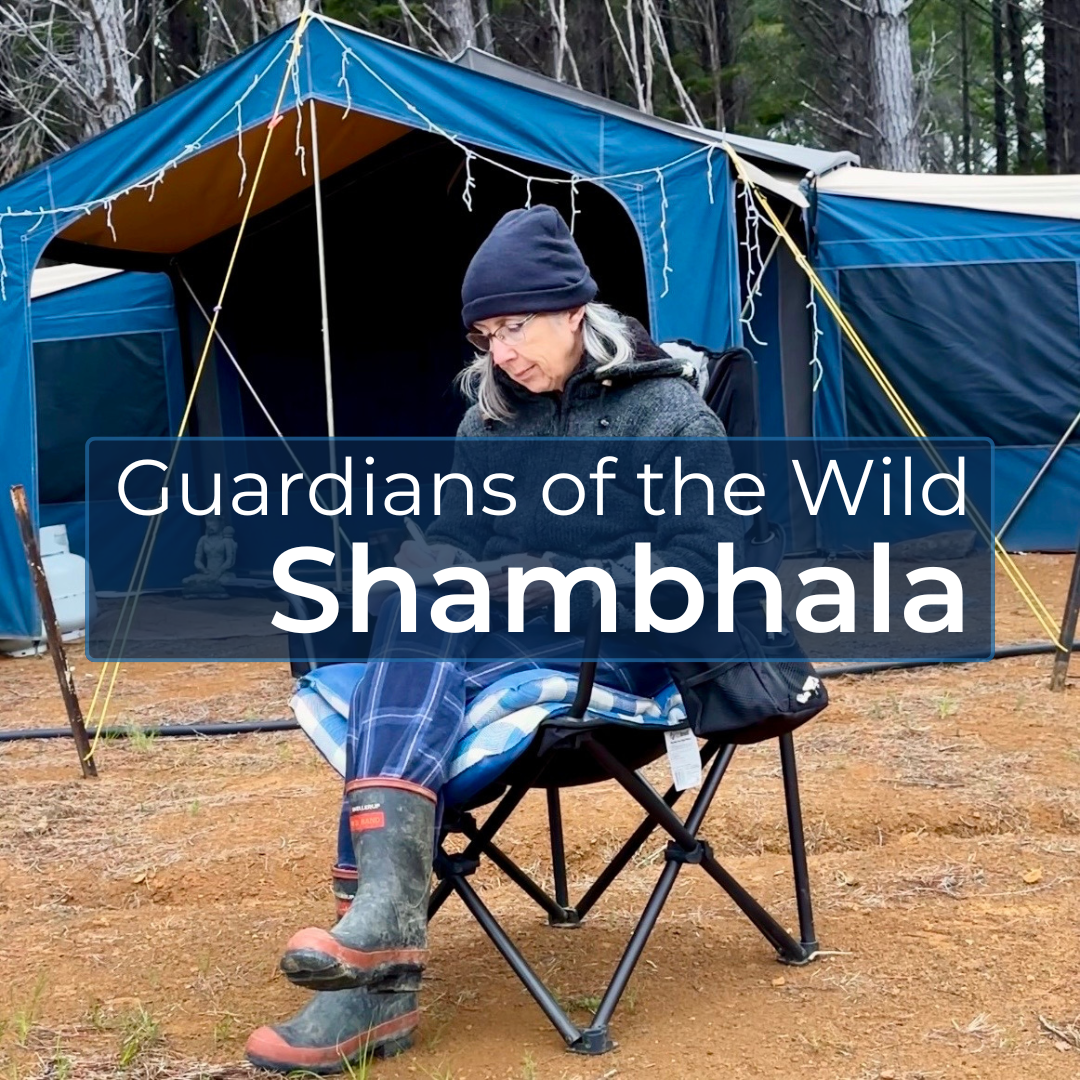



Living in a tent in the Coromandel bush while we build our off-grid cabin provides us with lessons in patience, resilience and humility.
Life here is immersive: you wake with the forest, sleep with the forest, and learn to navigate a world where humans are guests rather than masters.
In this post, I reflect on the experience of becoming one with Shambhala, a place of vast contradictions. Embracing those contradictions requires respect, attention and more than a little courage.